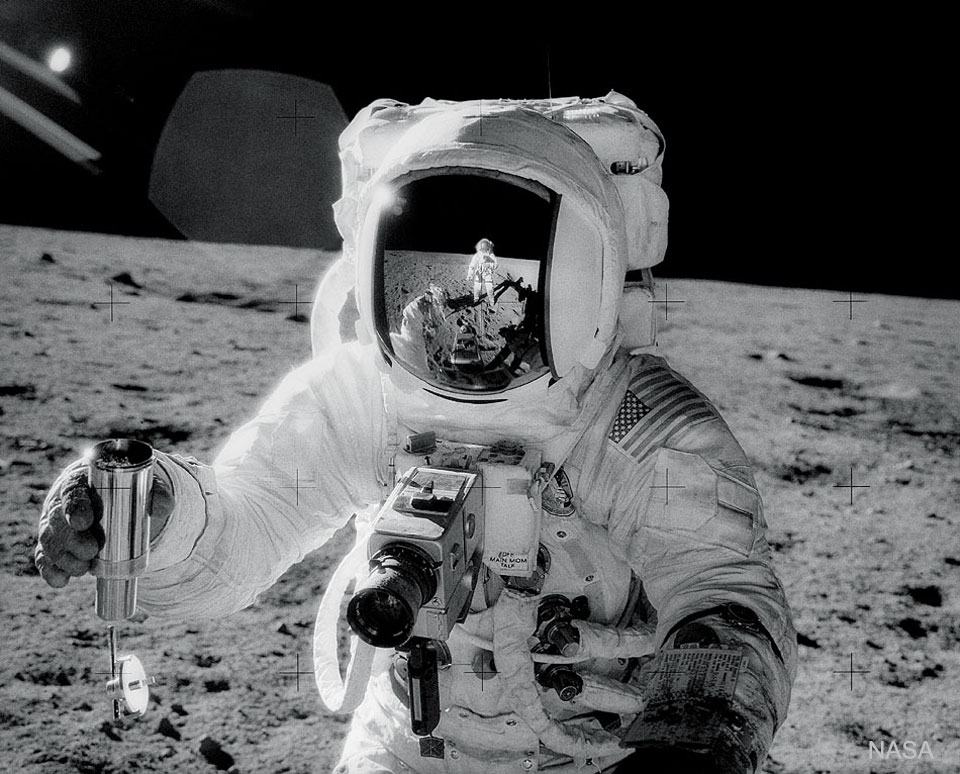
Is this image art? 50 years ago, Apollo 12 astronaut-photographer Charles "Pete" Conrad recorded this masterpiece while documenting colleague Alan Bean's lunar soil collection activities on Oceanus Procellarum. The featured image is dramatic and stark. The harsh environment of the Moon's Ocean of Storms is echoed in Bean's helmet, a... Continue Reading →

Station Commander Luca Parmitano of the European Space Agency conducts repairs while attached to the space station’s robotic arm during the first spacewalk to repair the Alpha Magnetic Spectrometer on Nov. 15, 2019. He and NASA astronaut Andrew Morgan (out of frame) worked for more than six... Continue Reading →

Gamma-ray bursts are the most powerful explosions in the cosmos. These explosive events last a fraction of a second to several minutes and emit the same amount of gamma rays as all the stars in the universe combined. Such extreme... Continue Reading →
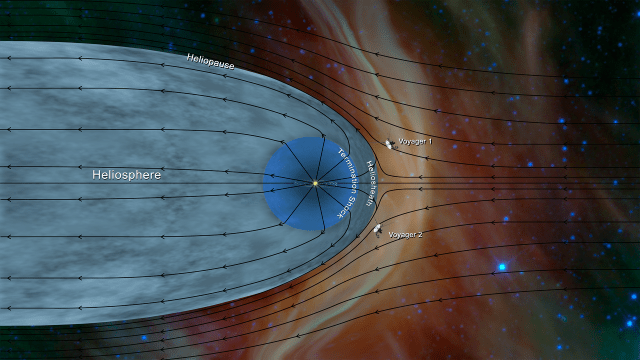
Voyager 1 has a companion in the realm of the stars. Researchers at the University of Iowa report that the spacecraft Voyager 2 has entered the interstellar medium (ISM), the region of space outside the bubble-shaped boundary produced by wind... Continue Reading →
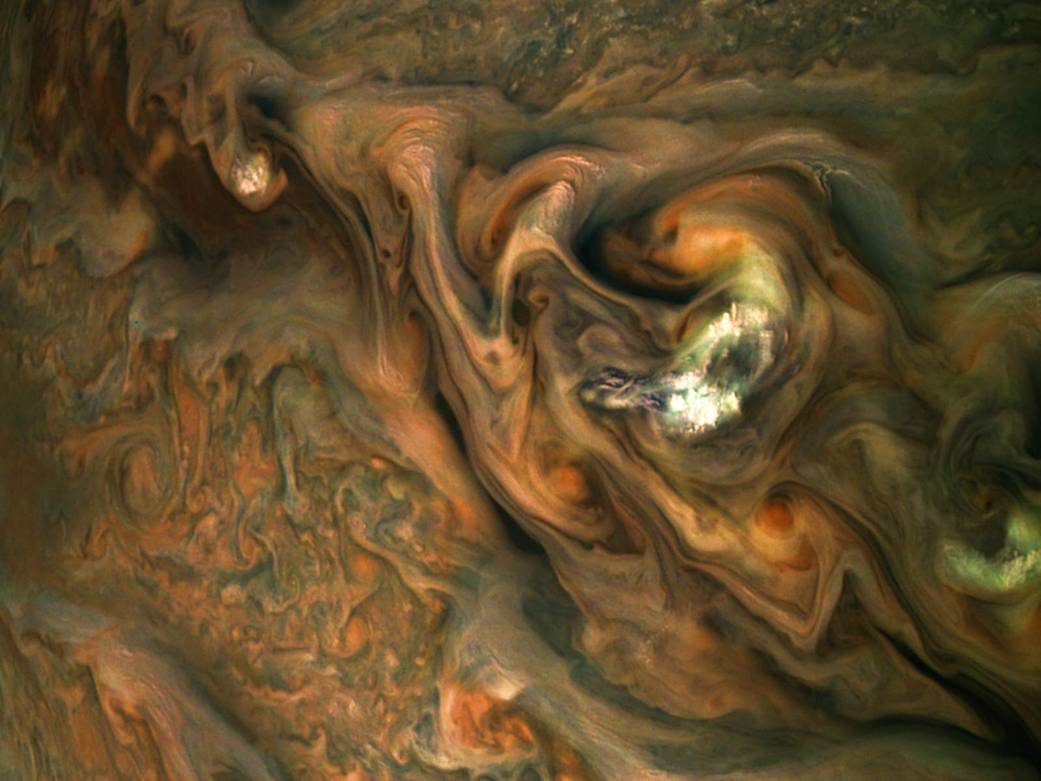
This view from NASA's Juno spacecraft captures colorful, intricate patterns in a jet stream region of Jupiter's northern hemisphere known as "Jet N3." Jupiter's cloud tops do not form a simple, flat surface. Data from Juno helped scientists discover that the swirling... Continue Reading →

Astronomers using ESO's SPHERE instrument at the Very Large Telescope (VLT) have revealed that the asteroid Hygiea could be classified as a dwarf planet. The object is the fourth largest in the asteroid belt after Ceres, Vesta and Pallas. For... Continue Reading →
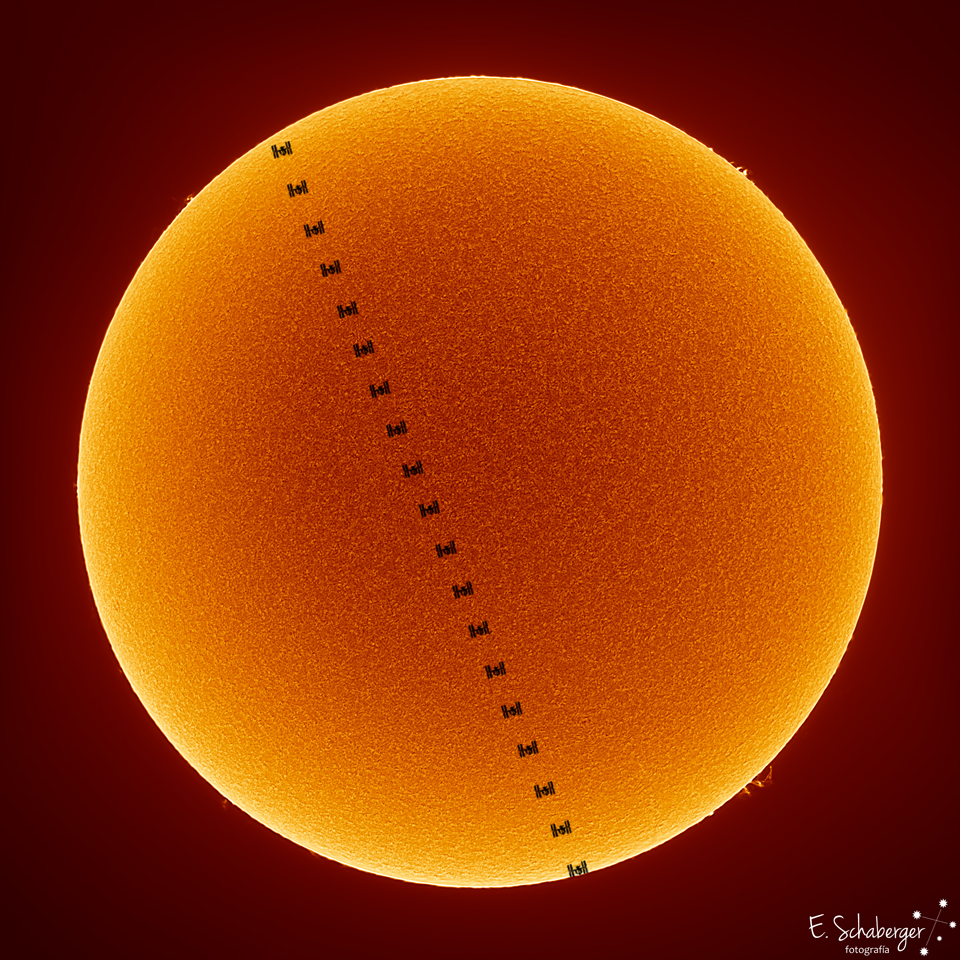
Typically, the International Space Station is visible only at night. Slowly drifting across the night sky as it orbits the Earth, the International Space Station (ISS) can be seen as a bright spot about once a month from many locations. The ISS is then visible only... Continue Reading →
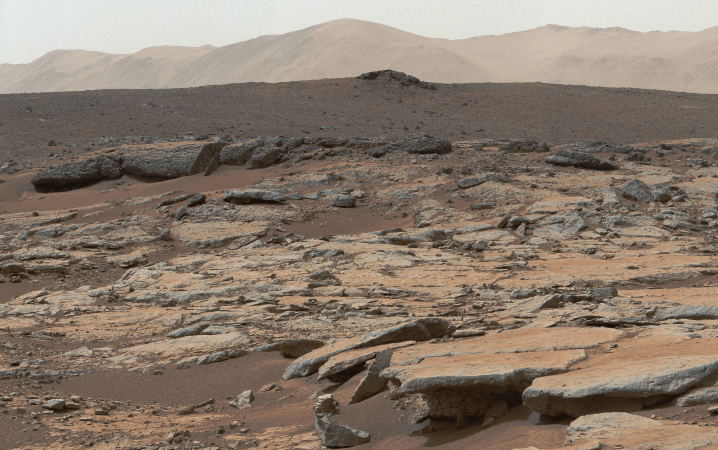
Mars once had salt lakes that are similar to those on Earth and has gone through wet and dry periods, according to an international team of scientists that includes a Texas A&M University College of Geosciences researcher. Marion Nachon, a... Continue Reading →
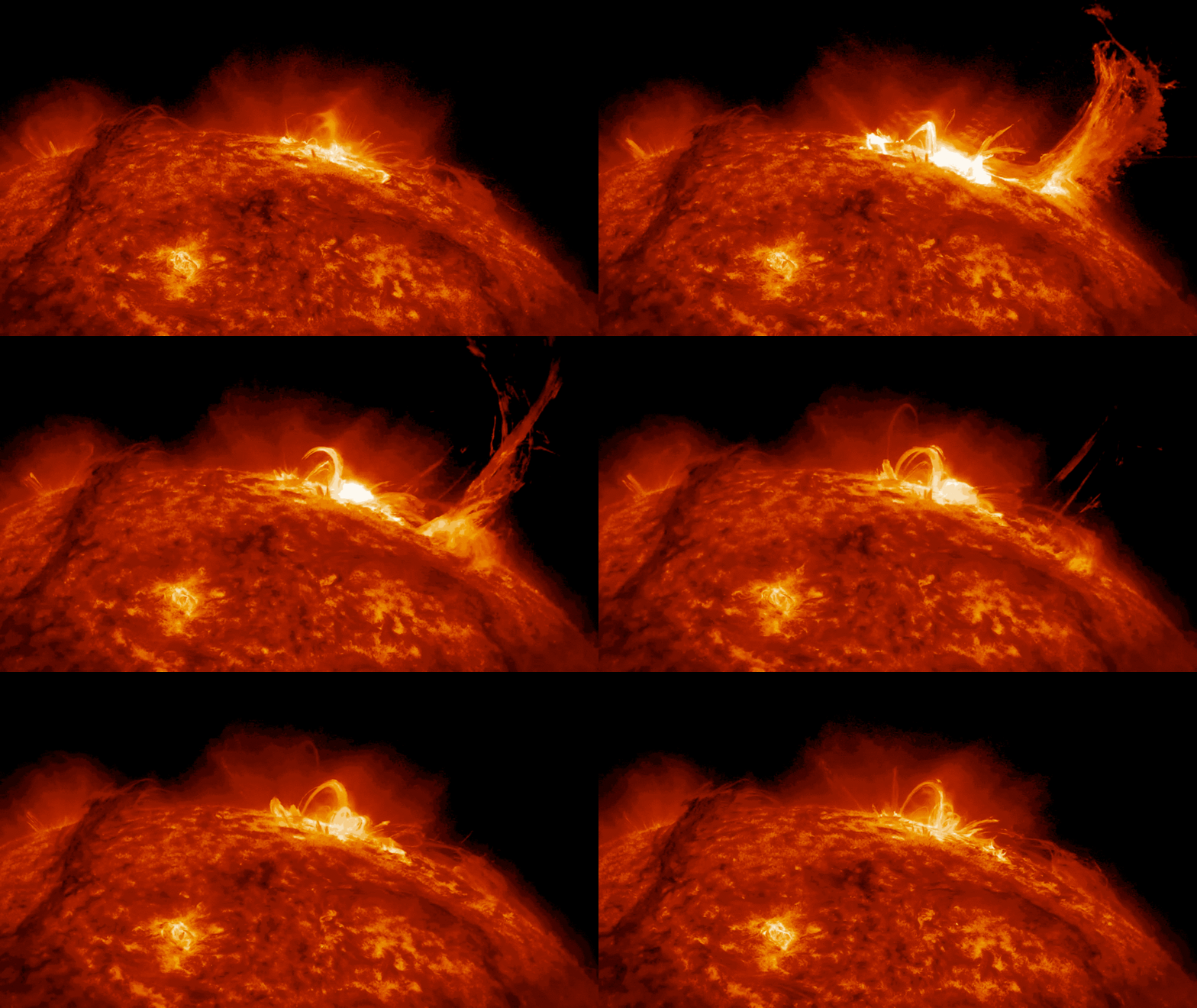
Seen from Earth, solar flares put on an elegant show. But these dancing plasma ribbons are the shrapnel of violent explosions. The energetic process that fuels them, known as magnetic reconnection, doesn't just power flares. Magnetic reconnection shapes the behavior... Continue Reading →
 Scents of Science