
Animation showing the trajectory of Solar Orbiter around the Sun, highlighting the gravity assist manoeuvres that will enable the spacecraft to change inclination to observe the Sun from different perspectives. During the initial cruise phase, which lasts until November 2021,... Continue Reading →
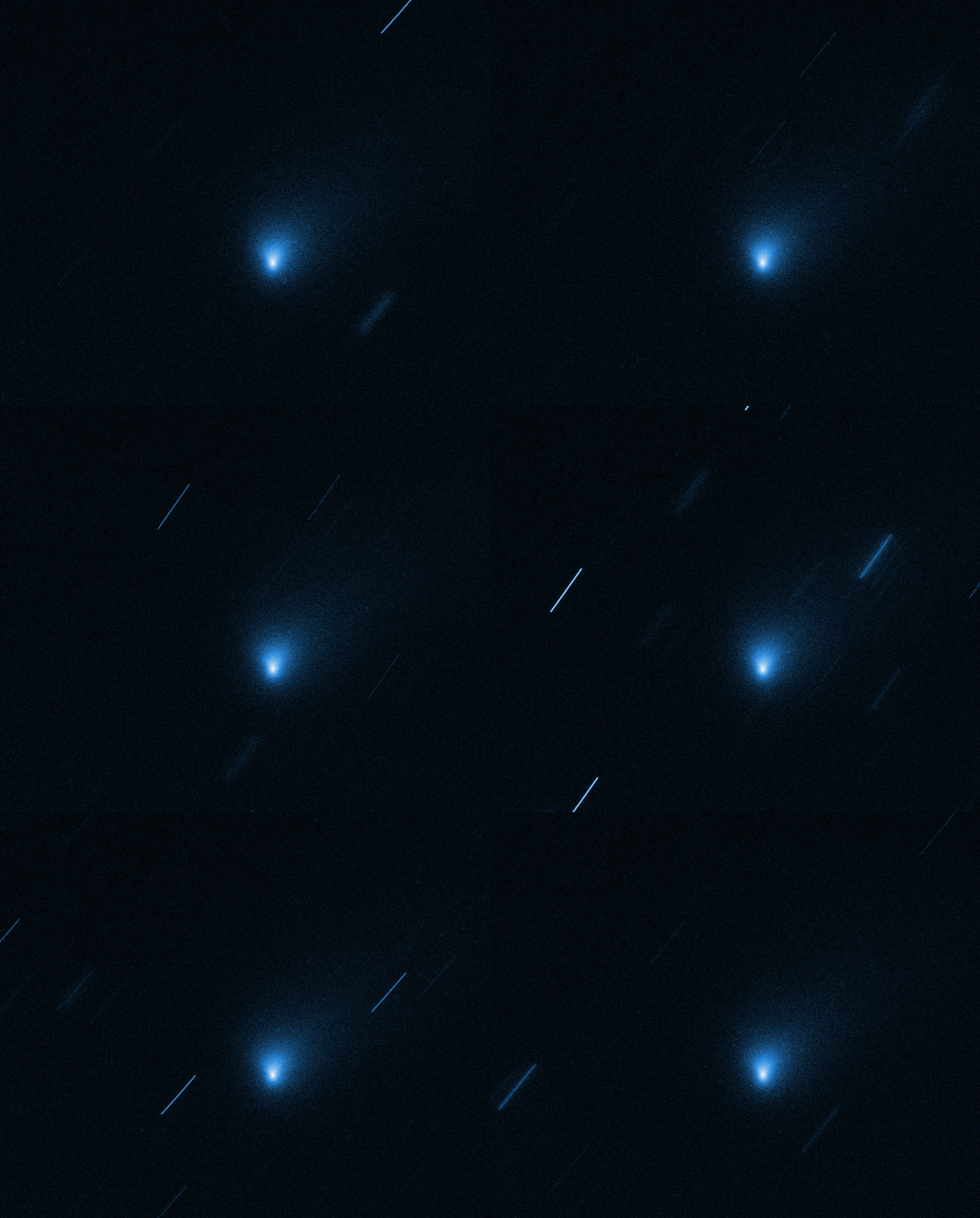
NASA's Hubble Space Telescope has given astronomers their best look yet at an interstellar visitor — comet 2I/Borisov — whose speed and trajectory indicate it has come from beyond our solar system. This Hubble image, taken on Oct. 12, 2019,... Continue Reading →

The failed unit was beyond the reach of the robotic Canadarm2. Therefore, this repair of the International Space Station would require humans. The humans on duty were NASA's Jessica Meir and Christina Koch. This was the fourth spacewalk for Meir, the first for Koch, and the first... Continue Reading →
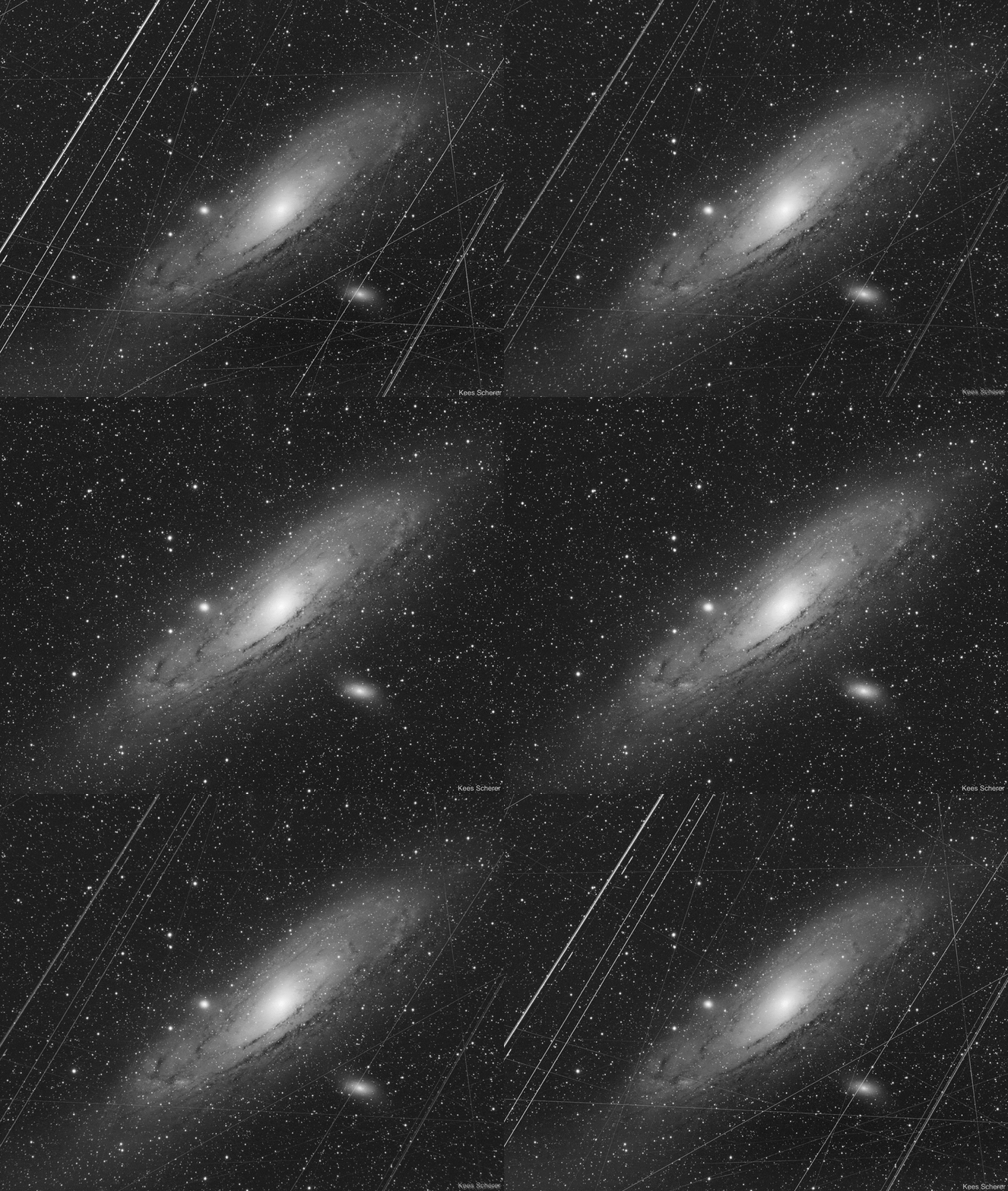
What does the Andromeda galaxy really look like? The featured image shows how our Milky Way Galaxy's closest major galactic neighbor really appears in a long exposure through Earth's busy skies and with a digital camera that introduces normal imperfections. The picture is a... Continue Reading →

Discovered in 2018 by NASA's Transiting Exoplanet Satellite Survey (TESS) mission, planet LHS 3844b is located 48.6 light-years from Earth and has a radius 1.3 times that of Earth. It orbits a small, cool type of star called an M dwarf - especially noteworthy because,... Continue Reading →

Is this galaxy jumping through a giant ring of stars? Probably not. Although the precise dynamics behind the featured image is yet unclear, what is clear is that the pictured galaxy, NGC 7714, has been stretched and distorted by a recent collision with a... Continue Reading →

A team led by Carnegie's Scott S. Sheppard has found 20 new moons orbiting Saturn. This brings the ringed planet's total number of moons to 82, surpassing Jupiter, which has 79. The discovery was announced Monday by the International Astronomical... Continue Reading →
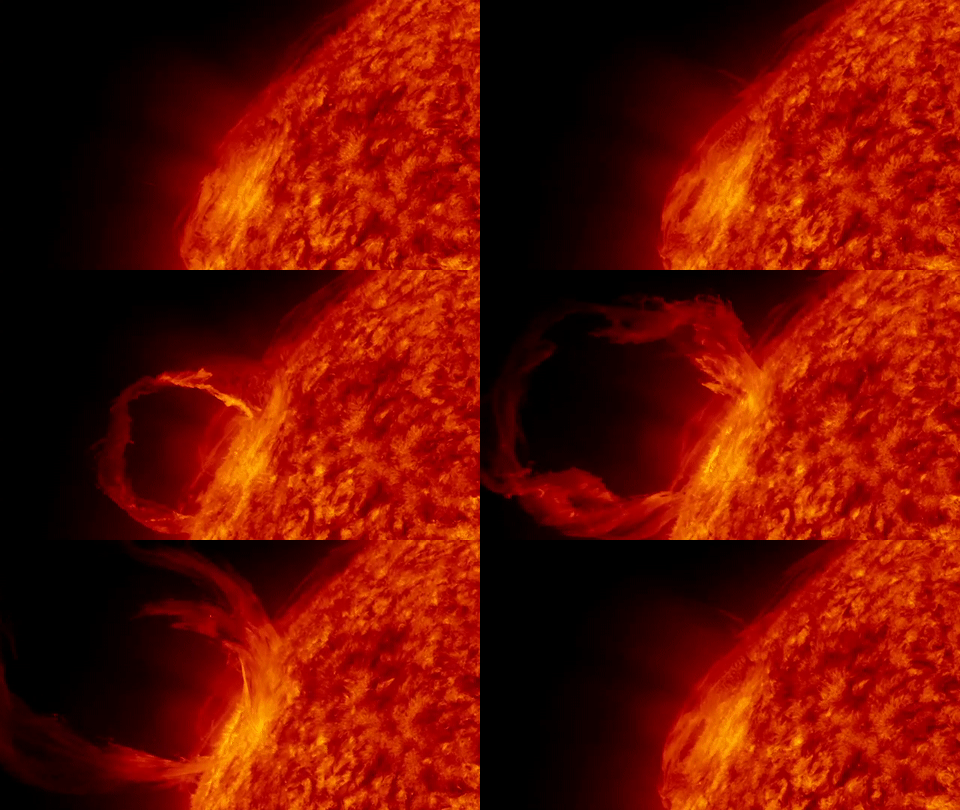
Soon after the instruments opened their doors, the Sun began performing for SDO with this beautiful prominence eruption. This AIA data is from March 30, 2010, showing a wavelength band that is centered around 304 Å. This extreme ultraviolet emission... Continue Reading →

What's that dark spot on Jupiter? It's the shadow of Jupiter's most volcanic moon Io. Since Jupiter shines predominantly by reflected sunlight, anything that blocks that light leaves a shadow. If you could somehow be in that shadow, you would see a total eclipse... Continue Reading →
 Scents of Science