
Every five seconds we close our eyes and blink to moisten them. During this brief moment no light falls on our retina yet it is not constantly dark and we continue to observe a stable picture of our environment. The... Continue Reading →
Researchers led by a team from The University of Texas Medical Branch at Galveston were able to dramatically reduce the pain of fibromyalgia patients with medication that targeted insulin resistance. This discovery could dramatically alter the way that chronic pain... Continue Reading →
Brains of baby boys born prematurely are affected differently and more severely than premature infant girls’ brains. This is according to a study published in the Springer Nature-branded journal Pediatric Research. Lead authors Amanda Benavides and Peg Nopoulos of the University... Continue Reading →

For thousands of years, humans have relied on storytelling to engage, to share emotions and to relate personal experiences. Now, psychologists at McMaster University are exploring the mechanisms deep within the brain to better understand just what happens when we... Continue Reading →

If getting to the gym seems like a struggle, a University of British Columbia researcher wants you to know this: the struggle is real, and it’s happening inside your brain. The brain is where Matthieu Boisgontier and his colleagues went... Continue Reading →

A team of researchers has uncovered the distinct computations that occur when we switch between different languages, a finding that provides new insights into the nature of bilingualism. Previous research has linked language switching with increased activity in areas associated with cognitive... Continue Reading →

Researchers at the University of Maryland School of Medicine (UMSOM) have made a surprising discovery: during fetal development, a particular immune cell seems to play a key role in determining the male or female characteristics of the brain. “This a... Continue Reading →

Engineers and physicians at USC and the University of California, San Francisco have discovered how mood variations can be translated, or decoded, from neural signals in a person’s brain — a process that has not been demonstrated before. The study,... Continue Reading →
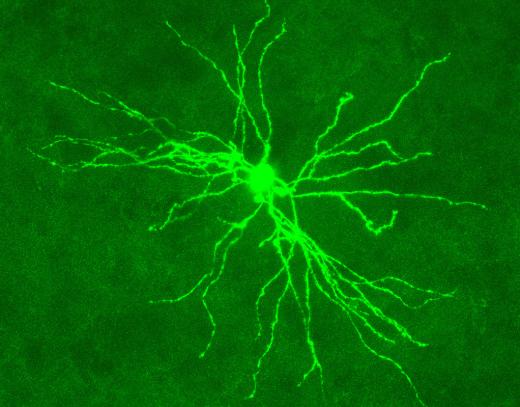
Adults select appropriate behavior with the help of the brain’s “spiny” neurons, and now a study from Columbia neuroscientists shows how these neurons mature during childhood. Why the study is important In disorders like ADHD that arise during childhood, neuroscientists... Continue Reading →
 Scents of Science