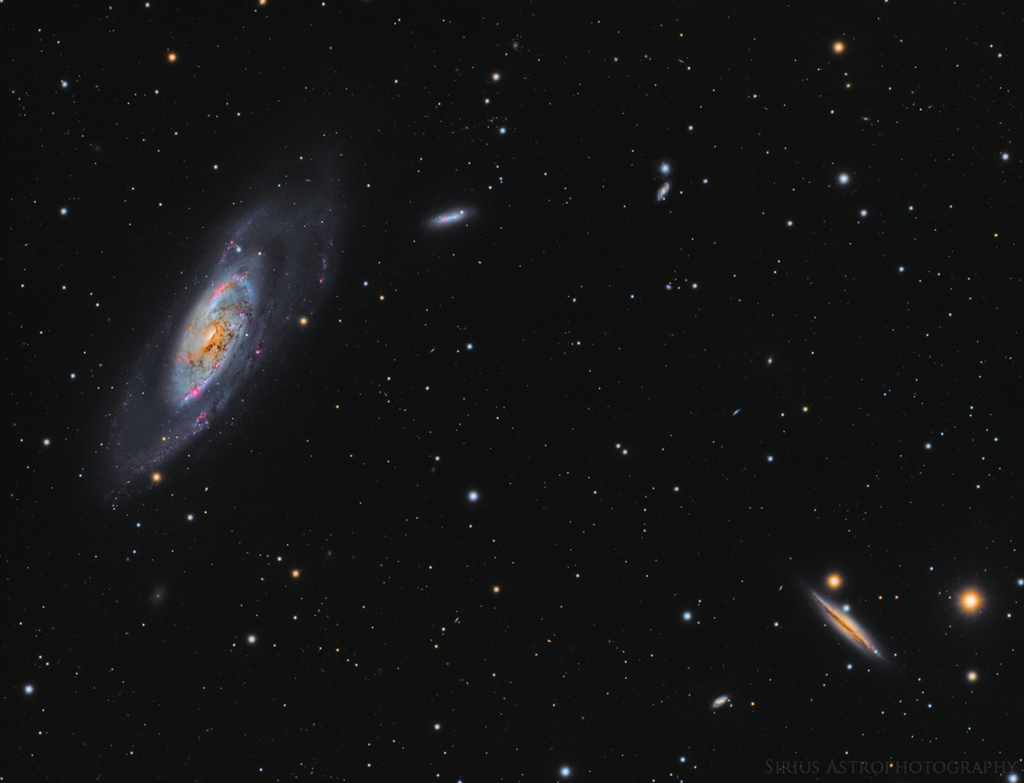
Big, bright, beautiful spiral, Messier 106 dominates this cosmic vista. The nearly two degree wide telescopic field of view looks toward the well-trained constellation Canes Venatici, near the handle of the Big Dipper. Also known as NGC 4258, M106 is about 80,000 light-years across... Continue Reading →

As NASA's Cassini dove close to Saturn in its final year, the spacecraft provided intricate detail on the workings of Saturn's complex rings, new analysis shows. Although the mission ended in 2017, science continues to flow from the data collected.... Continue Reading →
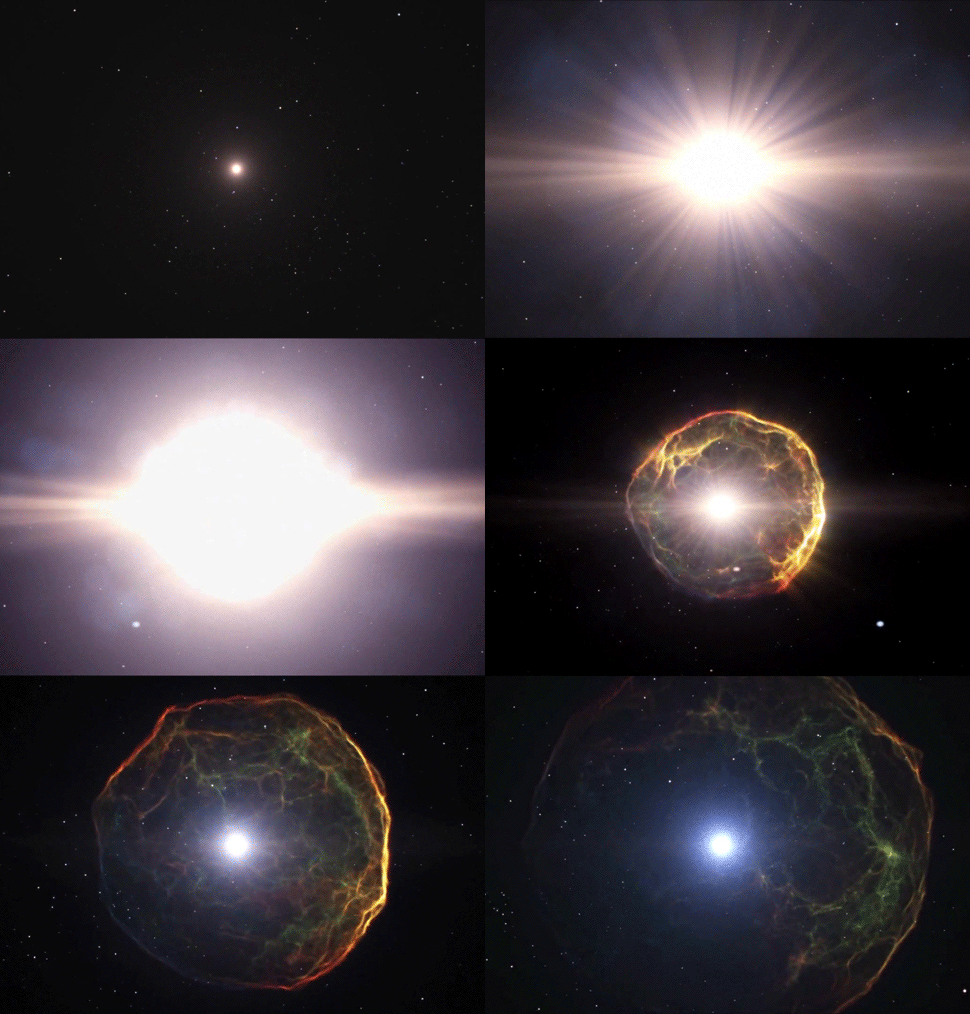
That gold on your ring finger is stellar -- and not just in a complimentary way. In a finding that may overthrow our understanding of where Earth's heavy elements such as gold and platinum come from, new research by a... Continue Reading →
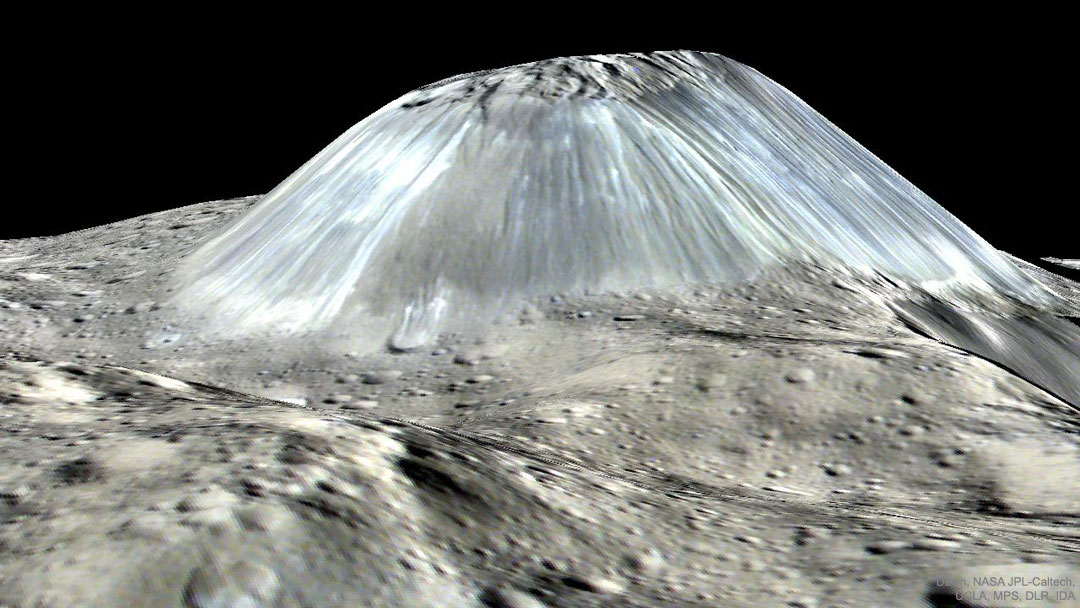
What created this unusual mountain? There is a new theory. Ahuna Mons is the largest mountain on the largest known asteroid in our Solar System, Ceres, which orbits our Sun in the main asteroid belt between Mars andJupiter. Ahuna Mons, though, is like nothing that humanity has ever seen before. For... Continue Reading →
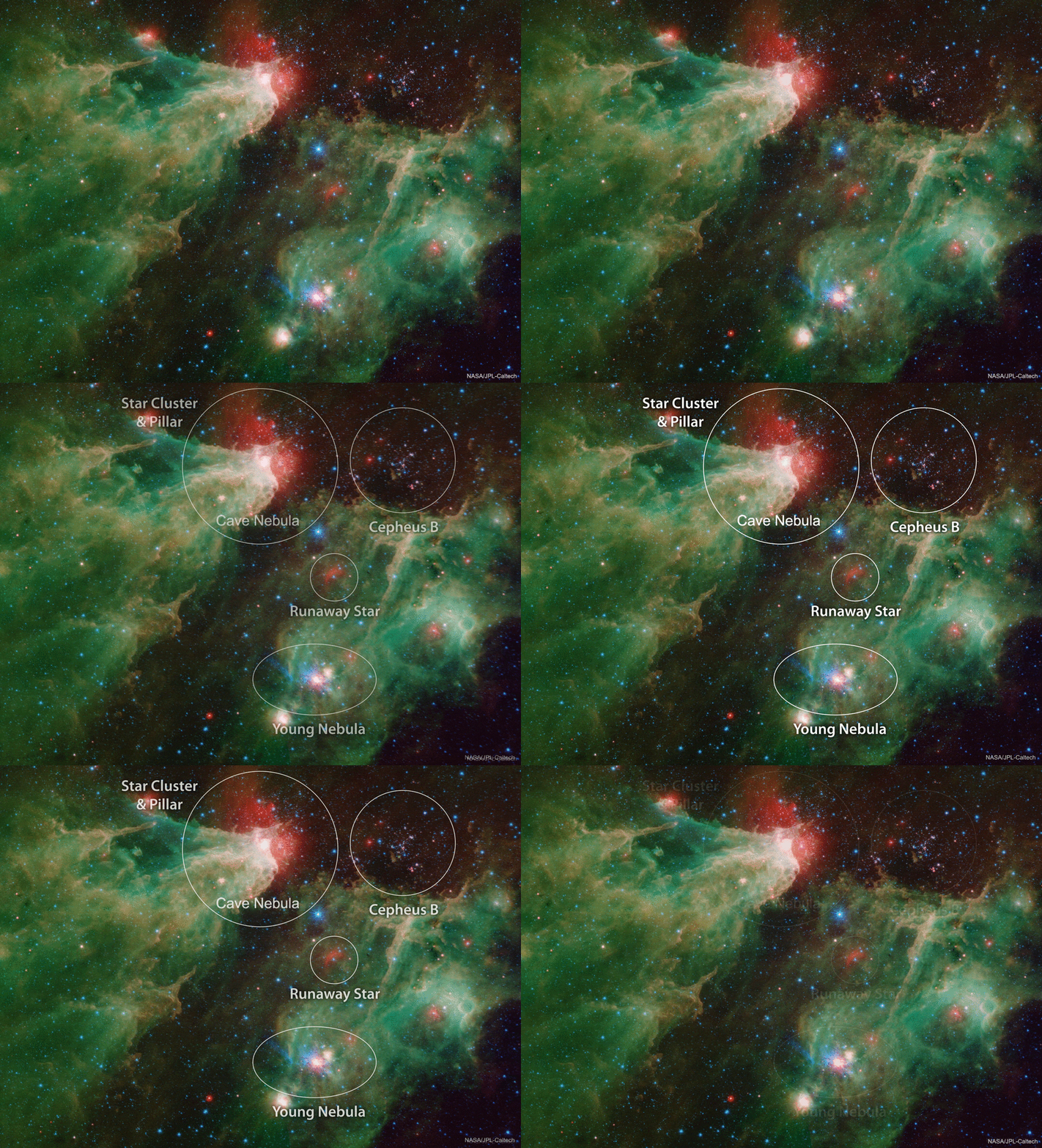
What's happening in and around the Cave Nebula? To help find out, NASA's orbiting Spitzer Space Telescope looked into this optically-dark star-forming region in four colors of infrared light. The Cave Nebula, cataloged as Sh2-155, is quite bright in infrared, revealing details not only of internal pillars of... Continue Reading →

It's one of the greatest and longest-running mysteries surrounding, quite literally, our sun -- why is its outer atmosphere hotter than its fiery surface? University of Michigan researchers believe they have the answer, and hope to prove it with help... Continue Reading →
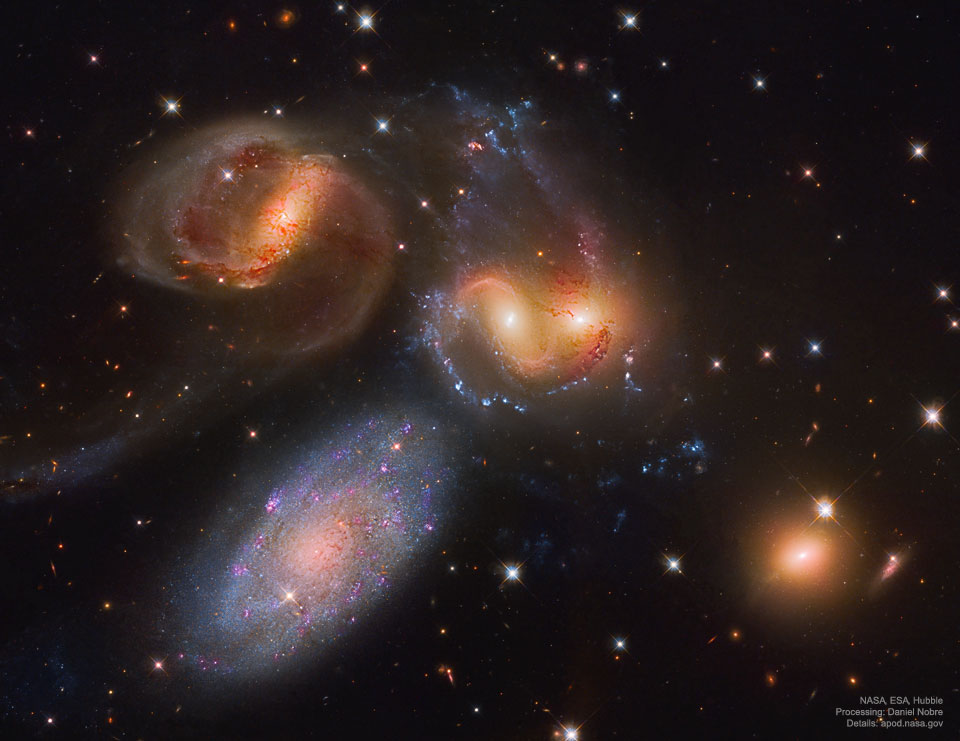
When did these big galaxies first begin to dance? Really only four of the five of Stephan's Quintet are locked in a cosmic tango of repeated close encounters taking place some 300 million light-years away. The odd galaxy out is easy to spot in this... Continue Reading →
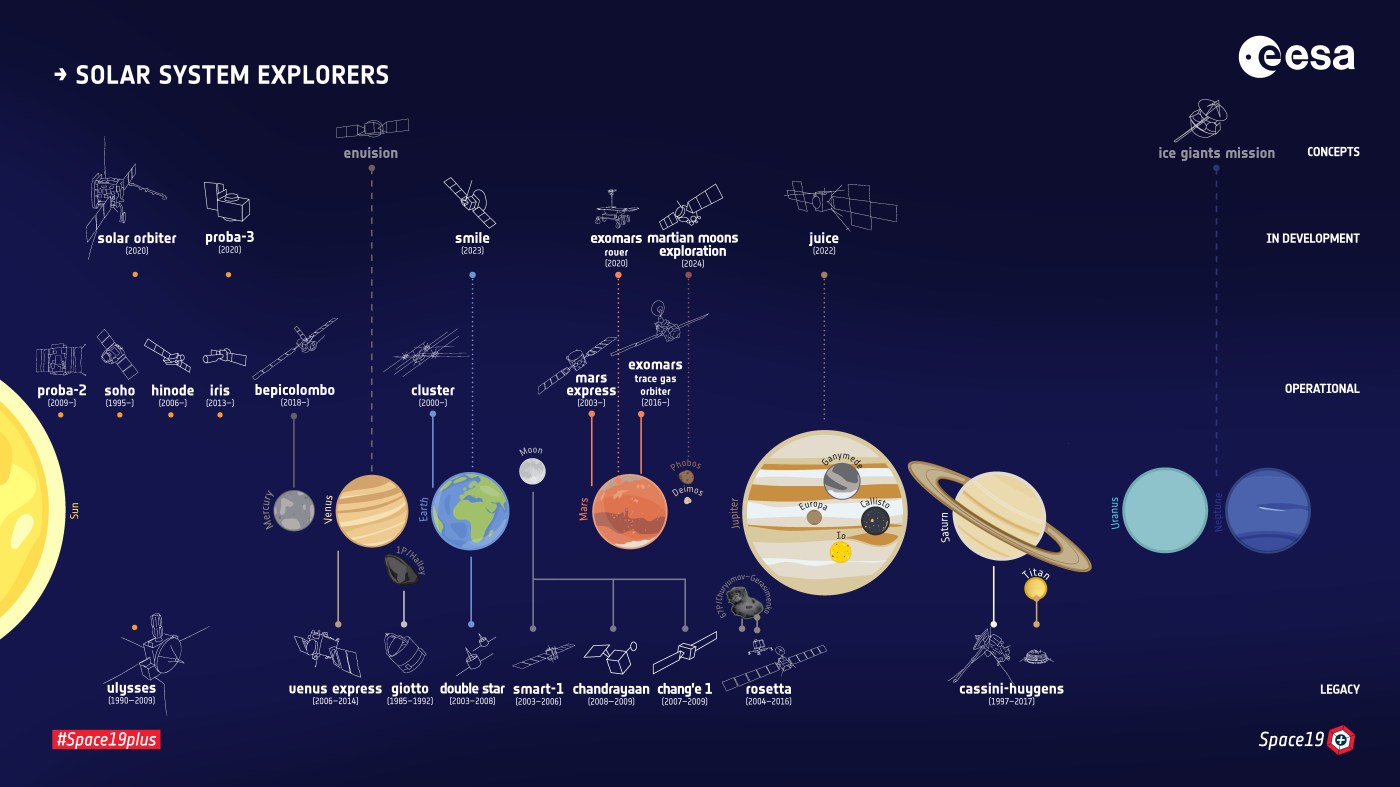
ESA's science missions have been exploring our planetary neighbourhood to tackle the big questions that help to put Earth in context, to understand a planet's interaction with its host star, and to search for habitable worlds. With more and more... Continue Reading →
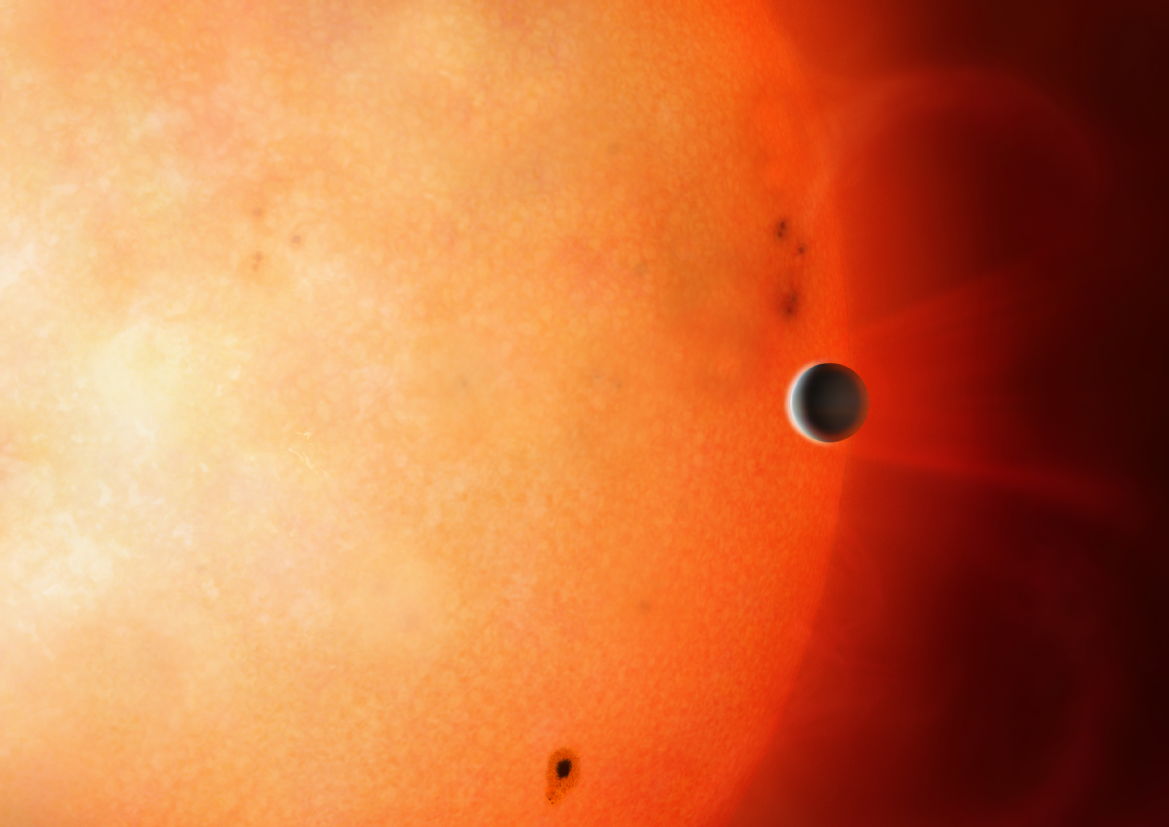
A Neptunian planet has been found in what should be a 'Neptunian Desert' by telescopes run by the University of Warwick in an international collaboration of astronomers.NGTS-4b is 20% smaller than Neptune, about 3 times the size of Earth, and... Continue Reading →
 Scents of Science