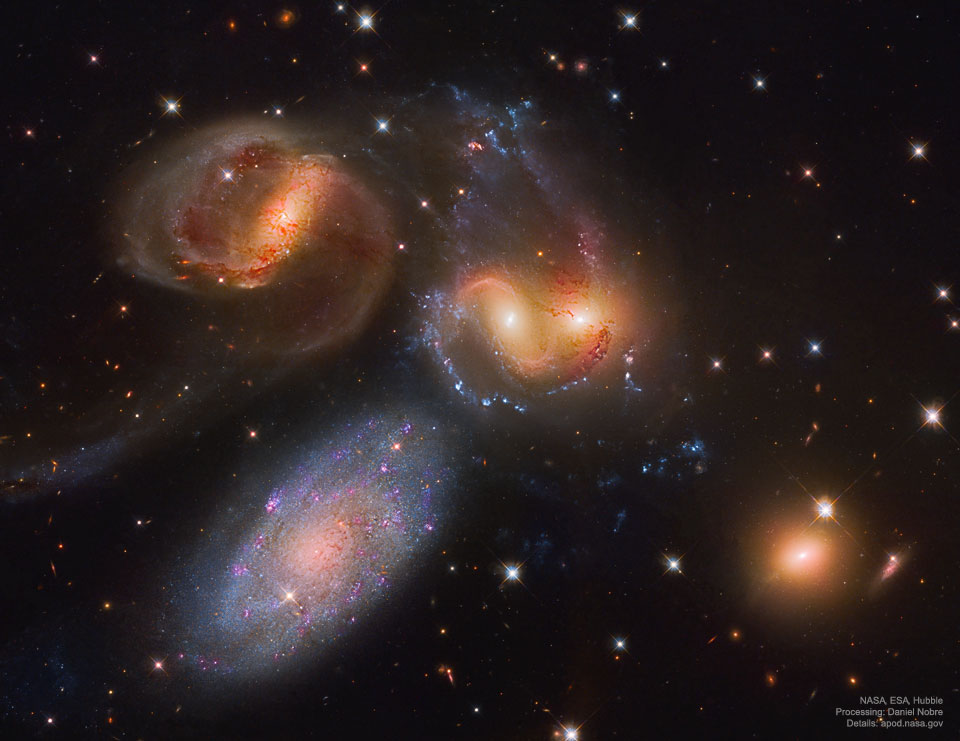
When did these big galaxies first begin to dance? Really only four of the five of Stephan's Quintet are locked in a cosmic tango of repeated close encounters taking place some 300 million light-years away. The odd galaxy out is easy to spot in this... Continue Reading →
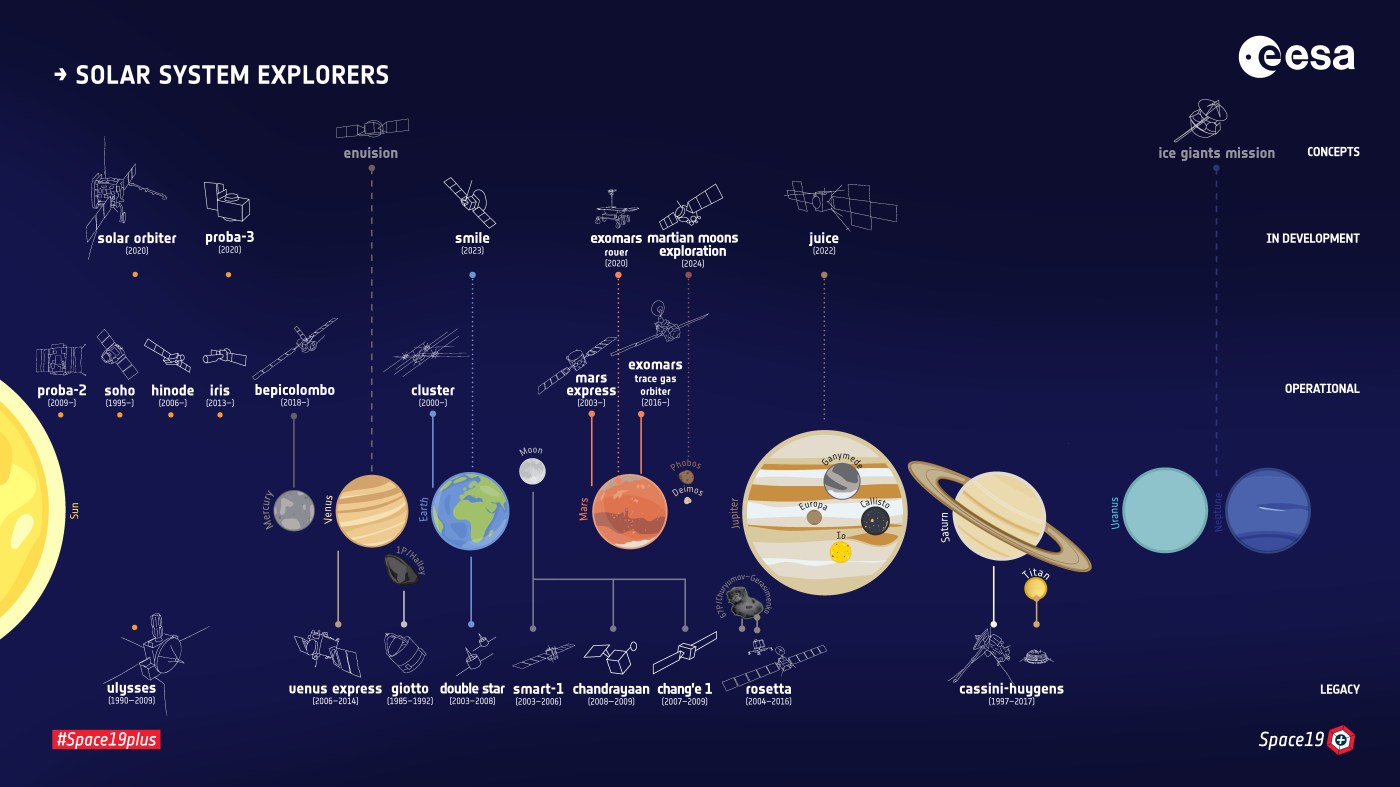
ESA's science missions have been exploring our planetary neighbourhood to tackle the big questions that help to put Earth in context, to understand a planet's interaction with its host star, and to search for habitable worlds. With more and more... Continue Reading →
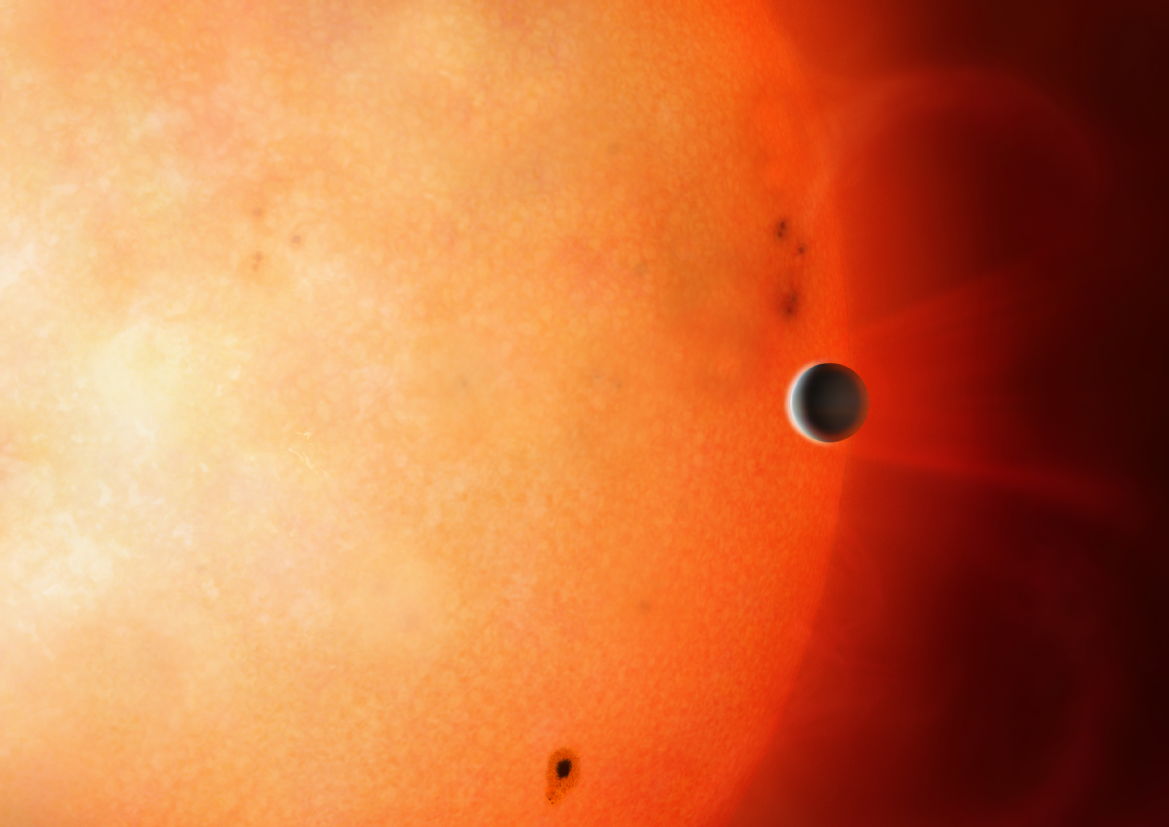
A Neptunian planet has been found in what should be a 'Neptunian Desert' by telescopes run by the University of Warwick in an international collaboration of astronomers.NGTS-4b is 20% smaller than Neptune, about 3 times the size of Earth, and... Continue Reading →
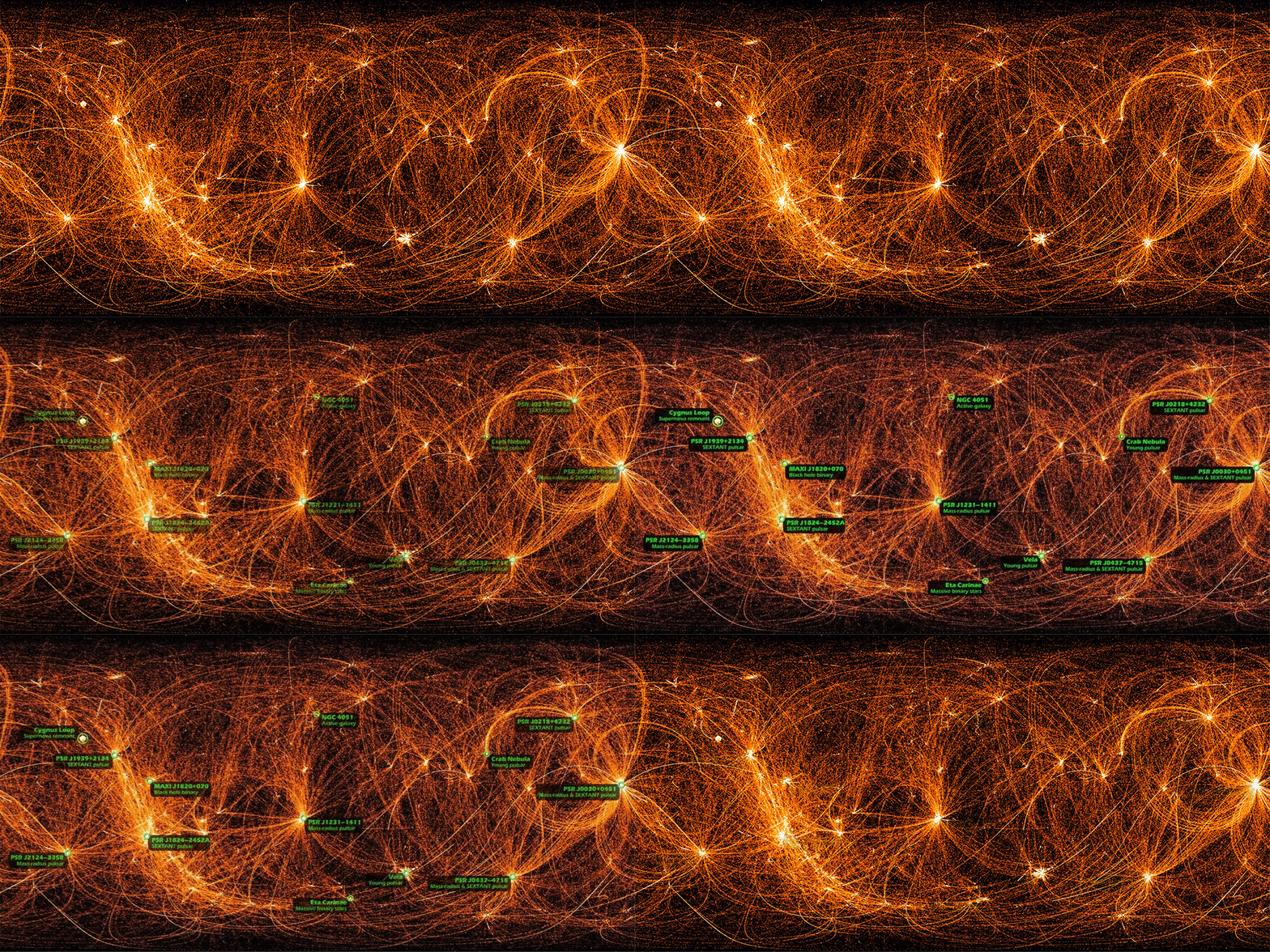
In this image, numerous sweeping arcs seem to congregate at various bright regions. You may wonder: What is being shown? Air traffic routes? Information moving around the global internet? Magnetic fields looping across active areas on the Sun? In fact,... Continue Reading →
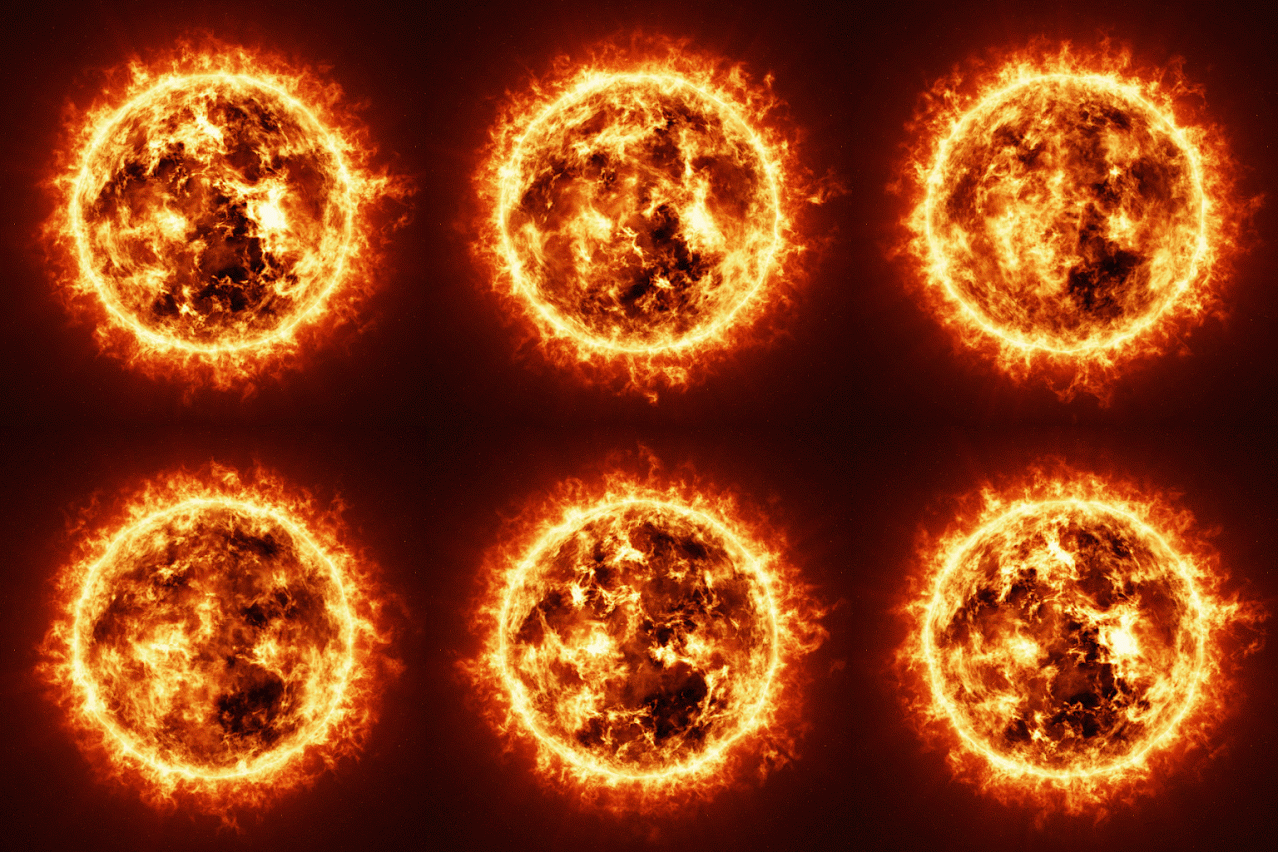
The scientists used large radio telescopes and ultraviolet cameras on a NASA spacecraft to better understand the exotic but poorly understood "fourth state of matter." Known as plasma, this matter could hold the key to developing safe, clean and efficient... Continue Reading →

A gassy insulating layer beneath the icy surfaces of distant celestial objects could mean there are more oceans in the universe than previously thought. Computer simulations provide compelling evidence that an insulating layer of gas hydrates could keep a subsurface... Continue Reading →
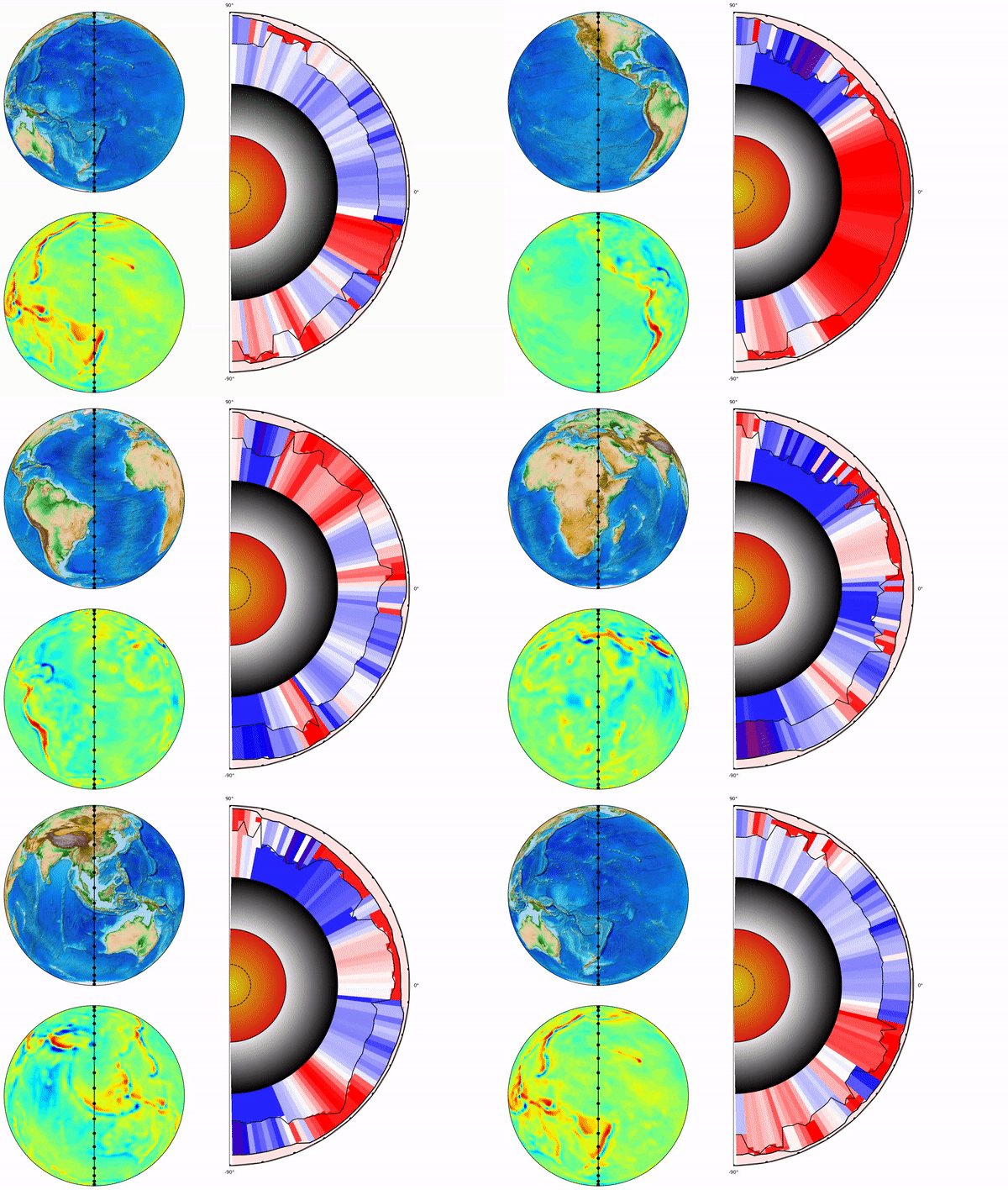
A thorough understanding of the ‘solid Earth’ system is essential for deciphering the links between processes occurring deep inside Earth and those occurring nearer the surface that lead to seismic activity such as earthquakes and volcanic eruptions, the rise of mountains... Continue Reading →

The Moon is shrinking as its interior cools, getting more than about 150 feet (50 meters) skinnier over the last several hundred million years. Just as a grape wrinkles as it shrinks down to a raisin, the Moon gets wrinkles... Continue Reading →

Researchers using ALMA data discovered an aluminum-bearing molecule for the first time around a young star. Aluminum rich inclusions found in meteorites are some of the oldest solid objects formed in the Solar System, but their formation process and stage... Continue Reading →
 Scents of Science