
In a new study, U.S. and Austrian physicists have observed quantum entanglement among "billions of billions" of flowing electrons in a quantum critical material. The research, which appears this week in Science, examined the electronic and magnetic behavior of a "strange... Continue Reading →
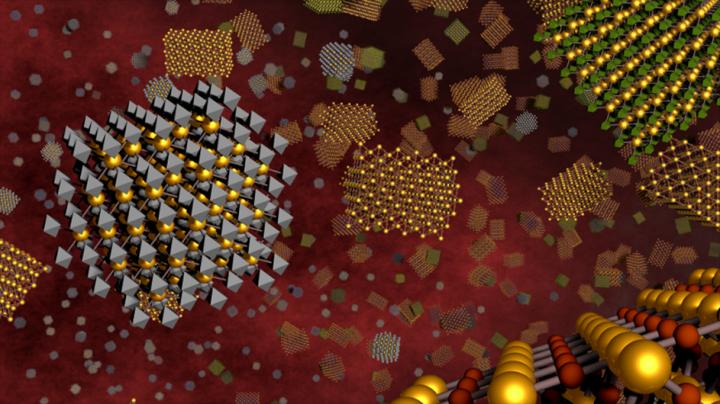
Researchers at Columbia University and University of California, San Diego, have introduced a novel "multi-messenger" approach to quantum physics that signifies a technological leap in how scientists can explore quantum materials. The findings appear in a recent article published in Nature... Continue Reading →

On a hillside above Stanford University, the SLAC National Accelerator Laboratory operates a scientific instrument nearly 2 miles long. In this giant accelerator, a stream of electrons flows through a vacuum pipe, as bursts of microwave radiation nudge the particles... Continue Reading →
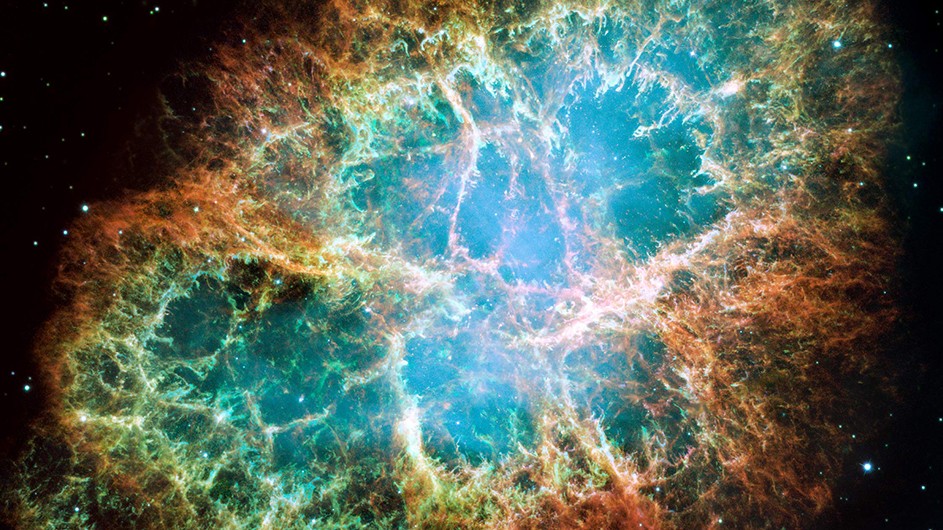
For decades, scientists have speculated about the origin of the electromagnetic radiation emitted from celestial regions that host black holes and neutron stars -- the most mysterious objects in the universe. Astrophysicists believe that this high-energy radiation -- which makes... Continue Reading →

Using the first new method in half a century for measuring the size of the proton via electron scattering, the PRad collaboration has produced a new value for the proton's radius in an experiment conducted at the Department of Energy's... Continue Reading →
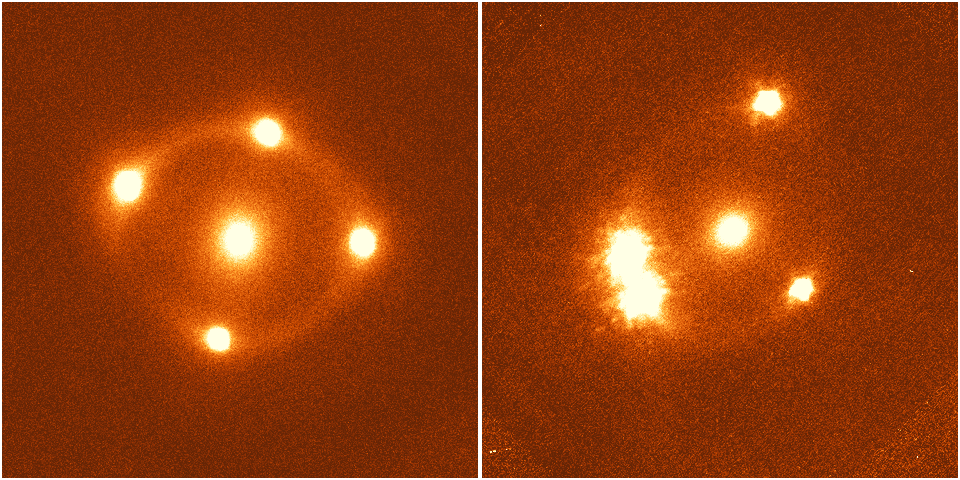
New measurements of the rate of expansion of the universe, led by astronomers at the University of California, Davis, add to a growing mystery: Estimates of a fundamental constant made with different methods keep giving different results. "There's a lot... Continue Reading →

Giant molecules can be in two places at once, thanks to quantum physics. That's something that scientists have long known is theoretically true based on a few facts: Every particle or group of particles in the universe is also a wave... Continue Reading →

The search narrows for a mysterious form of matter predicted from Einstein's theory of special relativity. After more than a decade of looking, scientists at the world's largest particle collider believe that they are on the verge of finding it. But... Continue Reading →

Neutron stars -- the compressed remains of massive stars gone supernova -- are the densest "normal" objects in the known universe. (Black holes are technically denser, but far from normal.) Just a single sugar-cube worth of neutron-star material would weigh... Continue Reading →
 Scents of Science