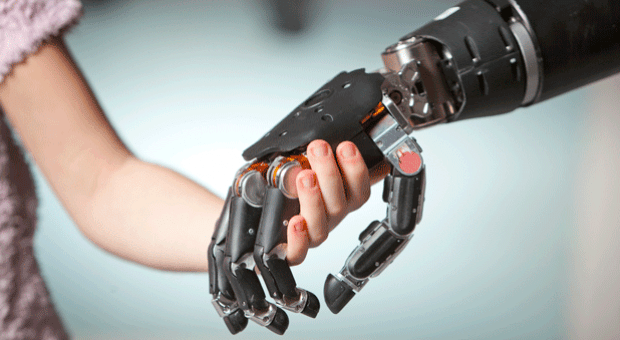
The 2010s brought major advancements in every aspect of the life sciences and ushered in an era of collaboration and multidisciplinary approaches. The Scientist spoke with Steven Wiley, a systems biologist at Pacific Northwest National Laboratory and member of TS’s editorial board, about what... Continue Reading →

Some of the effects of air pollution on health are well documented -lung cancer, stroke, respiratory diseases, and a long etcetera- but for others there is less scientific evidence. Such is the case of bone health: there are only a... Continue Reading →
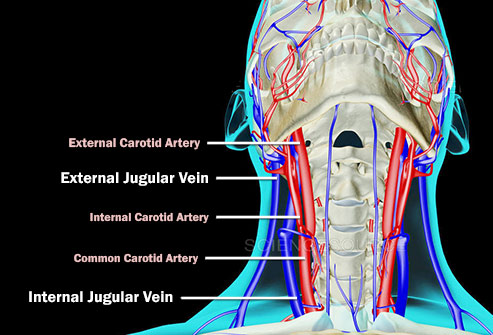
An unidentified astronaut aboard the International Space Station had a deep vein thrombosis (DVT) — or blood clot — in the jugular vein of their neck, according to a new case study. The astronaut's identity and exactly when the incident... Continue Reading →

A new study indicates that following the Mediterranean diet may help kidney transplant recipients maintain transplant kidney function. The findings appear in an upcoming issue of CJASN. Despite improvements in the survival of transplanted kidneys in the early years after transplantation,... Continue Reading →

When Vivian Mushahwar first applied to grad school, she wrote about her idea to fix paralysis by rewiring the spinal cord. It was only after she was accepted into a bioengineering program that the young electrical engineer learned her idea... Continue Reading →

Ultra-processed foods, which account for more than half of an average American's daily calories, are linked to lower measures of cardiovascular health, according to preliminary research to be presented at the American Heart Association's Scientific Sessions 2019 -- November 16-18... Continue Reading →

One of the enduring puzzles of hearing loss is the decline in a person's ability to determine where a sound originates, a key survival faculty that allows animals -- from lizards to humans -- to pinpoint the location of danger,... Continue Reading →

Over the last decade, evidence has mounted that the measles vaccine protects in not one but two ways: Not only does it prevent the well-known acute illness with spots and fever that frequently sends children to the hospital, but it... Continue Reading →

This device is used to immobilize young children in order to get their x-rays, when a child is very sick and an x-ray is needed to diagnose them. It does NOT hurt them at all. Taking multiple images of a... Continue Reading →
 Scents of Science