
This image shows knots of cold, dense interstellar gas where new stars are forming. These Free-floating Evaporating Gaseous Globules (frEGGs) were first seen in Hubble’s famous 1995 image of the Eagle Nebula. Because these lumps of gas are dark, they are... Continue Reading →

With the successful extension of Webb’s second sunshield mid-boom, the observatory has passed another critical deployment milestone. Webb’s sunshield now resembles its full, kite-shaped form in space. https://videopress.com/v/iAo2eYfg?resizeToParent=true&cover=true&autoPlay=true&preloadContent=metadata Engineers began to deploy the second (starboard) mid-boom at 6:31 p.m. EST... Continue Reading →
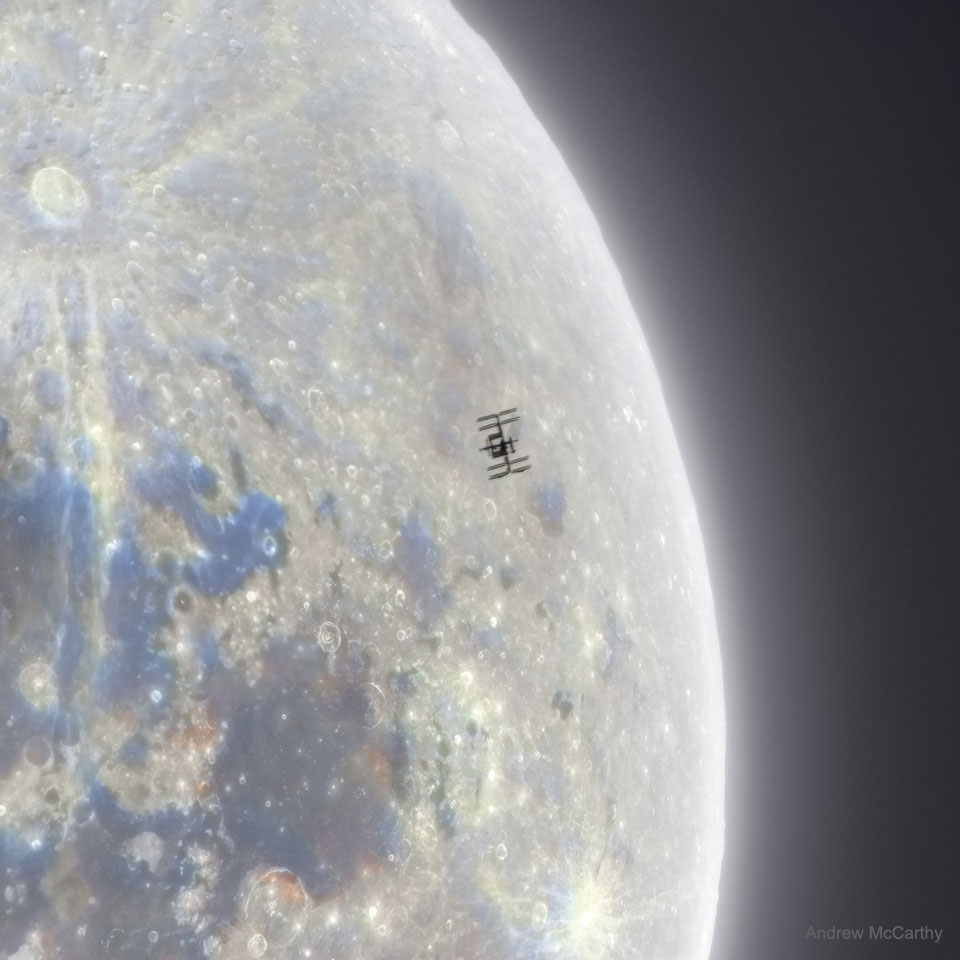
What's that unusual spot on the Moon? It's the International Space Station. Using precise timing, the Earth-orbiting space platform was photographed in front of a partially lit gibbous Moon last month. The featured composite, taken from Payson, Arizona, USA last month, was intricately composed by combining, in part, many... Continue Reading →

Stars are born from clouds of gas and dust that collapse under their own gravitational attraction. As the cloud collapses, a dense, hot core forms and begins gathering dust and gas, creating an object called a “protostar.” This Hubble infrared... Continue Reading →

A near-Earth asteroid named Kamo`oalewa could be a fragment of our moon, according to a new paper published in Nature Communications Earth and Environment by a team of astronomers led by the University of Arizona. Kamo`oalewa is a quasi-satellite --... Continue Reading →
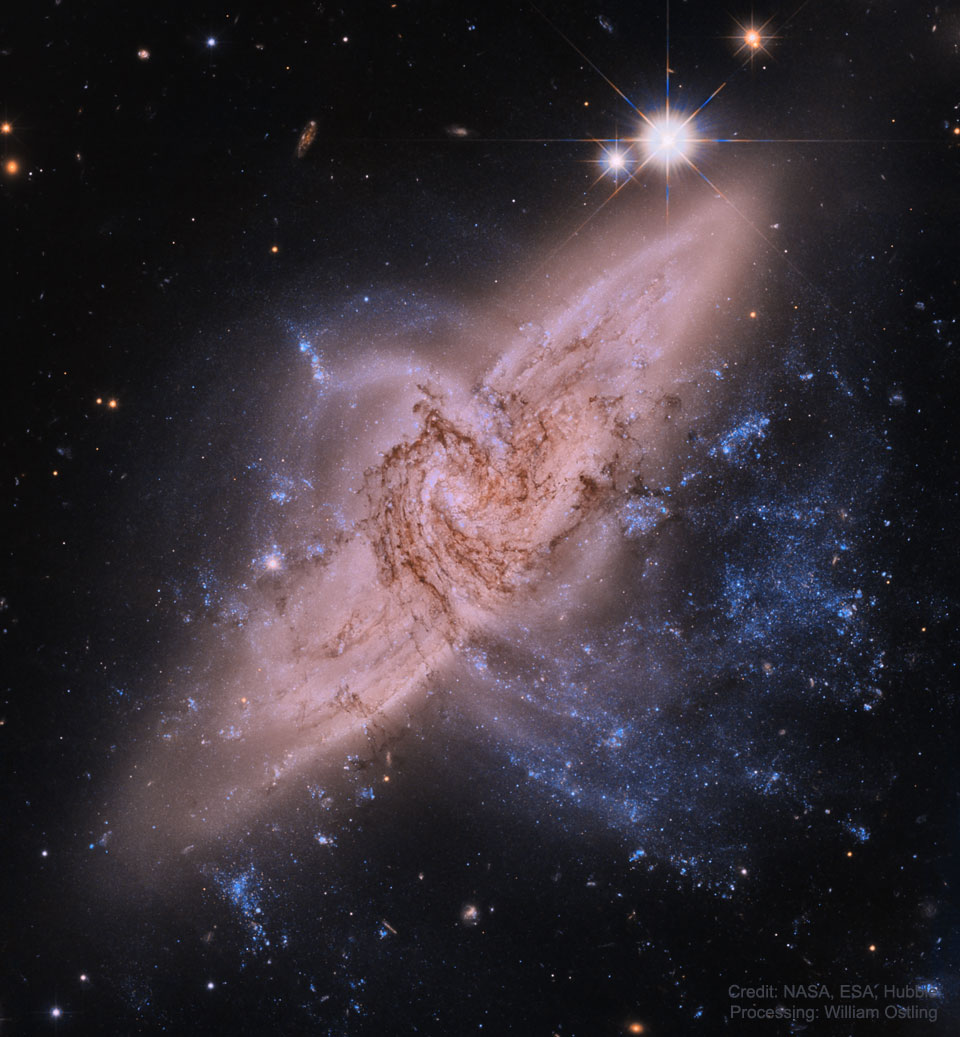
Why doesn't the nearby galaxy create a gravitational lensing effect on the background galaxy? It does, but since both galaxies are so nearby, the angular shift is much smaller than the angular sizes of the galaxies themselves. The featured Hubble image of NGC 3314 shows two large spiral galaxies... Continue Reading →

The joint European-Japanese BepiColombo mission captured this view of Mercury on 1 October 2021 as the spacecraft flew past the planet for a gravity assist manoeuvre. The image was taken at 23:44:12 UTC by the Mercury Transfer Module’s Monitoring Camera... Continue Reading →

What happening above that volcano? Something very unusual -- a volcanic light pillar. More typically, light pillars are caused by sunlight and so appear as a bright column that extends upward above a rising or setting Sun. Alternatively, other light pillars -- some quite colorful --... Continue Reading →
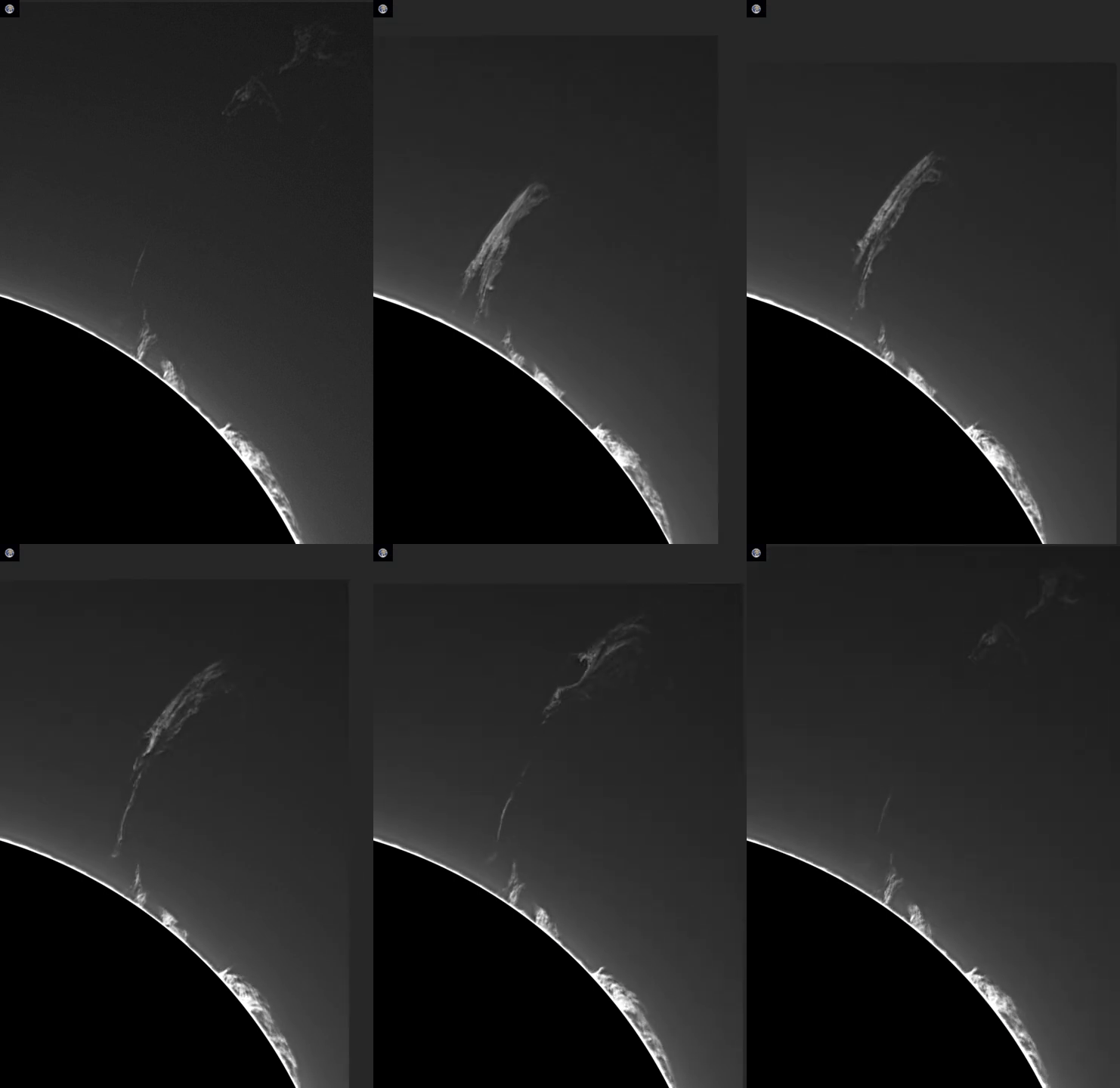
Why, sometimes, does part of the Sun's atmosphere leap into space? The reason lies in changing magnetic fields that thread through the Sun's surface. Regions of strong surface magnetism, known as active regions, are usually marked by dark sunspots. Active regions can channel charged... Continue Reading →
 Scents of Science