
NASA has big plans for returning astronauts to the Moon in 2024, a stepping stone on the path to sending humans to Mars. But where should the first people on the Red Planet land? A new paper published in Geophysical Research... Continue Reading →

In August 2018, NASA's Parker Solar Probe launched to space, soon becoming the closest-ever spacecraft to the Sun. With cutting-edge scientific instruments to measure the environment around the spacecraft, Parker Solar Probe has completed three of 24 planned passes through... Continue Reading →

Saturn's gravity exerts tidal forces on Enceladus, which cause heating and cooling of the tiny world. Those forces are strongest at the poles. As liquid water solidifies into ice under the outer ice shell, it expands in volume, putting pressure... Continue Reading →
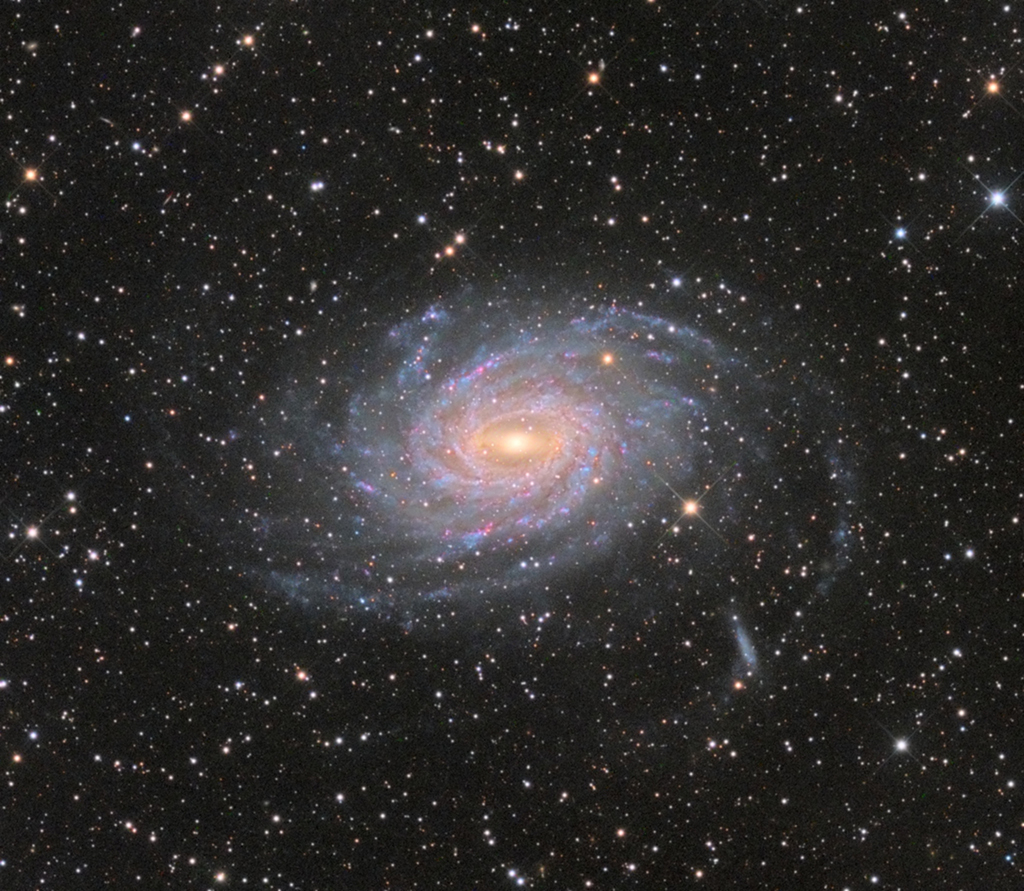
Beautiful spiral galaxy NGC 6744 is nearly 175,000 light-years across, larger than our own Milky Way. It lies some 30 million light-years distant in the southern constellation Pavo and appears as only a faint, extended object in small telescopes. We see the... Continue Reading →

Is this one galaxy or two? This question came to light in 1950 when astronomer Arthur Hoag chanced upon this unusual extragalactic object. On the outside is a ring dominated by bright blue stars, while near the center lies a ball of much redder... Continue Reading →
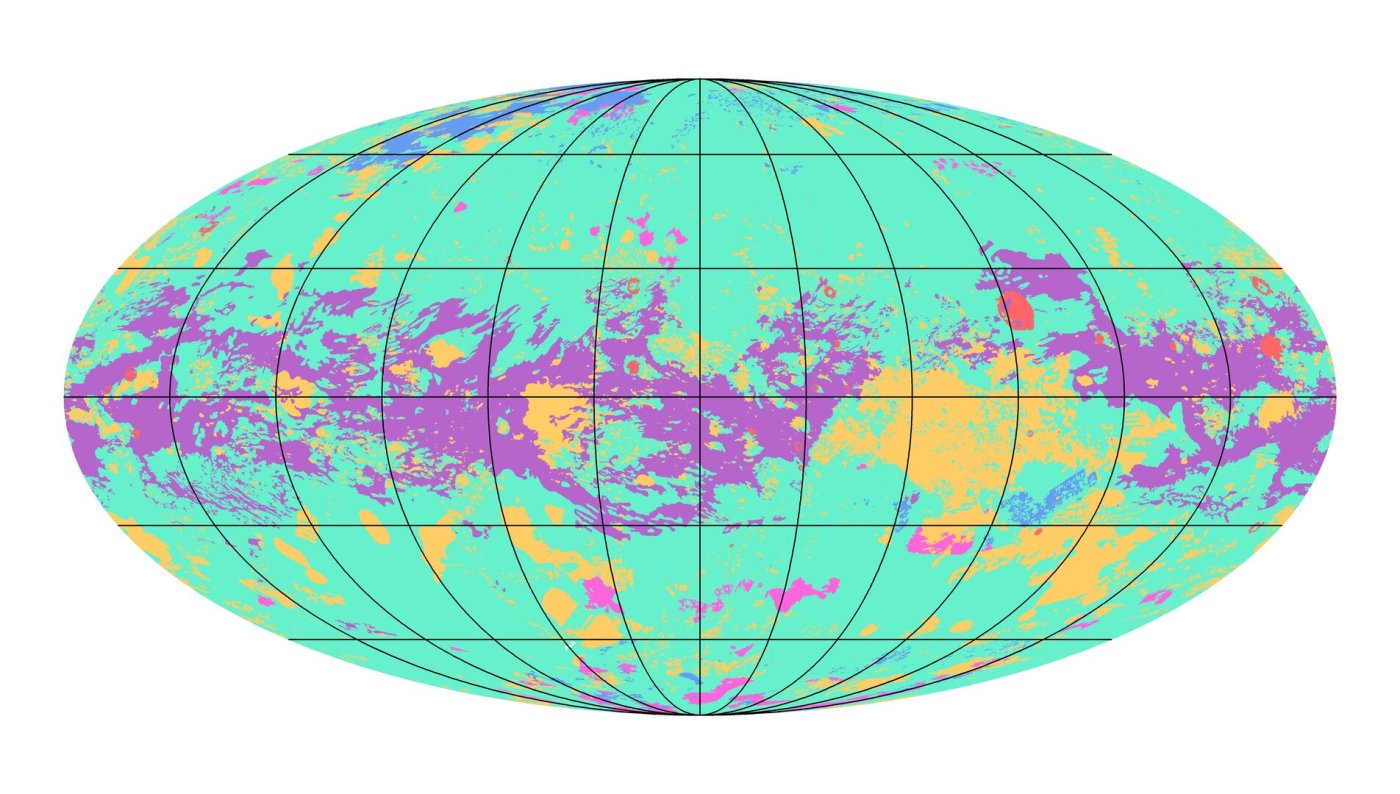
The first map of the global geology of Saturn's largest moon, Titan, has been completed, revealing a dynamic world with dunes, lakes, plains, craters and other terrains. The map is based on data from the international Cassini mission, which performed more than... Continue Reading →

Located about 5.8 billion light years from Earth in the Phoenix Constellation, astronomers have confirmed the first example of a galaxy cluster where large numbers of stars are being born at its core. Galaxy clusters are the largest structures in... Continue Reading →

Station Commander Luca Parmitano of the European Space Agency conducts repairs while attached to the space station’s robotic arm during the first spacewalk to repair the Alpha Magnetic Spectrometer on Nov. 15, 2019. He and NASA astronaut Andrew Morgan (out of frame) worked for more than six... Continue Reading →

Gamma-ray bursts are the most powerful explosions in the cosmos. These explosive events last a fraction of a second to several minutes and emit the same amount of gamma rays as all the stars in the universe combined. Such extreme... Continue Reading →
 Scents of Science