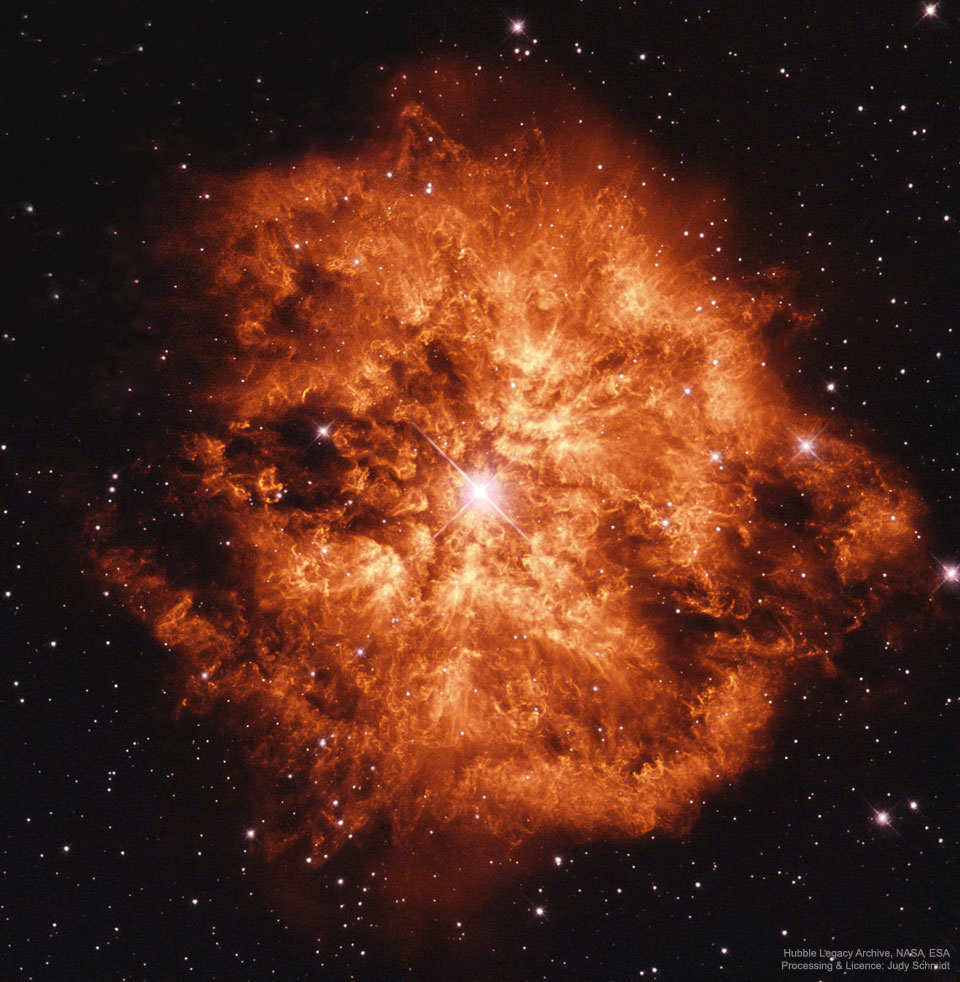
Some stars explode in slow motion. Rare, massive Wolf-Rayet stars are so tumultuous and hot that they are slowly disintegrating right before our telescopes. Glowing gas globs each typically over 30 times more massive than the Earth are being expelled by violent stellar winds. Wolf-Rayet star WR... Continue Reading →
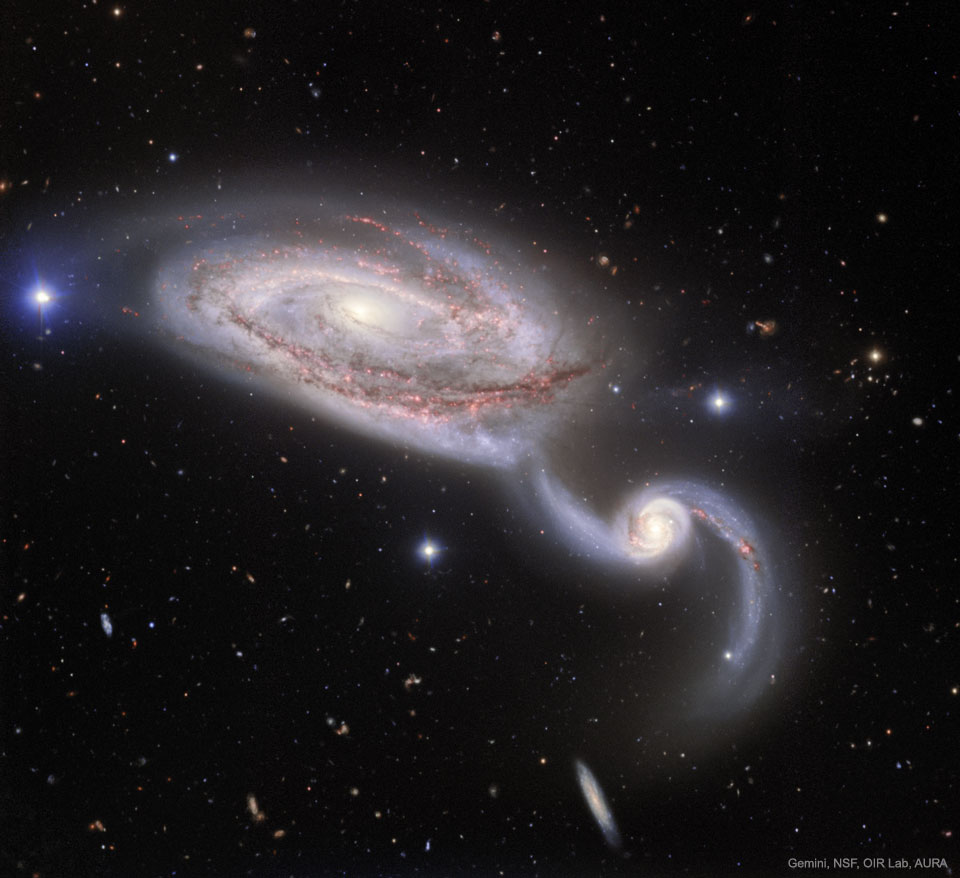
If you like slow dances, then this may be one for you. A single turn in this dance takes several hundred million years. Two galaxies, NGC 5394 and NGC 5395, slowly whirl about each other in a gravitational interaction that sets off a flourish... Continue Reading →

Blown by fast winds from a hot, massive star, this cosmic bubble is much larger than the dolphin it appears to be. Cataloged as Sharpless 2-308 it lies some 5,200 light-years away toward the constellation of the Big Dog (Canis Major) and... Continue Reading →

University students and researchers working on a NASA mission orbiting a near-Earth asteroid have made an unexpected detection of a phenomenon 30 thousand light years away. Last fall, the student-built Regolith X-Ray Imaging Spectrometer (REXIS) onboard NASA’s OSIRIS-REx spacecraft detected... Continue Reading →
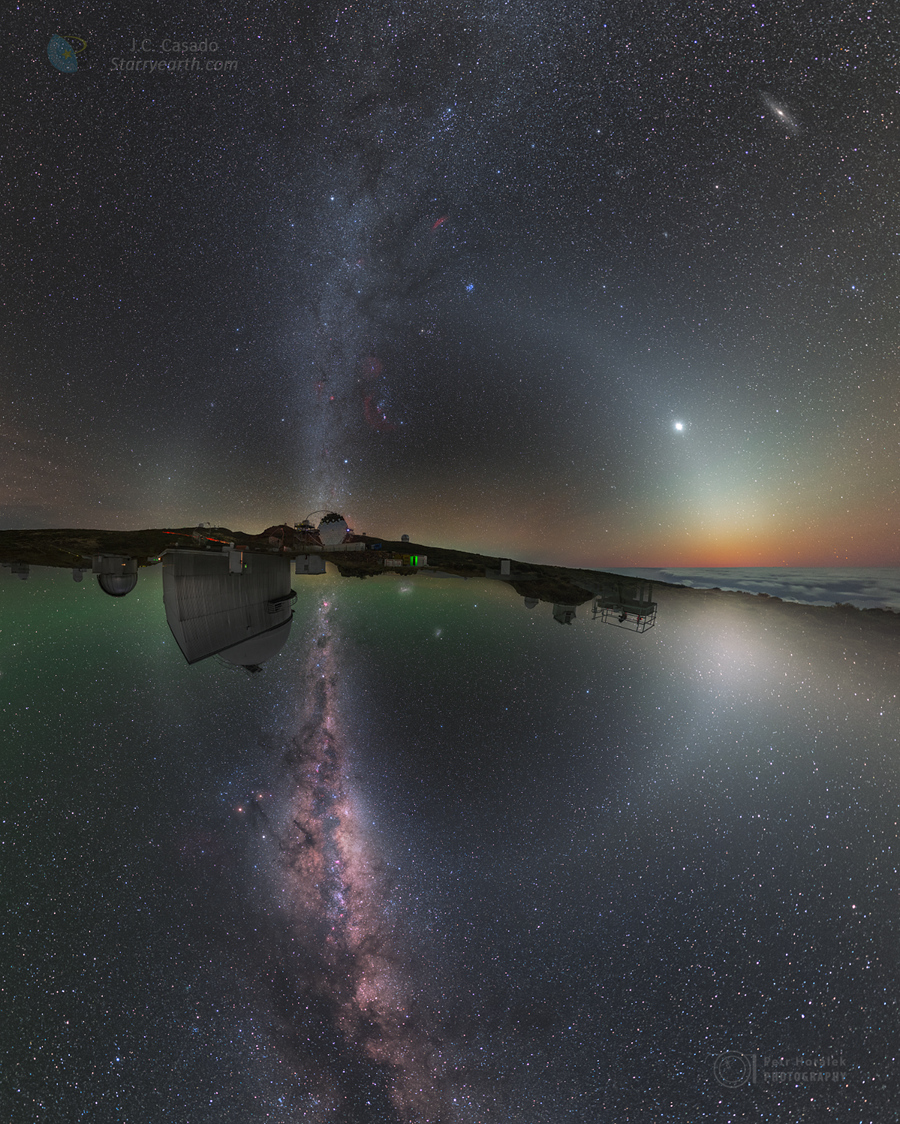
The Sun is hidden by a horizon that runs across the middle in this two hemisphere view of Earth's night sky. The digitally stitched mosaics were recorded from corresponding latitudes, one 29 degrees north and one 29 degrees south of the... Continue Reading →

Most ordinary matter is held together by an invisible subatomic glue known as the strong nuclear force -- one of the four fundamental forces in nature, along with gravity, electromagnetism, and the weak force. The strong nuclear force is responsible... Continue Reading →
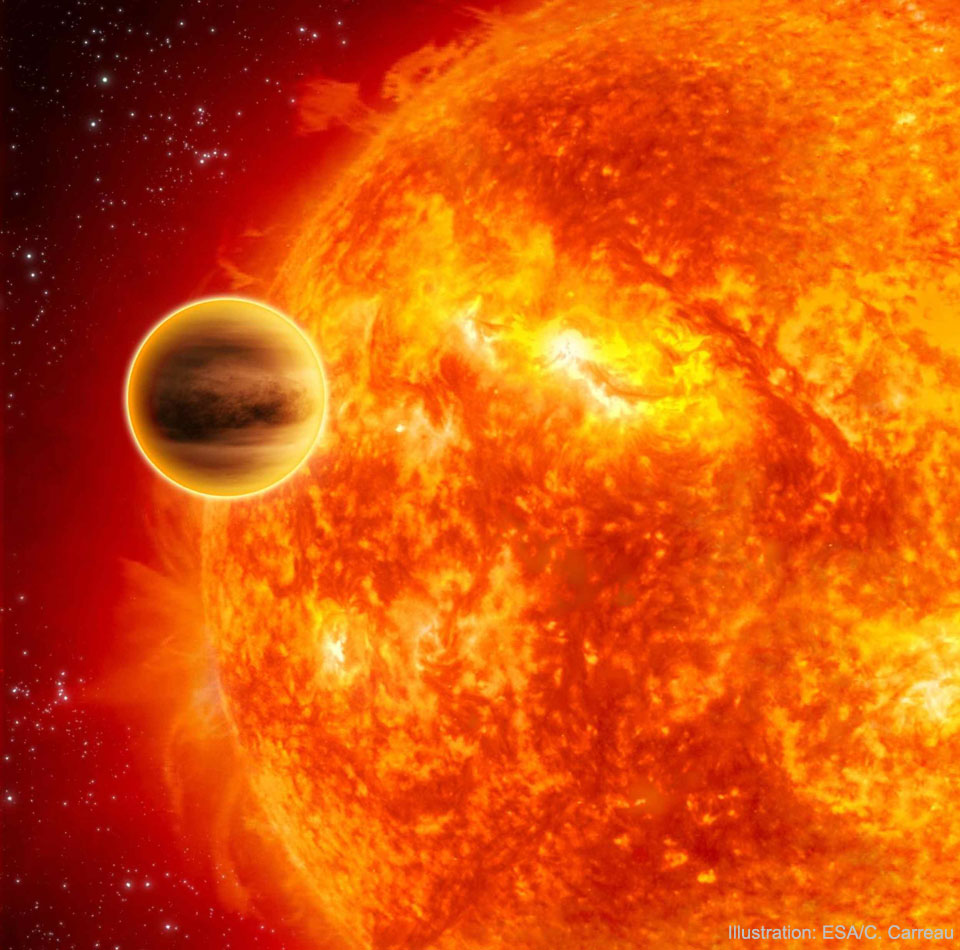
This hot jupiter is doomed. Hot jupiters are giant planets like Jupiter that orbit much closer to their parent stars than Mercury does to our Sun. But some hot jupiters are more extreme than others. NGTS-10b, illustrated generically, is the closest and fastest-orbiting giant planet yet discovered, circling its home... Continue Reading →
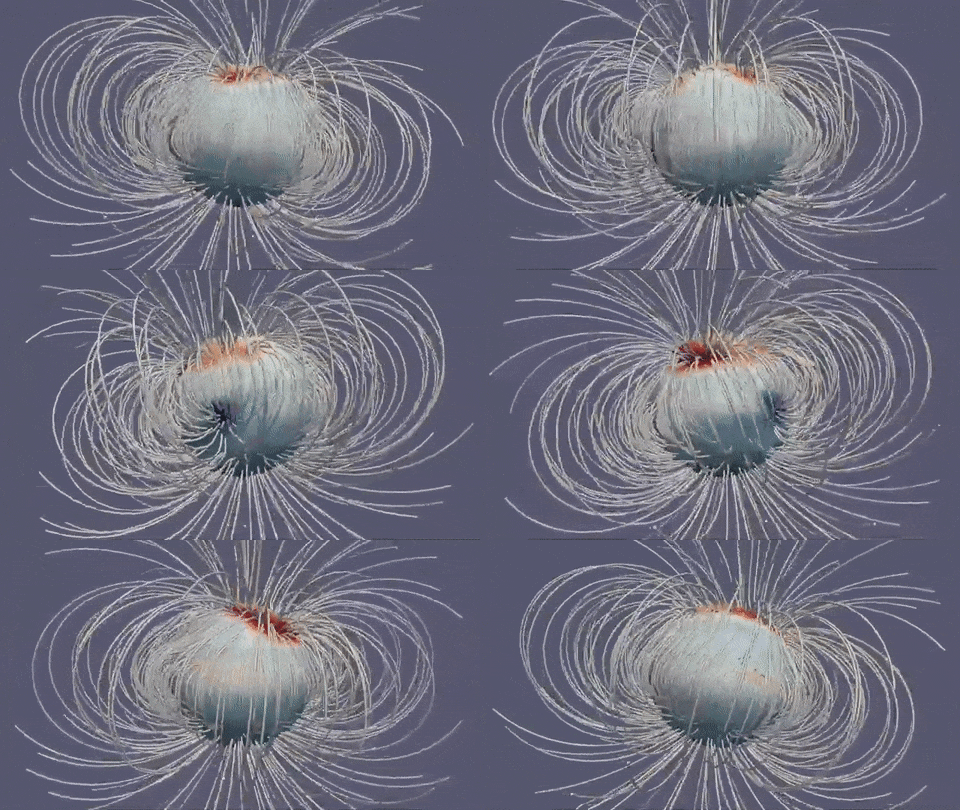
How similar is Jupiter's magnetic field to Earth's? NASA's robotic Juno spacecraft has found that Jupiter's magnetic field is surprisingly complex, so that the Jovian world does not have single magnetic poles like our Earth. A snapshot of Jupiter's magnetic field at one moment in time, as animated... Continue Reading →
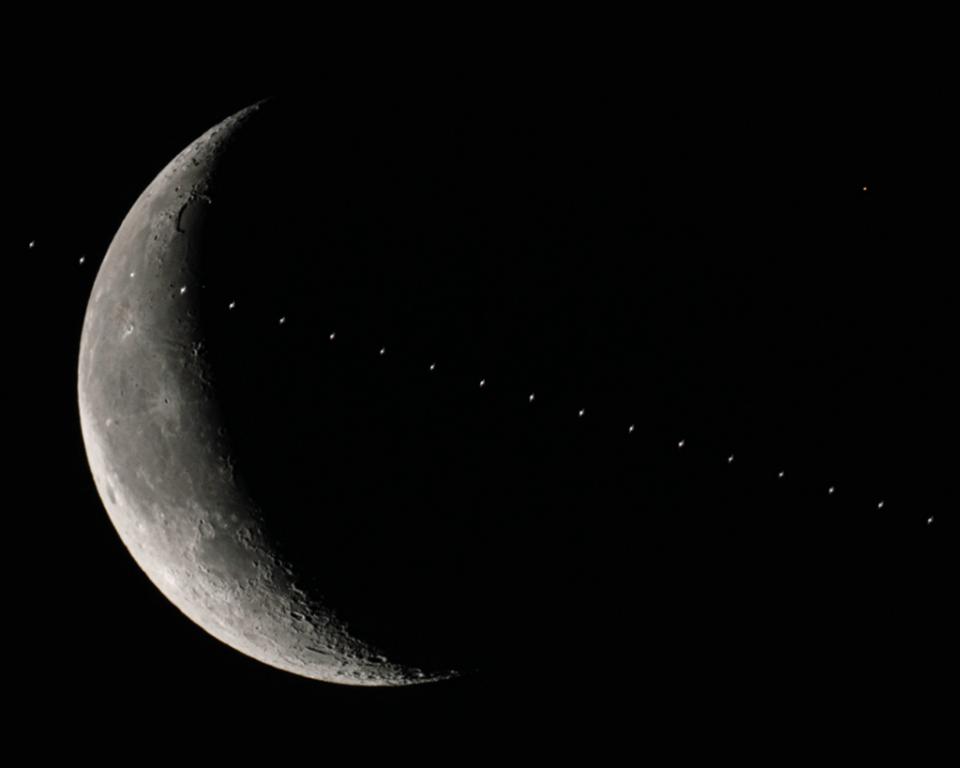
On February 18, as civil twilight began in northern New Mexico skies, the International Space Station, a waning crescent Moon, and planet Mars for a moment shared this well-planned single field of view. From the photographer's location the sky had... Continue Reading →
 Scents of Science