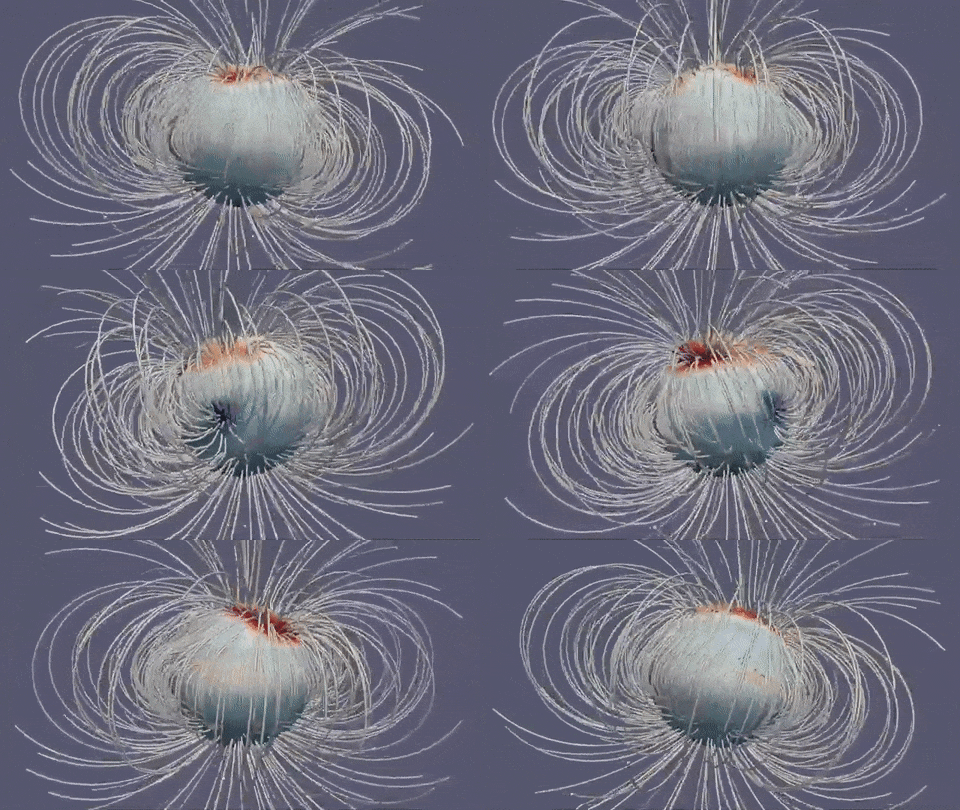
How similar is Jupiter's magnetic field to Earth's? NASA's robotic Juno spacecraft has found that Jupiter's magnetic field is surprisingly complex, so that the Jovian world does not have single magnetic poles like our Earth. A snapshot of Jupiter's magnetic field at one moment in time, as animated... Continue Reading →
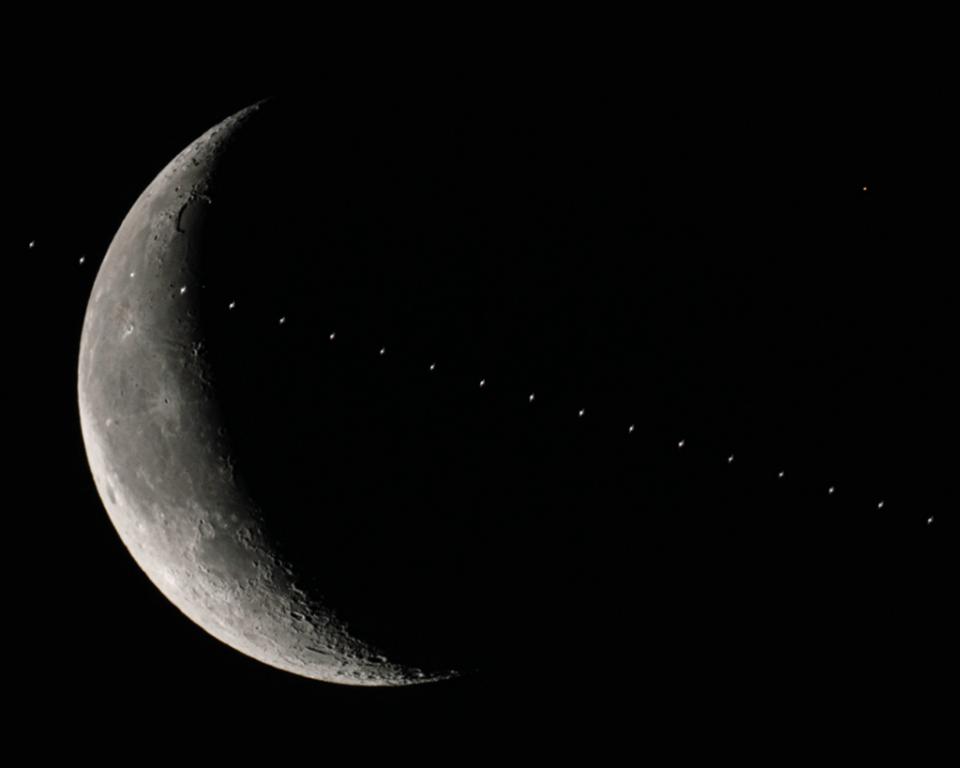
On February 18, as civil twilight began in northern New Mexico skies, the International Space Station, a waning crescent Moon, and planet Mars for a moment shared this well-planned single field of view. From the photographer's location the sky had... Continue Reading →
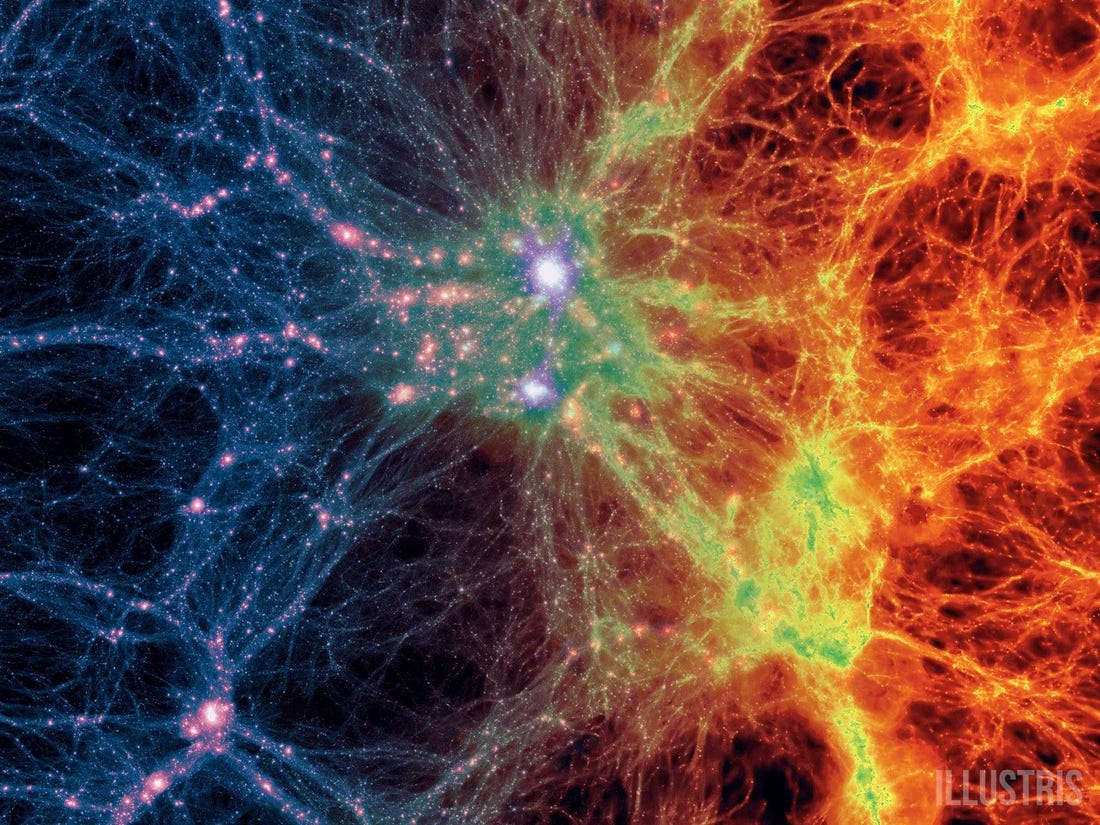
How did we get here? Click play, sit back, and watch. A computer simulation of the evolution of the universe provides insight into how galaxies formed and perspectives into humanity's place in the universe. https://www.youtube.com/watch?time_continue=62&v=QSivvdIyeG4&feature=emb_logo Video Credit: Illustris Collaboration, NASA, PRACE, XSEDE, MIT, Harvard CfA;Music: The Poisoned Princess (Media Right Productions) The Illustris project exhausted 20... Continue Reading →
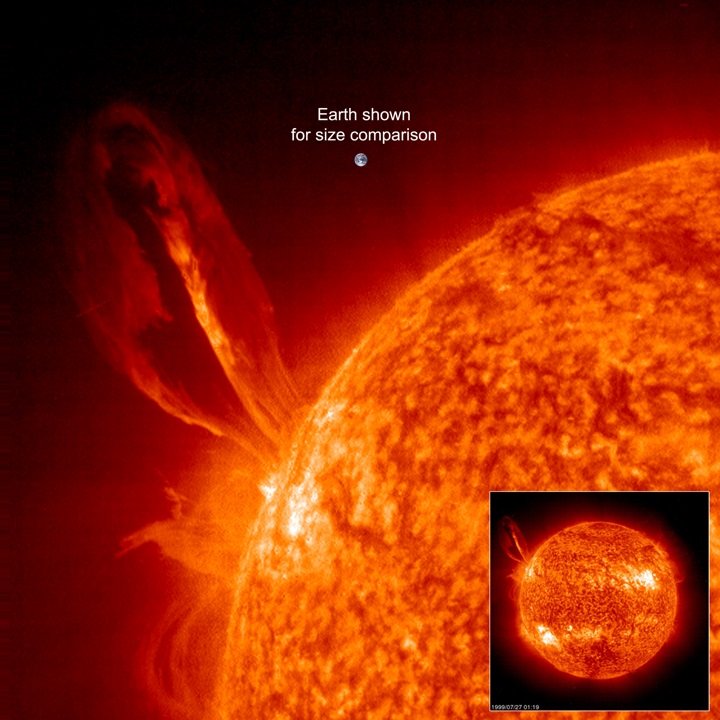
A star of about eight percent the Sun’s mass has been caught emitting an enormous ‘super flare’ of X-rays – a dramatic high-energy eruption that poses a fundamental problem for astronomers, who did not think it possible on stars that... Continue Reading →

NASA's Juno mission has provided its first science results on the amount of water in Jupiter's atmosphere. Published recently in the journal Nature Astronomy, the Juno results estimate that at the equator, water makes up about 0.25% of the molecules... Continue Reading →

The precursor of our planet, the proto-Earth, formed within a time span of approximately five million years, shows a new study from the Centre for Star and Planet Formation (StarPlan) at the Globe Institute at the University of Copenhagen. On... Continue Reading →

Do you recognize this constellation? Setting past the Central Bohemian Highlands in the Czech Republic is Orion, one of the most identifiable star groupings on the sky and an icon familiar to humanity for over 30,000 years. Orion has looked pretty much the same during this time and... Continue Reading →

More is unknown than is known. We know how much dark energy there is because we know how it affects the universe's expansion. Other than that, it is a complete mystery. But it is an important mystery. It turns out... Continue Reading →

A new study led by the University of Hawai'i (UH) at Mānoa has helped refine understanding of the amount of hydrogen, helium and other elements present in violent outbursts from the Sun, and other types of solar "wind," a stream... Continue Reading →
 Scents of Science