
Wisps like this are all that remain visible of a Milky Way star. About 7,000 years ago that star exploded in a supernova leaving the Veil Nebula. At the time, the expanding cloud was likely as bright as a crescent Moon, remaining visible for weeks to... Continue Reading →
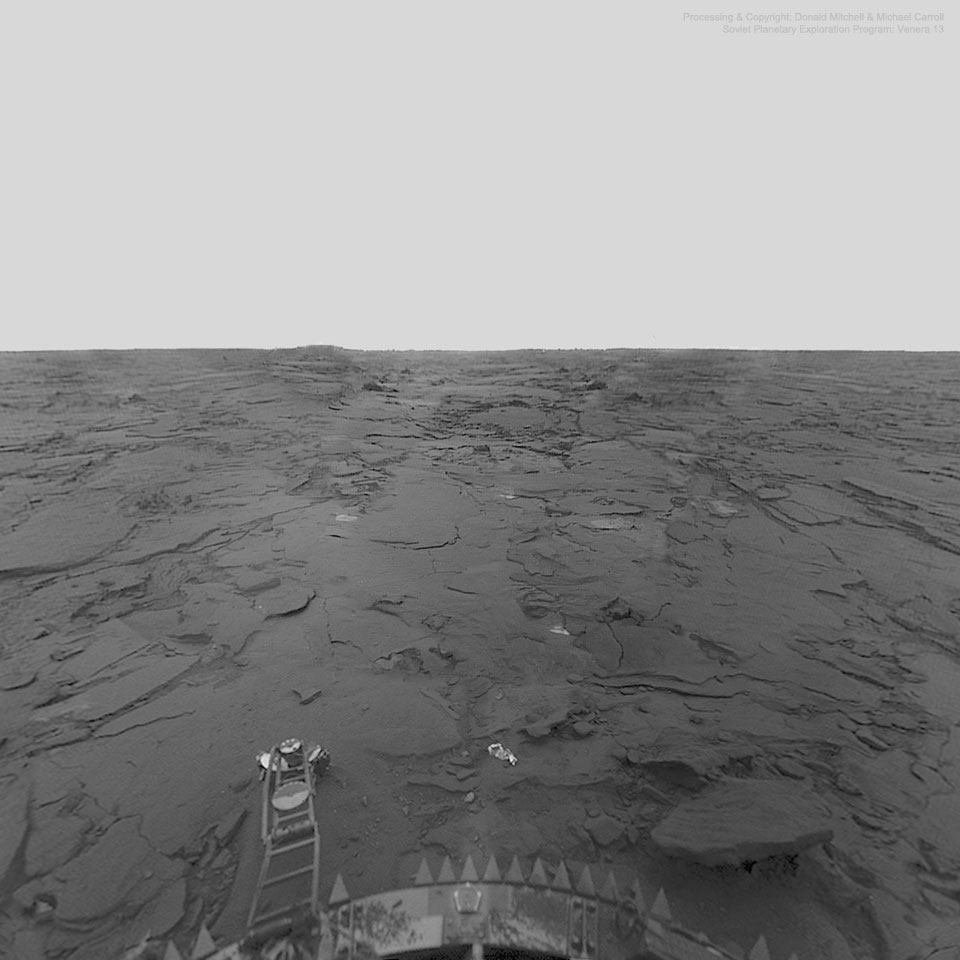
If you could stand on Venus -- what would you see? Pictured is the view from Venera 13, a robotic Soviet lander which parachuted and air-braked down through the thick Venusian atmosphere in March of 1982. The desolate landscape it saw included flat rocks, vast... Continue Reading →

The gas-giant orbiter is illuminating the provenance of Jovian polar light shows. New results from the Ultraviolet Spectrograph instrument on NASA’s Juno mission reveal for the first time the birth of auroral dawn storms – the early morning brightening unique... Continue Reading →

This artist's impression of hypergiant star VY Canis Majoris shows the star's vast convection cells and violent ejections. VY Canis Majoris is so large that if it replaced the Sun, the star would extend for hundreds of millions of miles, between the... Continue Reading →

In New York City on Tuesday, Feb. 16, 2021, the Empire State Building is illuminated in red to celebrate this Thursday's scheduled landing on Mars of NASA's Perseverance rover. A key objective for Perseverance’s mission on Mars is astrobiology, including the... Continue Reading →

Space debris is an issue of global concern that threatens our continued use of near-Earth space for the benefit of humankind. To raise awareness about this growing problem, ESA and the United Nations Office for Outer Space Affairs (UNOOSA) have created a series... Continue Reading →

In brush strokes of interstellar dust and glowing gas, this beautiful skyscape is painted across the plane of our Milky Way Galaxy near the northern end of the Great Rift and the constellation Cygnus the Swan. Composed over a decade with 400 hours of image data, the broad... Continue Reading →
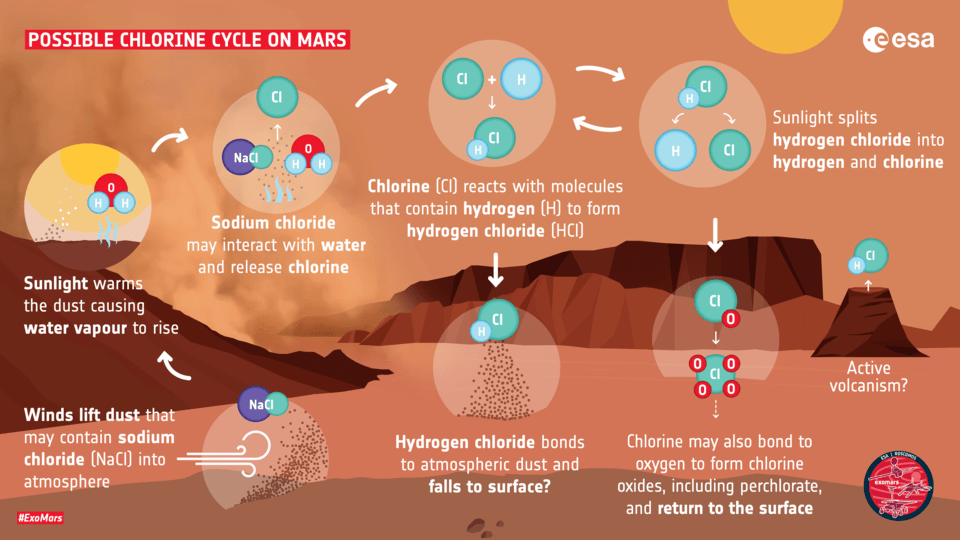
Sea salt embedded in the dusty surface of Mars and lofted into the planet’s atmosphere has led to the discovery of hydrogen chloride – the first time the ESA-Roscosmos ExoMars Trace Gas Orbiter has detected a new gas. The spacecraft... Continue Reading →

Astronomers may have found our galaxy’s first example of an unusual kind of stellar explosion. This discovery, made with NASA’s Chandra X-ray Observatory, adds to the understanding of how some stars shatter and seed the universe with elements critical for... Continue Reading →
 Scents of Science