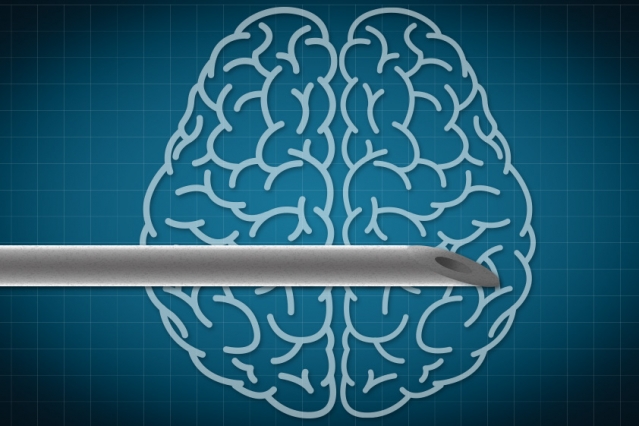
Many diseases, including Parkinson’s disease, can be treated with electrical stimulation from an electrode implanted in the brain. However, the electrodes can produce scarring, which diminishes their effectiveness and can necessitate additional surgeries to replace them. MIT researchers have now... Continue Reading →

Washington State University physicists have created a fluid with negative mass, which is exactly what it sounds like. Push it, and unlike every physical object in the world we know, it doesn’t accelerate in the direction it was pushed. It... Continue Reading →
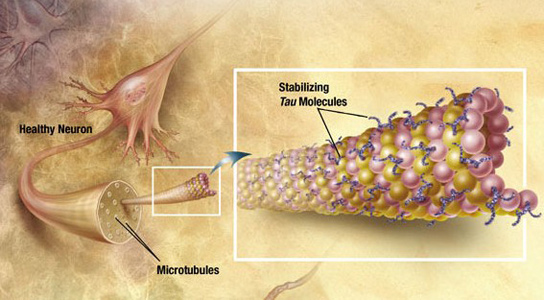
Investigators at Rush University Medical Center and the Brigham and Women’s Hospital in Boston reported the discovery of a new gene that is associated with susceptibility to a common form of brain pathology called Tau that accumulates in several different... Continue Reading →

Our lungs may be doing much more than just helping us breathe. A series of experiments on mice, carried out by researchers at the University of California, San Francisco (UCSF), has revealed that these organs play a crucial role in... Continue Reading →
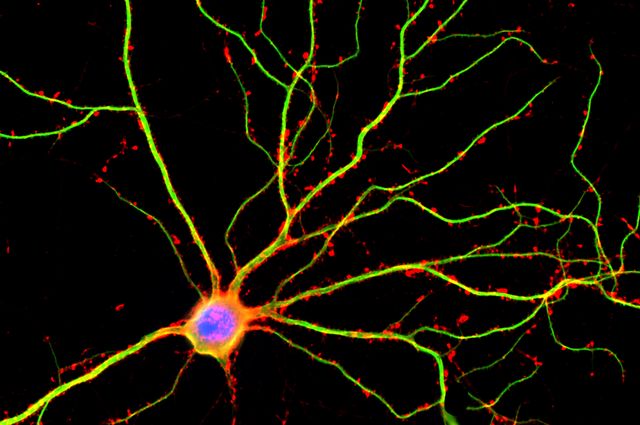
A new UCLA study could change scientists’ understanding of how the brain works — and could lead to new approaches for treating neurological disorders and for developing computers that “think” more like humans. The research focused on the structure and... Continue Reading →
Head injuries can alter hundreds of genes and lead to serious brain diseases, UCLA biologists report

Head injuries can harm hundreds of genes in the brain in a way that increases people’s risk for a wide range of neurological and psychiatric disorders, UCLA life scientists report. The researchers identified for the first time master genes that... Continue Reading →

Depending on your genetic make-up, you might be able to drink coffee right before bed or feel wired after just one cup, ongoing research shows. In previous work, Marilyn Cornelis, assistant professor in preventive medicine at Northwestern University Feinberg School... Continue Reading →

When it comes to perceiving music, the human brain is much more tuned in to certain types of rhythms than others, according to a new study from MIT. A team of neuroscientists has found that people are biased toward hearing... Continue Reading →
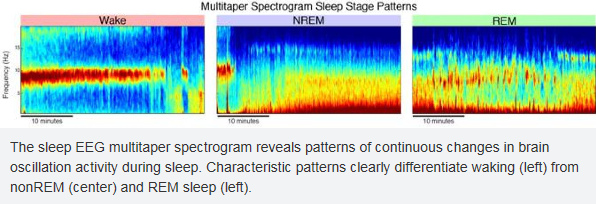
Massachusetts General Hospital (MGH) investigators have developed a novel approach to analyze brainwaves during sleep, which promises to give a more detailed and accurate depiction of neurophysiological changes than provided by a traditional sleep study. In a report published in... Continue Reading →
 Scents of Science