
The gas-giant orbiter is illuminating the provenance of Jovian polar light shows. New results from the Ultraviolet Spectrograph instrument on NASA’s Juno mission reveal for the first time the birth of auroral dawn storms – the early morning brightening unique... Continue Reading →

This artist's impression of hypergiant star VY Canis Majoris shows the star's vast convection cells and violent ejections. VY Canis Majoris is so large that if it replaced the Sun, the star would extend for hundreds of millions of miles, between the... Continue Reading →

In brush strokes of interstellar dust and glowing gas, this beautiful skyscape is painted across the plane of our Milky Way Galaxy near the northern end of the Great Rift and the constellation Cygnus the Swan. Composed over a decade with 400 hours of image data, the broad... Continue Reading →

Astronomers may have found our galaxy’s first example of an unusual kind of stellar explosion. This discovery, made with NASA’s Chandra X-ray Observatory, adds to the understanding of how some stars shatter and seed the universe with elements critical for... Continue Reading →
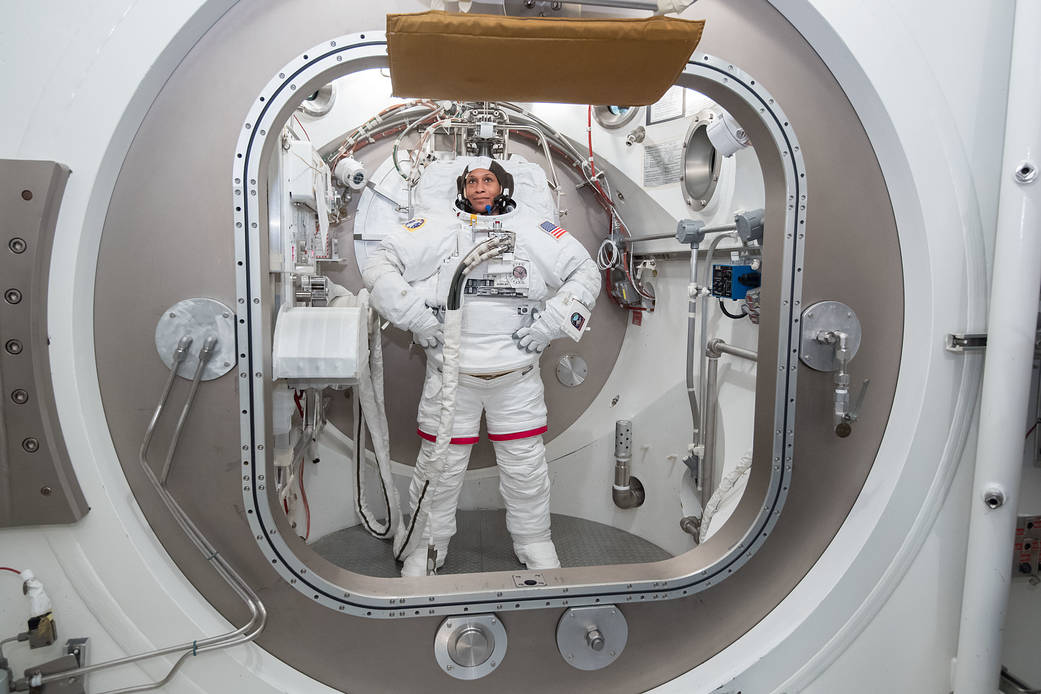
n this image from 2018, NASA astronaut Jeanette Epps trains in a U.S. spacesuit at the Johnson Space Center. Epps is assigned to NASA’s Boeing Starliner-1 mission, the first operational crewed flight of Boeing’s CST-100 Starliner spacecraft on a mission to the International Space Station. She... Continue Reading →

Massive stars in our Milky Way Galaxy live spectacular lives. Collapsing from vast cosmic clouds, their nuclear furnaces ignite and create heavy elements in their cores. After a few million years, the enriched material is blasted back into interstellar space where star... Continue Reading →

This animation shows a series of views of the Sun captured with the Extreme Ultraviolet Imager (EUI) on ESA’s Solar Orbiter on 30 May 2020. They show the Sun’s appearance at a wavelength of 17 nanometers, which is in the... Continue Reading →
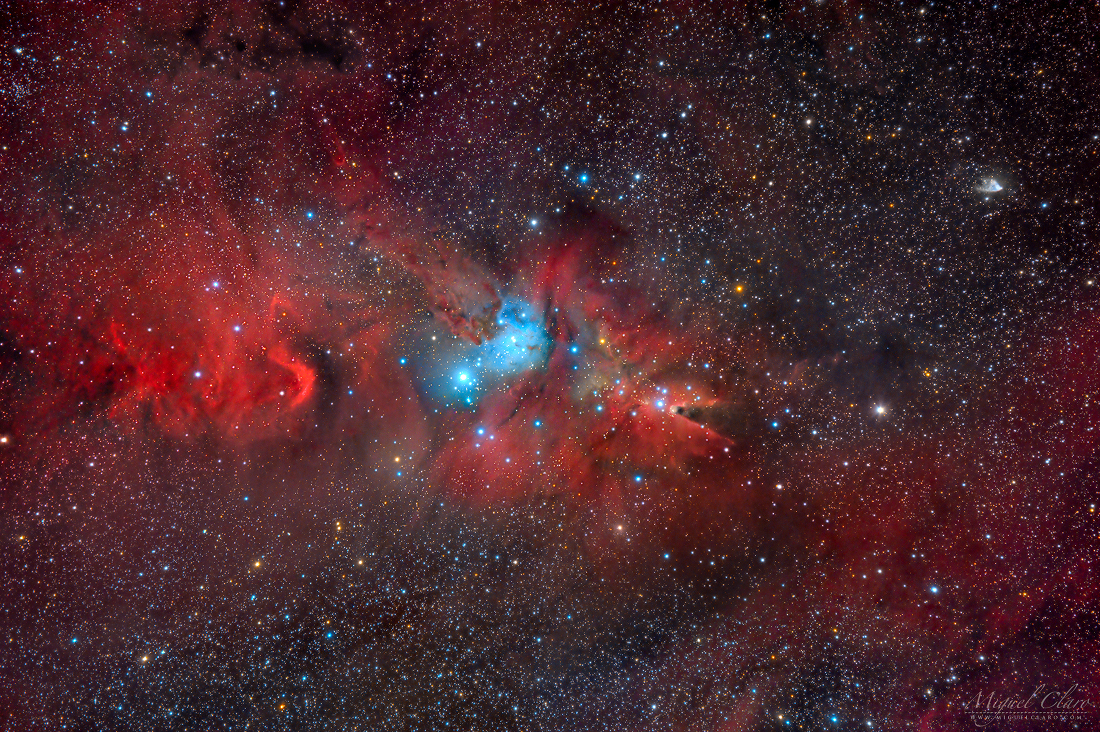
Clouds of glowing hydrogen gas fill this colorful skyscape in the faint but fanciful constellation Monoceros, the Unicorn. A star forming region cataloged as NGC 2264, the complex jumble of cosmic gas and dust is about 2,700 light-years distant and mixes reddish emission... Continue Reading →

Are stars still forming in the Milky Way's satellite galaxies? Found among the Small Magellanic Cloud's (SMC's) clusters and nebulas, NGC 346 is a star forming region about 200 light-years across, pictured here in the center of a Hubble Space Telescope image. A satellite galaxy of the Milky... Continue Reading →
 Scents of Science