
Stars are born from clouds of gas and dust that collapse under their own gravitational attraction. As the cloud collapses, a dense, hot core forms and begins gathering dust and gas, creating an object called a “protostar.” This Hubble infrared... Continue Reading →
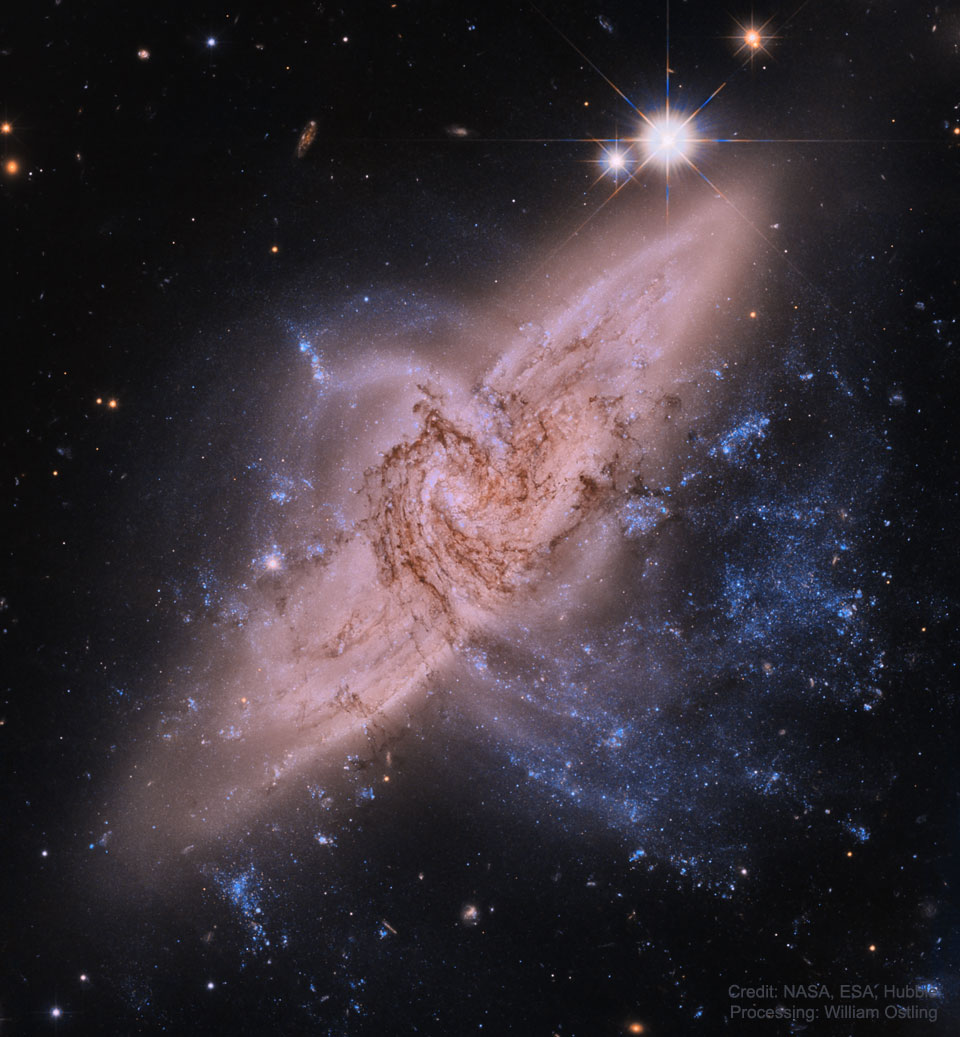
Why doesn't the nearby galaxy create a gravitational lensing effect on the background galaxy? It does, but since both galaxies are so nearby, the angular shift is much smaller than the angular sizes of the galaxies themselves. The featured Hubble image of NGC 3314 shows two large spiral galaxies... Continue Reading →

NGC 2438 is a planetary nebula, formed after the death of a Sun-like star. The medium-sized star would have expelled its outer layers of gas into space as it died, leaving behind a white-dwarf core. A halo of glowing gas... Continue Reading →

In June 2021, NASA received its first sample of asteroid Ryugu, which was returned to Earth in December 2020 by the Japan Aerospace Exploration Agency’s (JAXA) Hayabusa2 spacecraft. This is one of the first samples to leave Japan for preliminary investigation. As deputy leader of... Continue Reading →
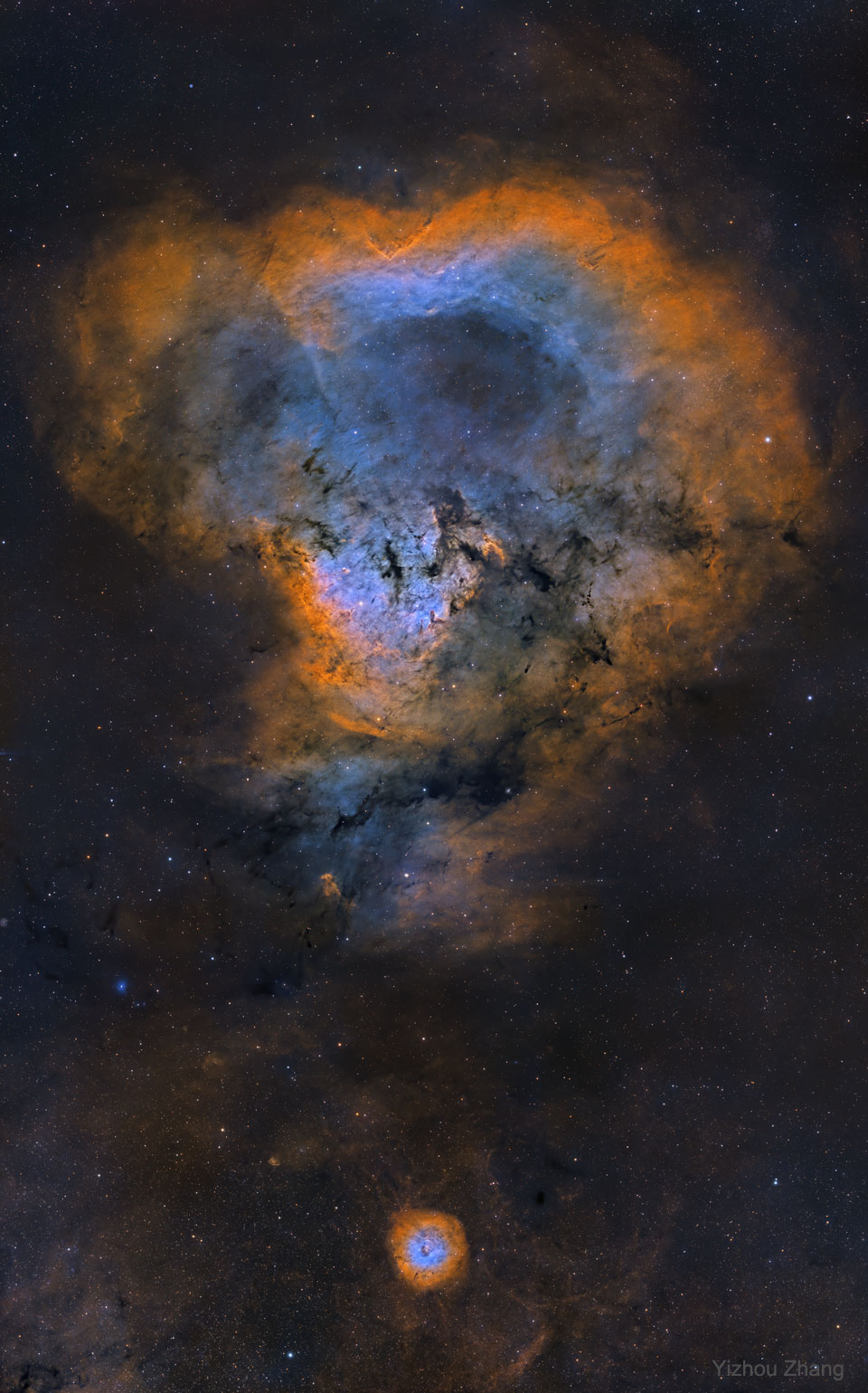
It may look like a huge cosmic question mark, but the big question really is how does the bright gas and dark dust tell this nebula's history of star formation. At the edge of a giant molecular cloud toward the northern constellation Cepheus,... Continue Reading →
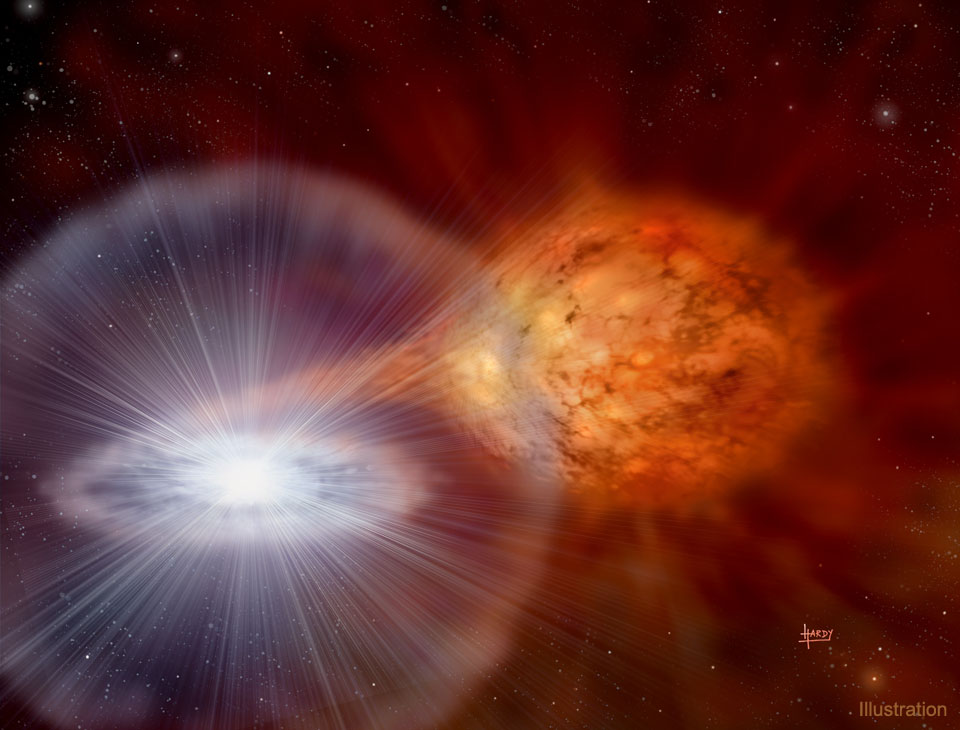
Spectacular explosions keep occurring in the binary star system named RS Ophiuchi. Every 20 years or so, the red giant star dumps enough hydrogen gas onto its companion white dwarf star to set off a brilliant thermonuclear explosion on the white dwarf's surface. At about 5,000 light years distant, the... Continue Reading →

Planet TOI-1231 b orbits a red dwarf star some 90 light-years away from Earth and is oddly reminiscent of our own Neptune – that is, a gaseous world with a potentially rich atmosphere, ripe for study. The planet is more than 3... Continue Reading →
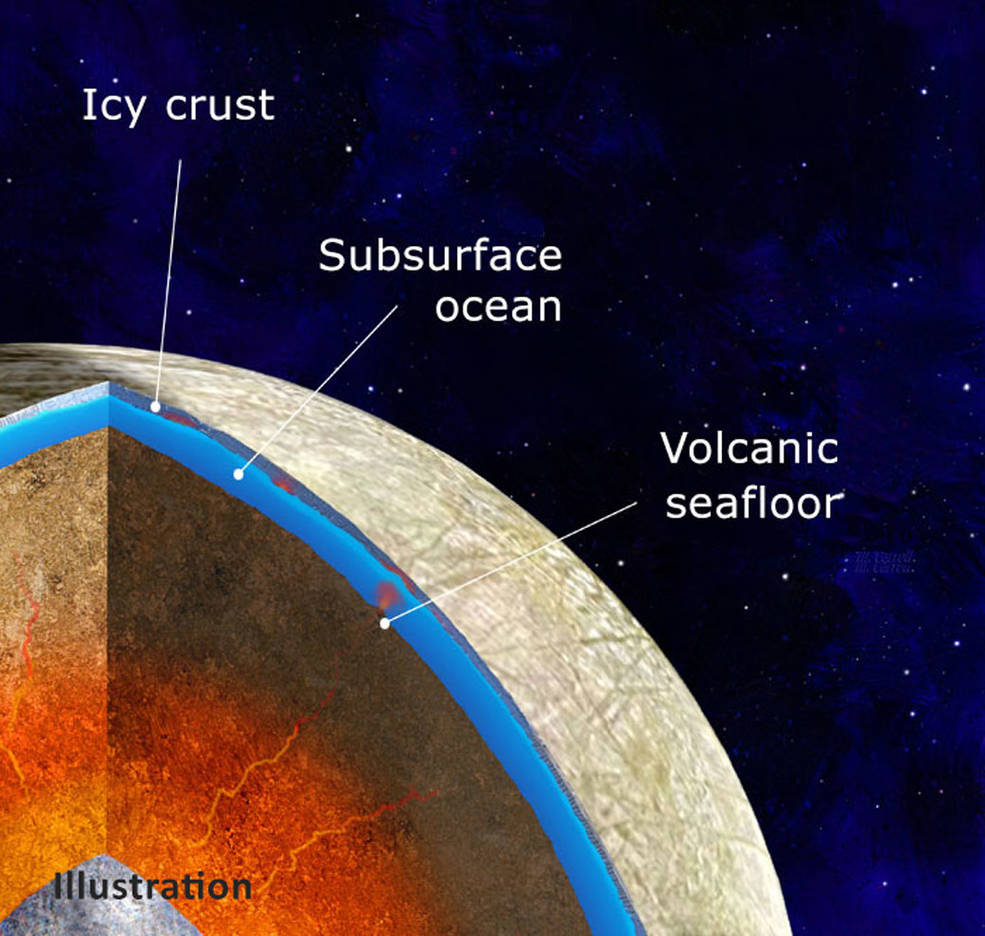
Jupiter’s moon Europa has an icy crust covering a vast, global ocean. The rocky layer underneath may be hot enough to melt, leading to undersea volcanoes. New research and computer modeling show that volcanic activity may have occurred on the... Continue Reading →
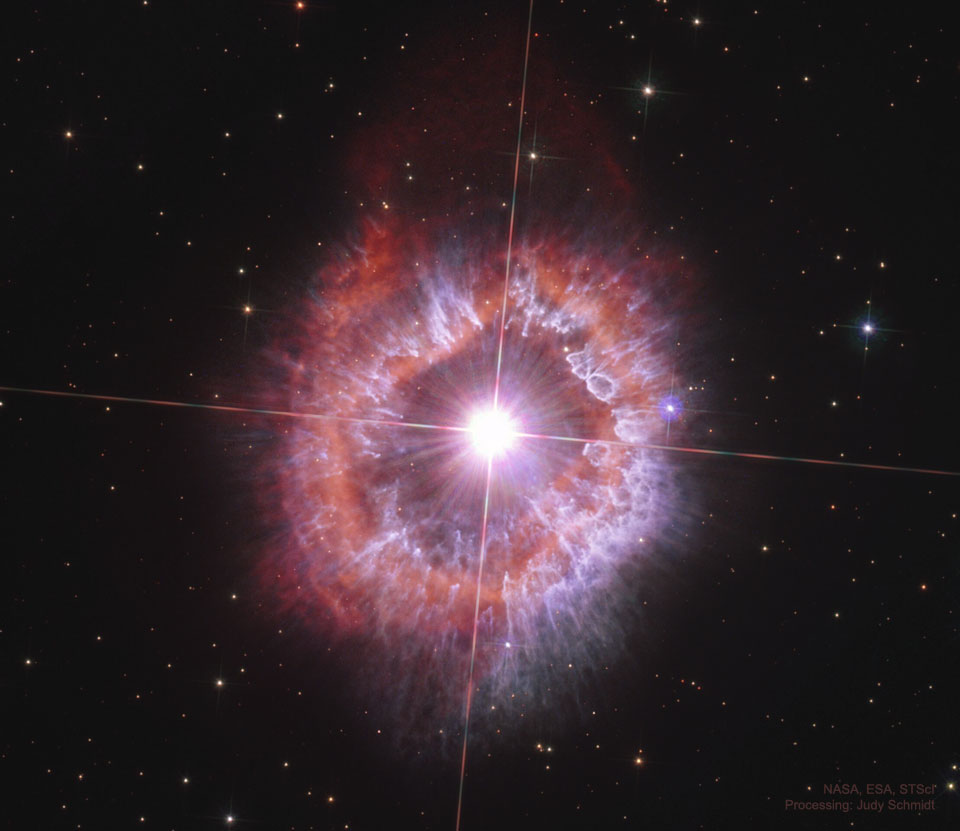
What created these unusual clouds? At the center of this 2021 Hubble image sits AG Carinae, a supergiant star located about 20,000 light-years away in the southern constellation Carina. The star's emitted power is over a million times that of the Sun, making AG Carinae one... Continue Reading →
 Scents of Science