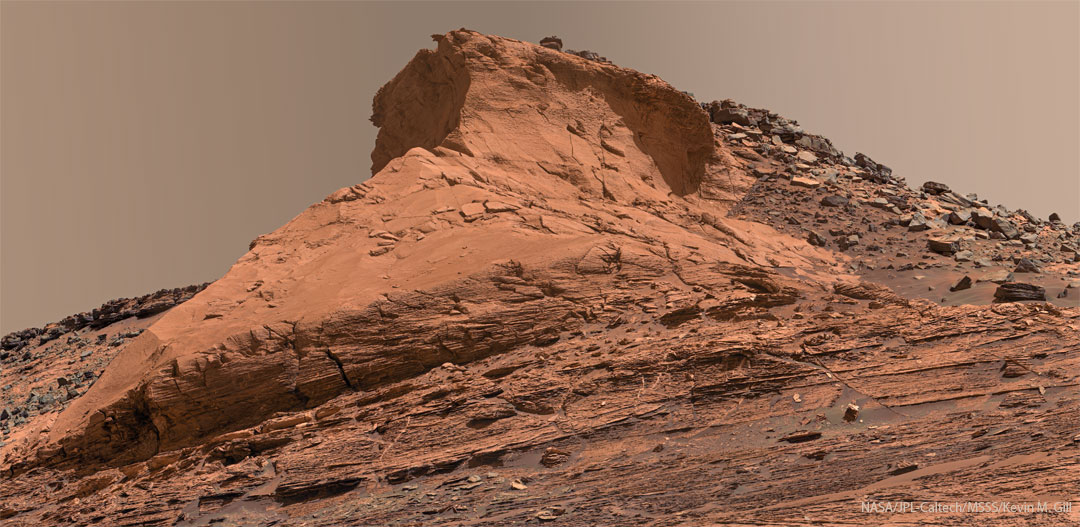
What created this unusual hill on Mars? No one is sure. A good outlook to survey the surrounding area, Siccar Point stands out from its surroundings in Gale Crater. The unusual mound was visited by the robotic Curiosity rover exploring Mars late last year. Siccar Point not only has... Continue Reading →

The famous Horsehead Nebula in Orion is not alone. A deep exposure shows that the dark familiar shaped indentation, visible just right of center, is part of a vast complex of absorbing dust and glowing gas. The featured spectacular picture details an intricate tapestry of gaseous wisps and dust-laden filaments that were... Continue Reading →

OK, but why can't you combine images from Webb and Hubble? You can, and today's featured image shows one impressive result. Although the recently launched James Webb Space Telescope (Webb) has a larger mirror than Hubble, it specializes in infrared light and can't see blue -- only up to about... Continue Reading →

NASA’s James Webb Space Telescope has produced the deepest and sharpest infrared image of the distant universe to date. Known as Webb’s First Deep Field, this image of galaxy cluster SMACS 0723 is overflowing with detail. Thousands of galaxies –... Continue Reading →
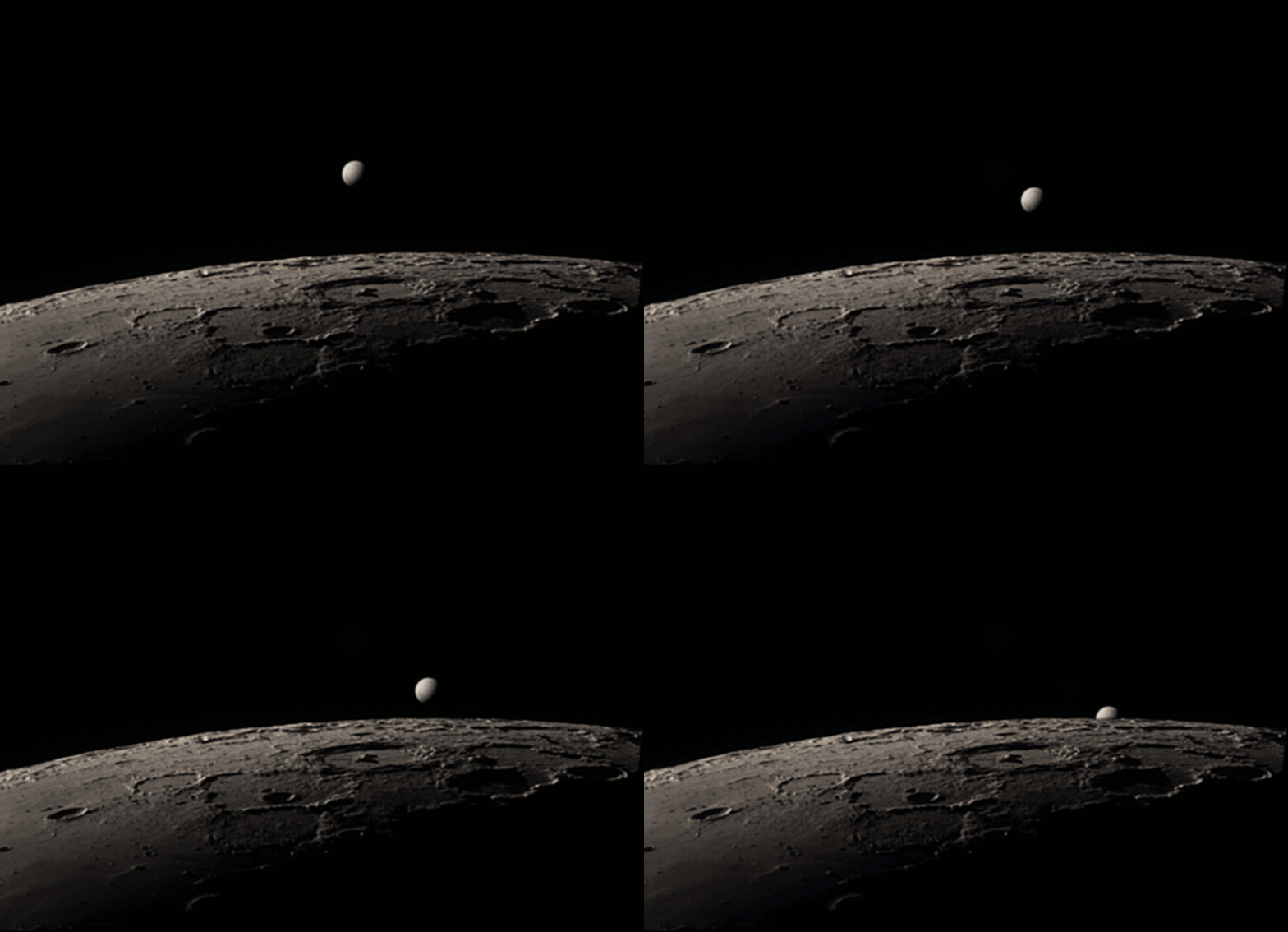
On May 27 Venus rose as the morning star, near the waning crescent Moon in a predawn sky already full of planets. It was close on the sky to the Moon's crescent and a conjunction of the second an third brightest celestial beacons were enjoyed by... Continue Reading →

The Ingenuity Mars Helicopter’s black-and-white navigation camera has provided dramatic video of its record-breaking 25th flight, which took place on April 8. Covering a distance of 2,310 feet (704 meters) at a speed of 12 mph (5.5 meters per second),... Continue Reading →

The center of the Lagoon Nebula is a whirlwind of spectacular star formation. Visible near the image center, at least two long funnel-shaped clouds, each roughly half a light-year long, have been formed by extreme stellar winds and intense energetic starlight. A tremendously bright nearby star, Herschel 36,... Continue Reading →
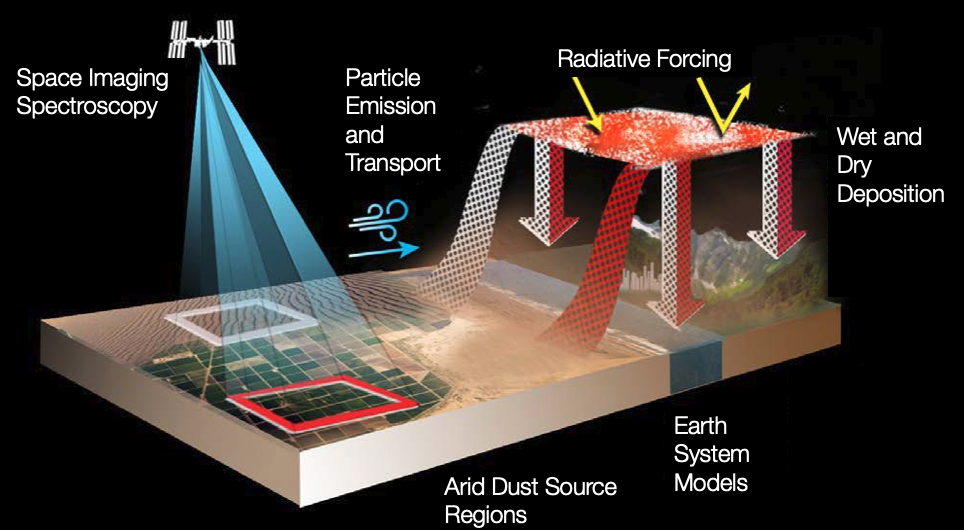
The Earth Surface Mineral Dust Source Investigation (EMIT) is an Earth Ventures-Instrument (EVI-4) Mission to map the mineral composition of arid dust source regions via imaging spectroscopy in the visible and short-wave infrared. The maps of the source regions will... Continue Reading →

DART is the first-ever mission dedicated to investigating and demonstrating one method of asteroid deflection by changing an asteroid’s motion in space through kinetic impact. This method will have DART deliberately collide with a target asteroid—which poses no threat to... Continue Reading →
 Scents of Science