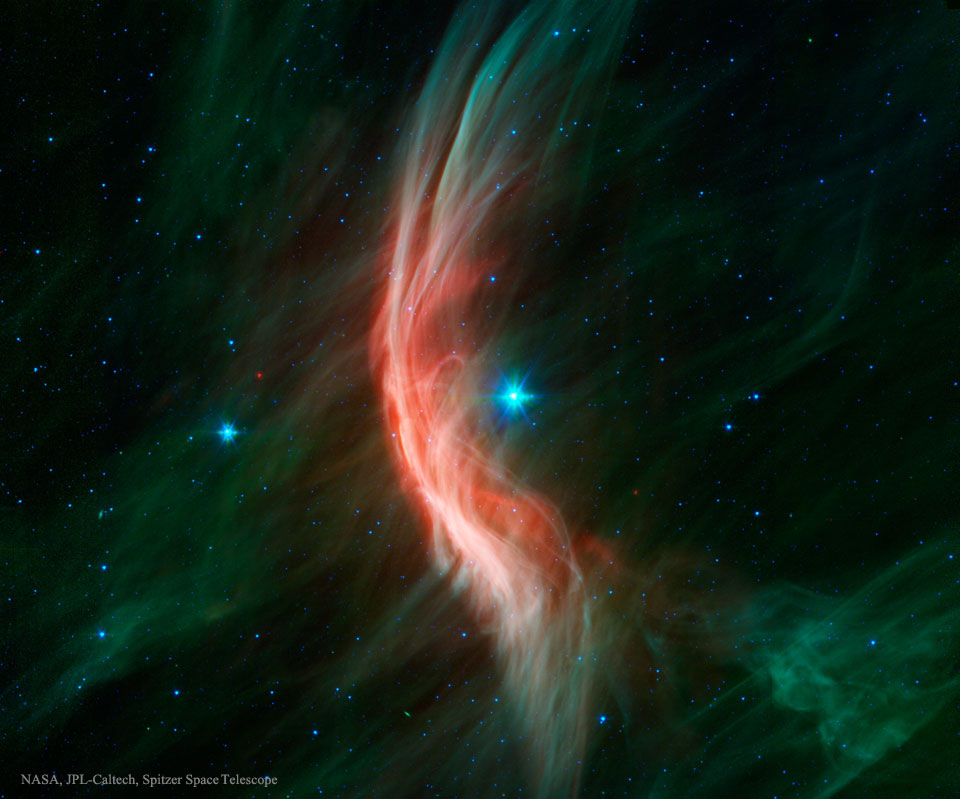
Like a ship plowing through cosmic seas, runaway star Zeta Ophiuchi produces the arcing interstellar bow wave or bow shock seen in this stunning infrared portrait. In the false-color view, bluish Zeta Oph, a star about 20 times more massive than the Sun, lies near... Continue Reading →

What's all of the commotion in the Tadpole Nebula? Star formation. Dusty emission in the Tadpole Nebula, IC 410, lies about 12,000 light-years away in the northern constellation of the Charioteer (Auriga). The cloud of glowing gas is over 100 light-years across, sculpted by stellar winds and radiation from... Continue Reading →

Sometimes, even rovers on Mars stop to admire the scenery. Just late last November the Curiosity rover on Mars paused to photograph its impressive surroundings. One thing to admire, straight ahead, was Central Butte, an unusual flat hill studied by Curiosity just a few days before this image... Continue Reading →

This artist’s concept illustrates a catastrophic collision between two rocky exoplanets in the planetary system BD +20 307, turning both into dusty debris. Ten years ago, scientists speculated that the warm dust in this system was a result of a planet-to-planet collision.... Continue Reading →
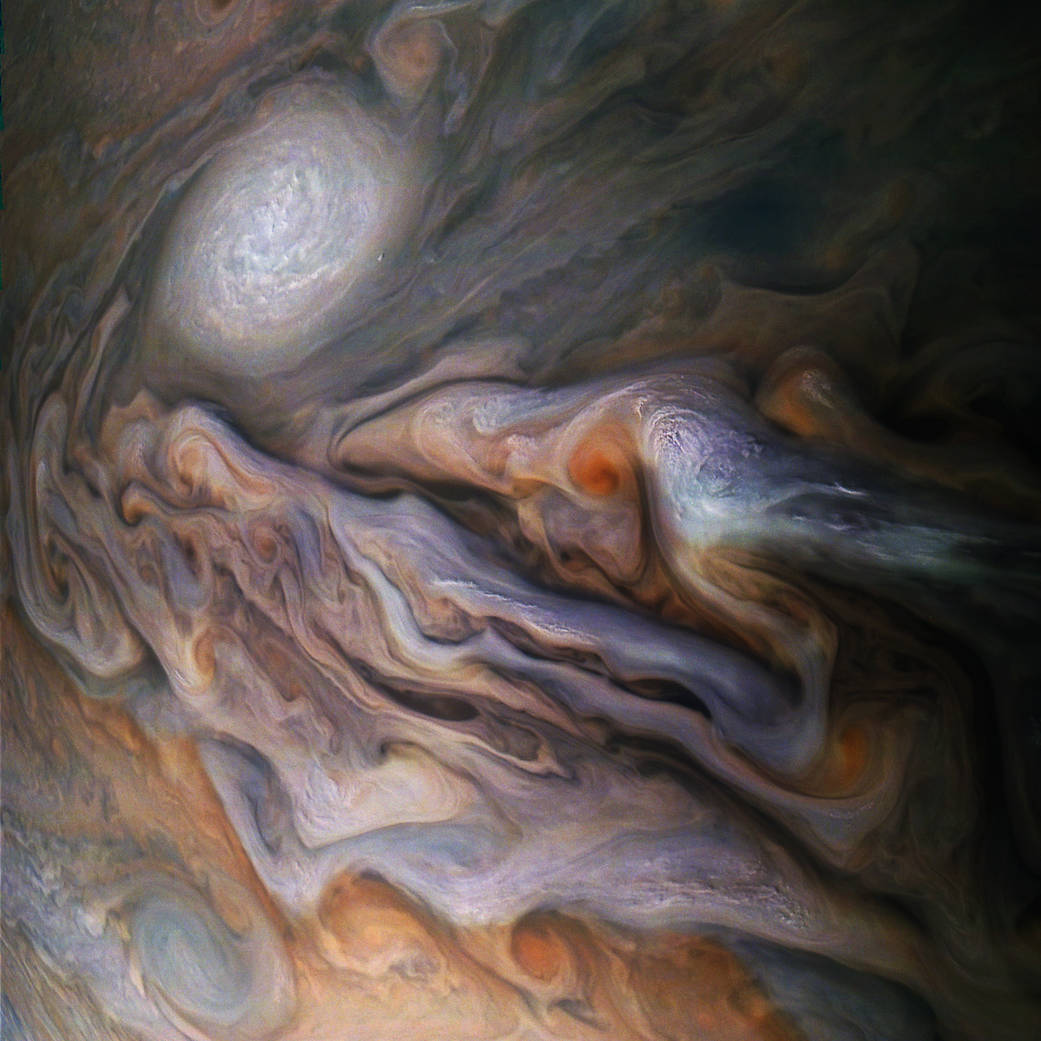
A multitude of swirling clouds in Jupiter's dynamic North North Temperate Belt is captured in this image from NASA's Juno spacecraft. Appearing in the scene are several bright-white “pop-up” clouds as well as an anticyclonic storm, known as a white oval. This color-enhanced... Continue Reading →

Image taken by ESA astronaut Luca Parmitano from outside the International Space Station on the first spacewalk to service the cosmic ray detecting Alpha Magnetic Spectrometer (AMS-02). Luca and his spacewalking partner NASA astronaut Andrew Morgan performed the first of... Continue Reading →
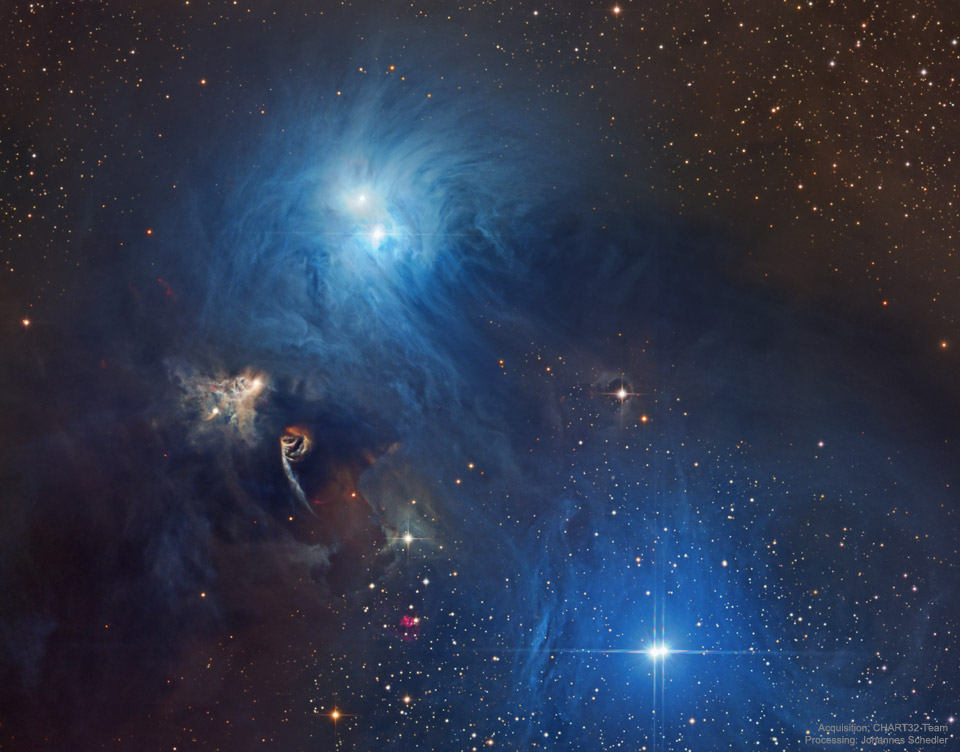
Cosmic dust clouds and young, energetic stars inhabit this telescopic vista, less than 500 light-years away toward the northern boundary of Corona Australis, the Southern Crown. The dust clouds effectively block light from more distant background stars in the Milky Way. But the striking complex... Continue Reading →
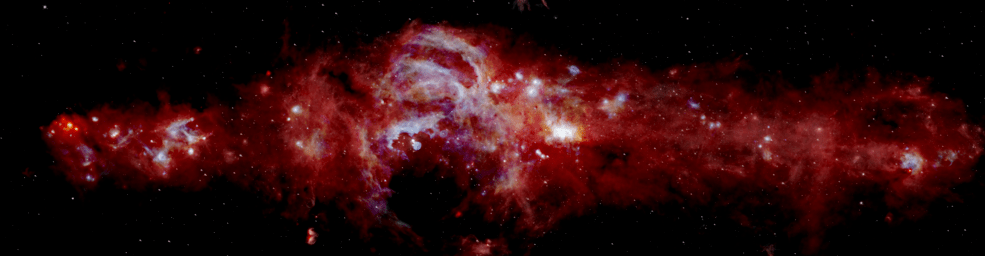
NASA has captured an extremely crisp infrared image of the center of our Milky Way galaxy. Spanning a distance of more than 600 light-years, this panorama reveals details within the dense swirls of gas and dust in high resolution, opening... Continue Reading →

NASA's Transiting Exoplanet Survey Satellite (TESS) has discovered its first Earth-size planet in its star's habitable zone, the range of distances where conditions may be just right to allow the presence of liquid water on the surface. Scientists confirmed the... Continue Reading →
 Scents of Science