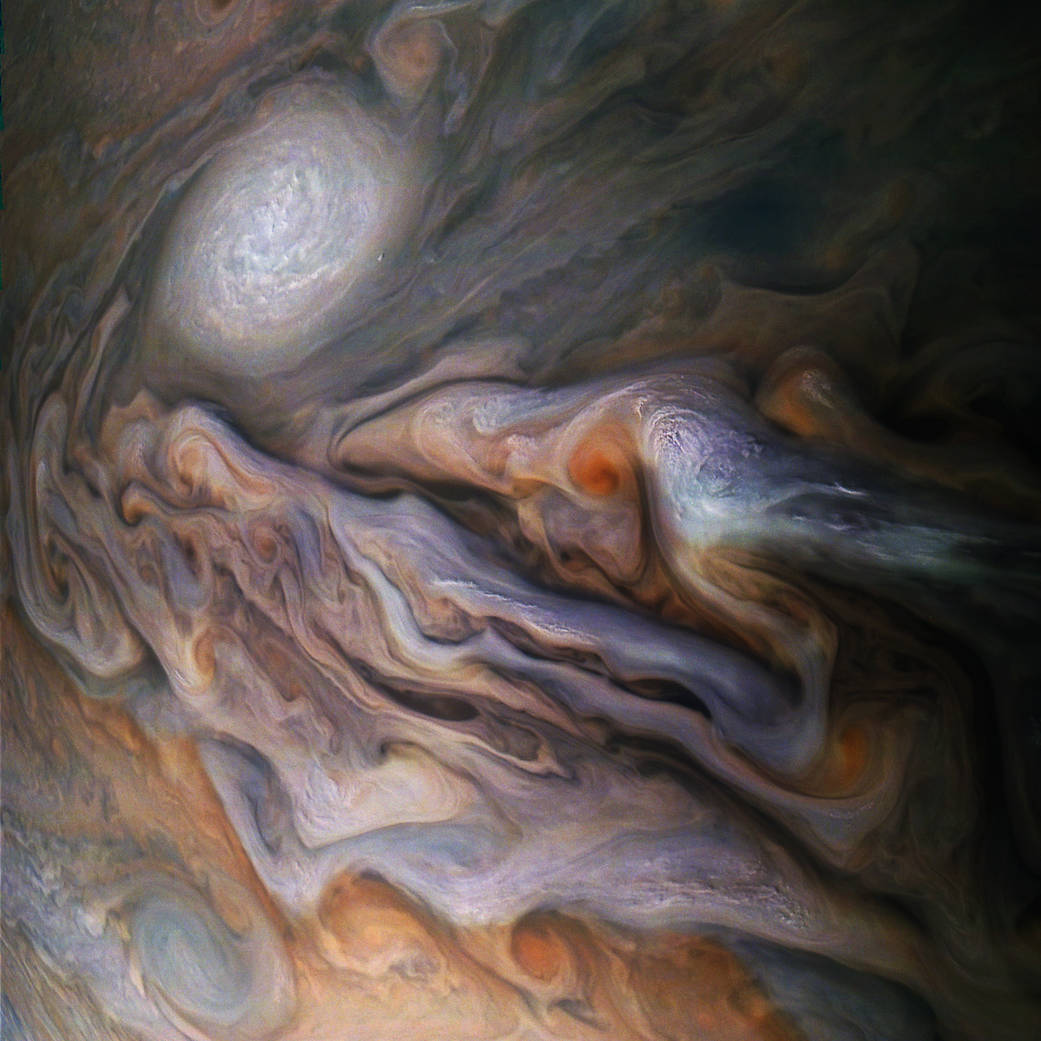
A multitude of swirling clouds in Jupiter's dynamic North North Temperate Belt is captured in this image from NASA's Juno spacecraft. Appearing in the scene are several bright-white “pop-up” clouds as well as an anticyclonic storm, known as a white oval. This color-enhanced... Continue Reading →

Image taken by ESA astronaut Luca Parmitano from outside the International Space Station on the first spacewalk to service the cosmic ray detecting Alpha Magnetic Spectrometer (AMS-02). Luca and his spacewalking partner NASA astronaut Andrew Morgan performed the first of... Continue Reading →
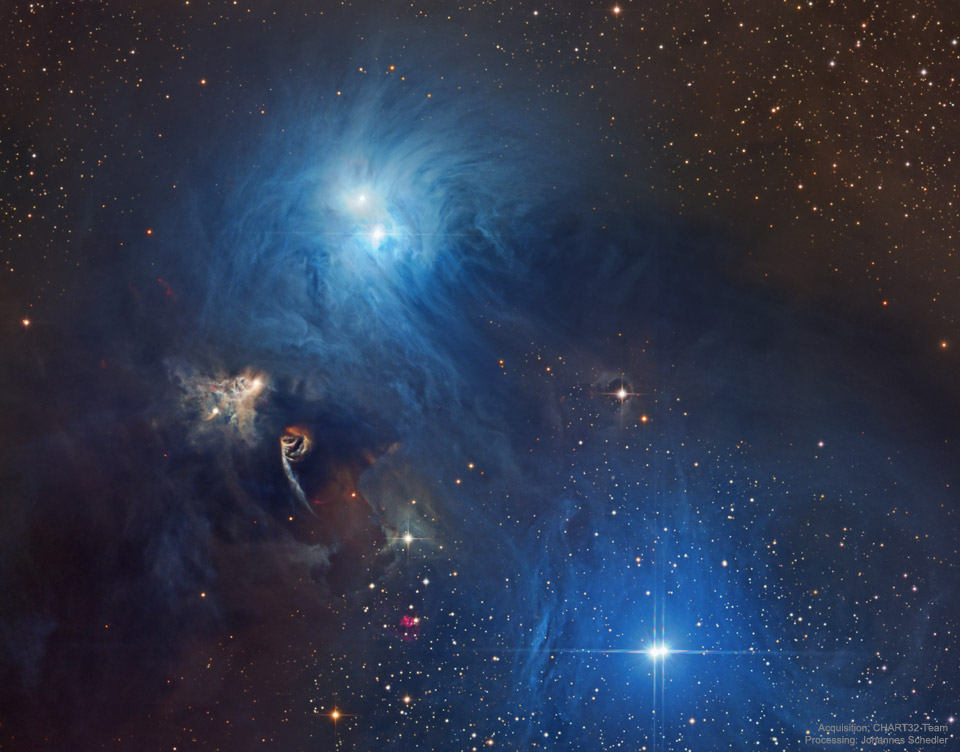
Cosmic dust clouds and young, energetic stars inhabit this telescopic vista, less than 500 light-years away toward the northern boundary of Corona Australis, the Southern Crown. The dust clouds effectively block light from more distant background stars in the Milky Way. But the striking complex... Continue Reading →
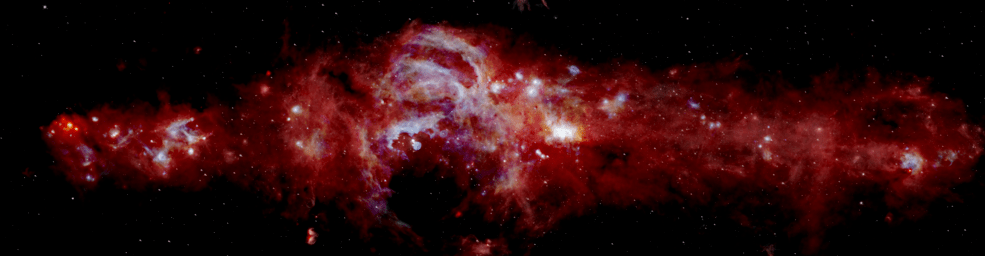
NASA has captured an extremely crisp infrared image of the center of our Milky Way galaxy. Spanning a distance of more than 600 light-years, this panorama reveals details within the dense swirls of gas and dust in high resolution, opening... Continue Reading →

NASA's Transiting Exoplanet Survey Satellite (TESS) has discovered its first Earth-size planet in its star's habitable zone, the range of distances where conditions may be just right to allow the presence of liquid water on the surface. Scientists confirmed the... Continue Reading →

Why is Betelgeuse fading? No one knows. Betelgeuse, one of the brightest and most recognized stars in the night sky, is only half as bright as it used to be only five months ago. Such variability is likely just normal behavior for this famously variable supergiant, but... Continue Reading →
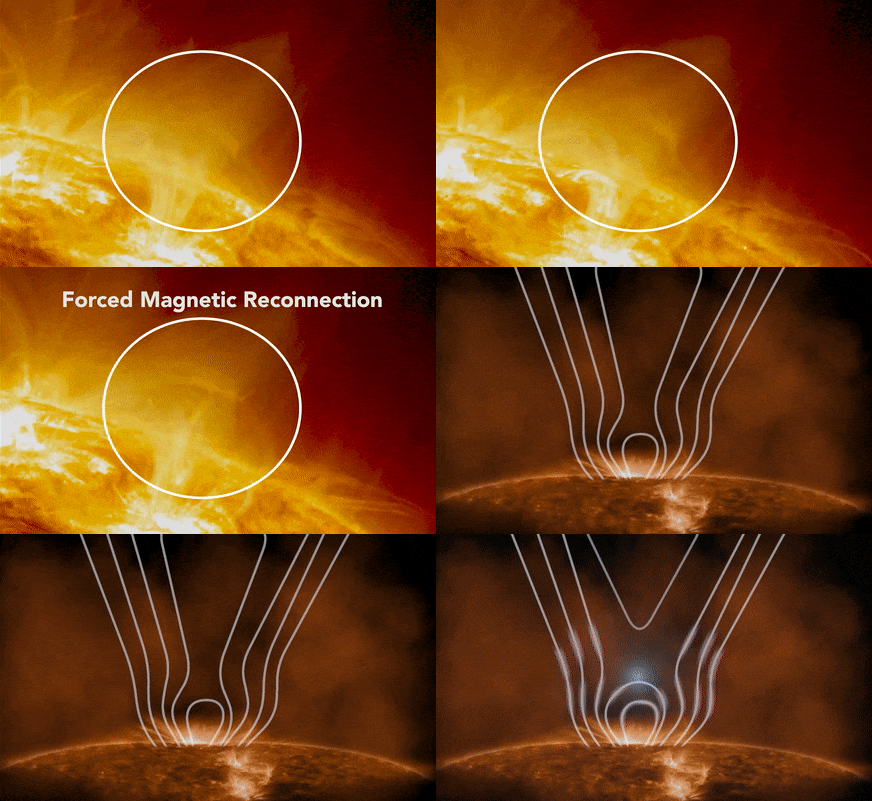
NASA’s Solar Dynamics Observatory has observed a magnetic explosion the likes of which have never been seen before. In the scorching upper reaches of the Sun’s atmosphere, a prominence — a large loop of material launched by an eruption on... Continue Reading →
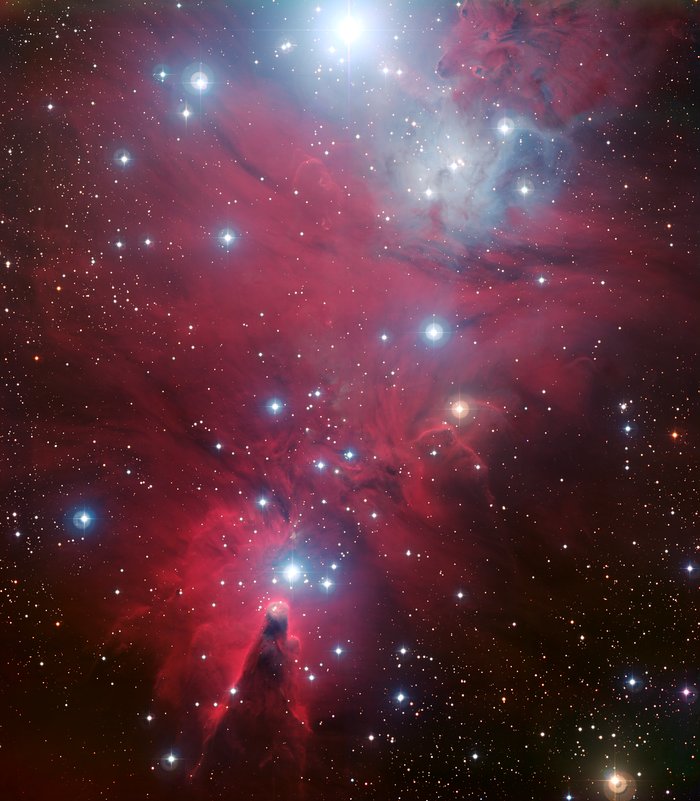
This colour image of the region known as NGC 2264 — an area of sky that includes the sparkling blue baubles of the Christmas Tree star cluster and the Cone Nebula — was created from data taken through four different... Continue Reading →
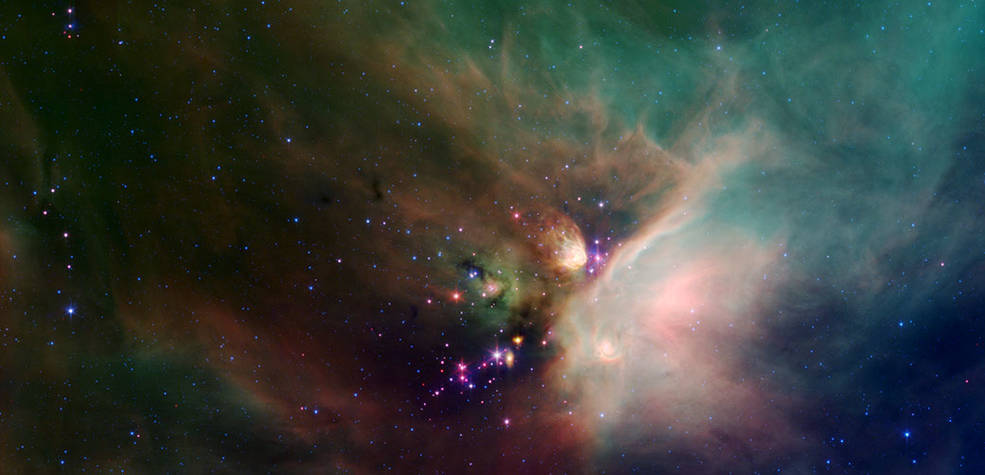
Newborn stars peek out from beneath their natal blanket of dust in this dynamic image of the Rho Ophiuchi dark cloud from NASA's Spitzer Space Telescope. Called "Rho Oph" by astronomers, it's one of the closest star-forming regions to our... Continue Reading →
 Scents of Science