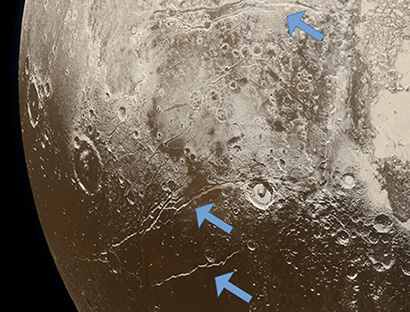
The accretion of new material during Pluto's formation may have generated enough heat to create a liquid ocean that has persisted beneath an icy crust to the present day, despite the dwarf planet's orbit far from the sun in the... Continue Reading →

An investigation into one of the current great mysteries of astronomy has come to the fore thanks to a four-year observing campaign conducted at the Jodrell Bank Observatory. Using the long-term monitoring capabilities of the iconic Lovell Telescope, an international... Continue Reading →
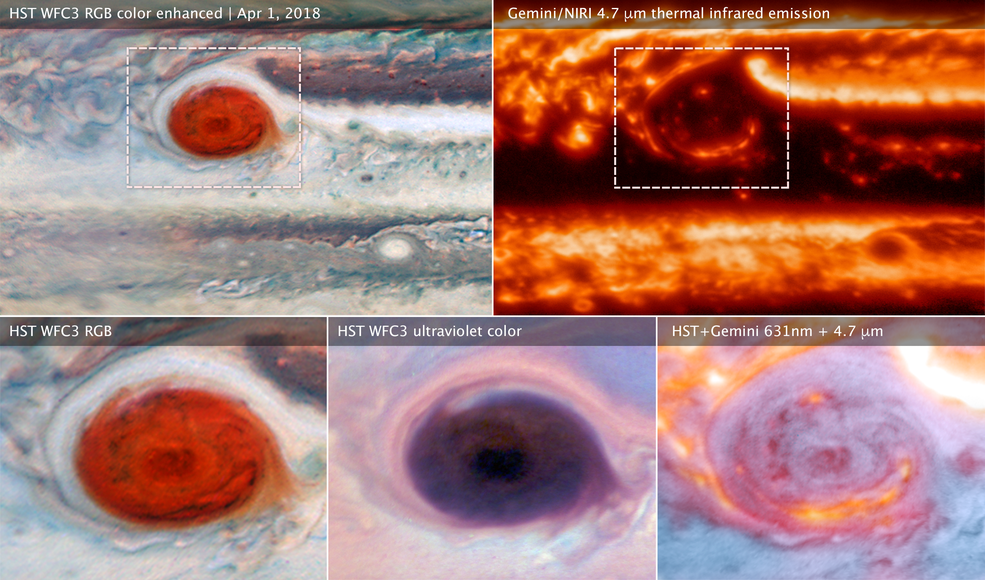
NASA's Hubble Space Telescope and the ground-based Gemini Observatory in Hawaii have teamed up with the Juno spacecraft to probe the mightiest storms in the solar system, taking place more than 500 million miles away on the giant planet Jupiter.... Continue Reading →
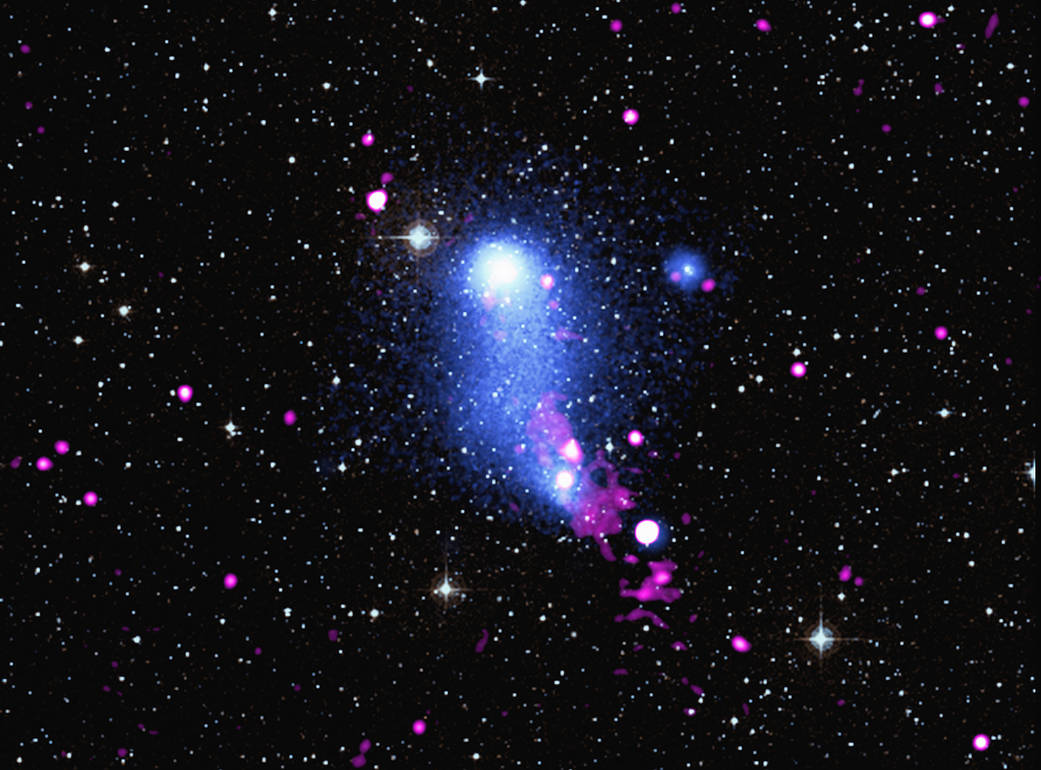
Several hundred million years ago, two galaxy clusters collided and then passed through each other. This mighty event released a flood of hot gas from each galaxy cluster that formed an unusual bridge between the two objects. This bridge is now being pummeled by... Continue Reading →

NASA astronaut Ricky Arnold takes an out of this world "space-selfie" while conducting a spacewalk on March 29, 2018. Before he joined the Astronaut Corps, Arnold was a teacher, who taught all over the world from Malaysia to Romania. As an astronaut he... Continue Reading →

This 2018 composite of the Crab Nebula was made with data from the Chandra X-Ray Observatory (blue and white), Hubble Space Telescope (purple), and Spitzer Space Telescope (pink). The star that exploded to create the Crab Nebula was first seen from Earth in 1054 A.D. Since its launch in 1999,... Continue Reading →
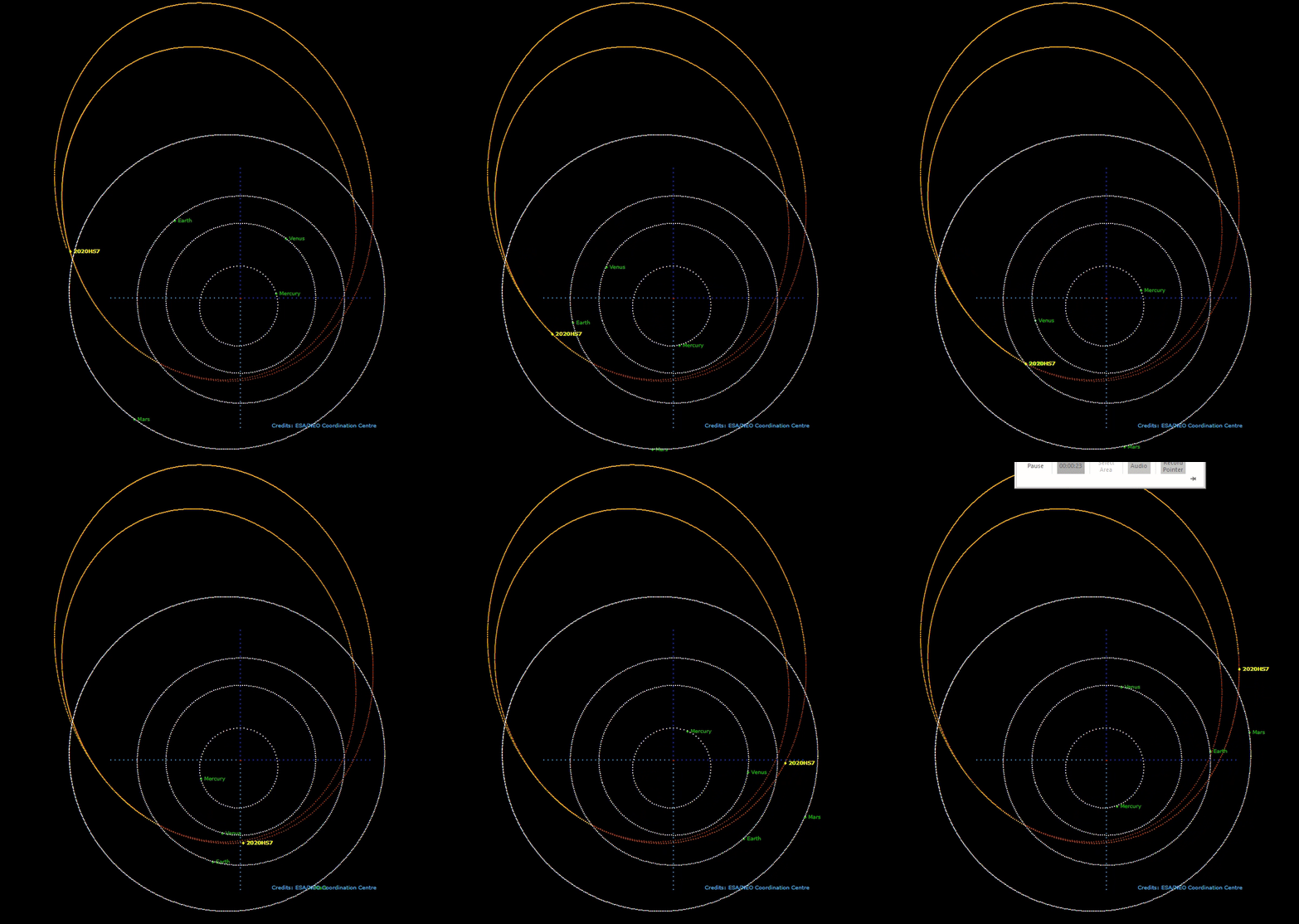
A reasonably small 4-8 m asteroid recently flew by Earth, passing close to satellites orbiting in the geostationary ring at a distance of about 42 735 km from Earth’s center and only about 1200 km from the nearest satellite. After... Continue Reading →

Dark matter, although invisible, makes up most of the universe’s mass and creates its underlying structure. Dark matter’s gravity drives normal matter (gas and dust) to collect and build up into stars and galaxies. Although astronomers cannot see dark matter, they can... Continue Reading →
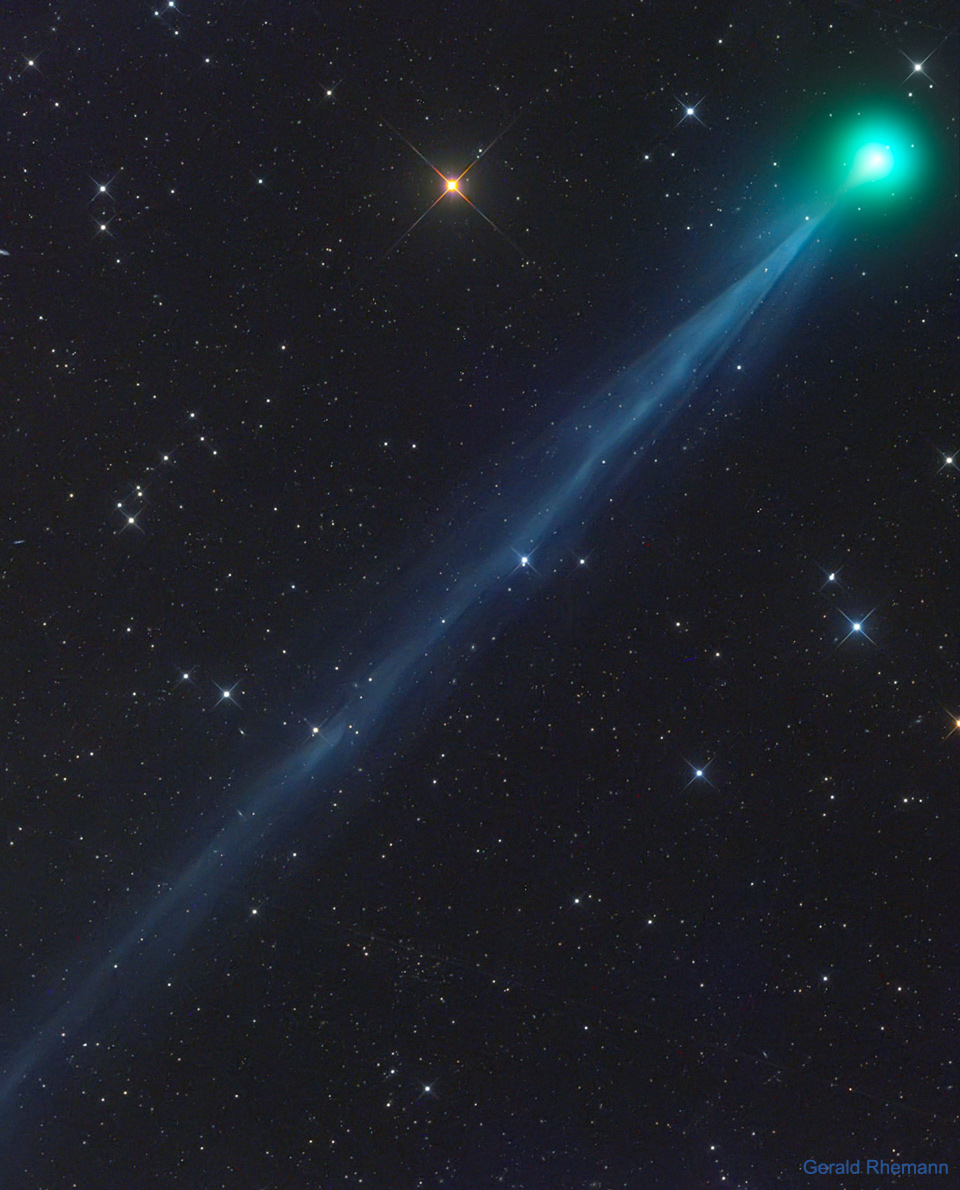
Newly discovered Comet SWAN has already developed an impressive tail. The comet came in from the outer Solar System and has just passed inside the orbit of the Earth. Officially designated C/2020 F8 (SWAN), this outgassing interplanetary iceberg will pass its closest to the Earth on May... Continue Reading →
 Scents of Science