
In this image from April 10, 2022, sunlight glints off the Atlantic Ocean in this photograph from taken by the crew of the International Space Station as it orbited 262 miles above. Every 24 hours, the space station makes 16 orbits of Earth,... Continue Reading →

NASA's Hubble Space Telescope has established an extraordinary new benchmark: detecting the light of a star that existed within the first billion years after the universe's birth in the big bang -- the farthest individual star ever seen to date.... Continue Reading →

What will the Moon phase be on your birthday this year? It is hard to predict because the Moon's appearance changes nightly. As the Moon orbits the Earth, the half illuminated by the Sun first becomes increasingly visible, then decreasingly visible. The featured video animates images and altitude data taken by... Continue Reading →

This image shows knots of cold, dense interstellar gas where new stars are forming. These Free-floating Evaporating Gaseous Globules (frEGGs) were first seen in Hubble’s famous 1995 image of the Eagle Nebula. Because these lumps of gas are dark, they are... Continue Reading →

With the successful extension of Webb’s second sunshield mid-boom, the observatory has passed another critical deployment milestone. Webb’s sunshield now resembles its full, kite-shaped form in space. https://videopress.com/v/iAo2eYfg?resizeToParent=true&cover=true&autoPlay=true&preloadContent=metadata Engineers began to deploy the second (starboard) mid-boom at 6:31 p.m. EST... Continue Reading →

NASA's Parker Solar Probe reached the sun's extended solar atmosphere, known as the corona, and spent five hours there. The spacecraft is the first to enter the outer boundaries of our sun. "This marks the achievement of the primary objective... Continue Reading →

Light-year is the distance light travels in one year. Light zips through interstellar space at 186,000 miles (300,000 kilometers) per second and 5.88 trillion miles (9.46 trillion kilometers) per year. How far can light travel in one minute? 11,160,000 miles.... Continue Reading →
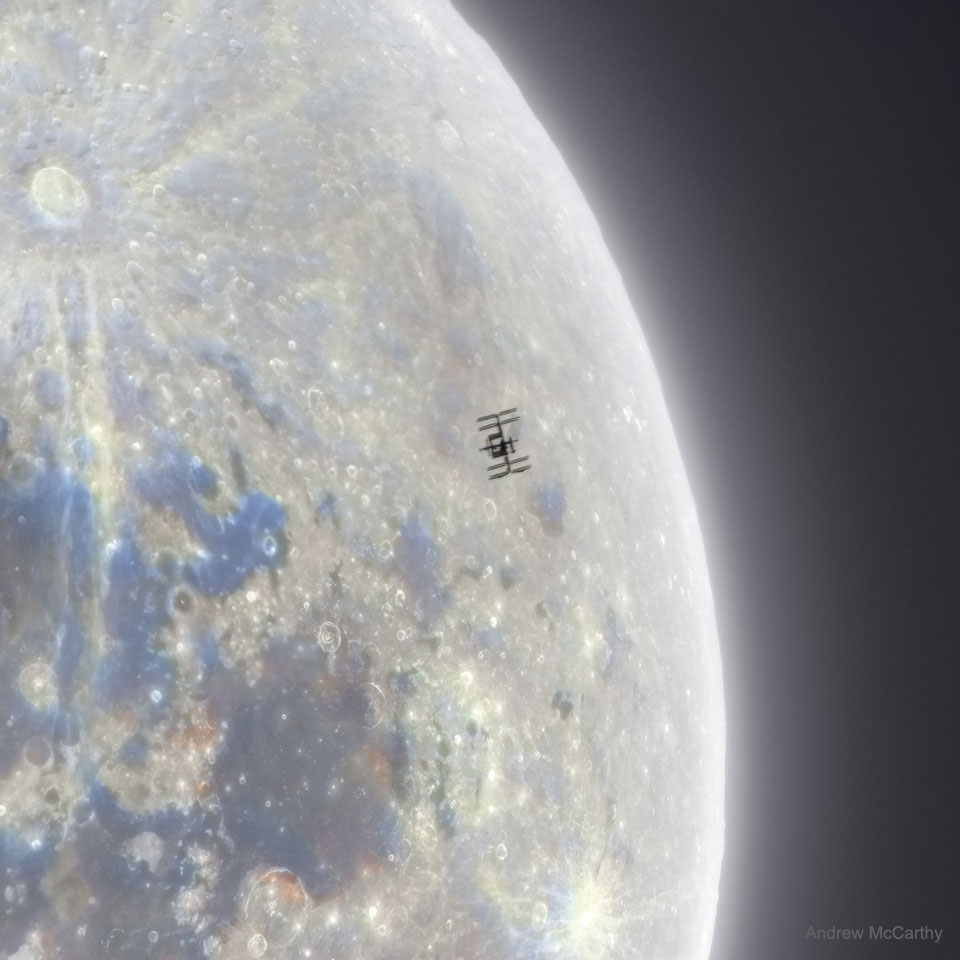
What's that unusual spot on the Moon? It's the International Space Station. Using precise timing, the Earth-orbiting space platform was photographed in front of a partially lit gibbous Moon last month. The featured composite, taken from Payson, Arizona, USA last month, was intricately composed by combining, in part, many... Continue Reading →

Stars are born from clouds of gas and dust that collapse under their own gravitational attraction. As the cloud collapses, a dense, hot core forms and begins gathering dust and gas, creating an object called a “protostar.” This Hubble infrared... Continue Reading →
 Scents of Science