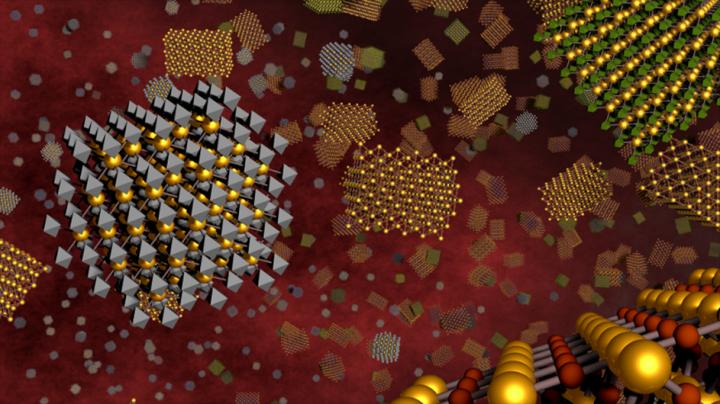
Researchers at Columbia University and University of California, San Diego, have introduced a novel "multi-messenger" approach to quantum physics that signifies a technological leap in how scientists can explore quantum materials. The findings appear in a recent article published in Nature... Continue Reading →

On a hillside above Stanford University, the SLAC National Accelerator Laboratory operates a scientific instrument nearly 2 miles long. In this giant accelerator, a stream of electrons flows through a vacuum pipe, as bursts of microwave radiation nudge the particles... Continue Reading →
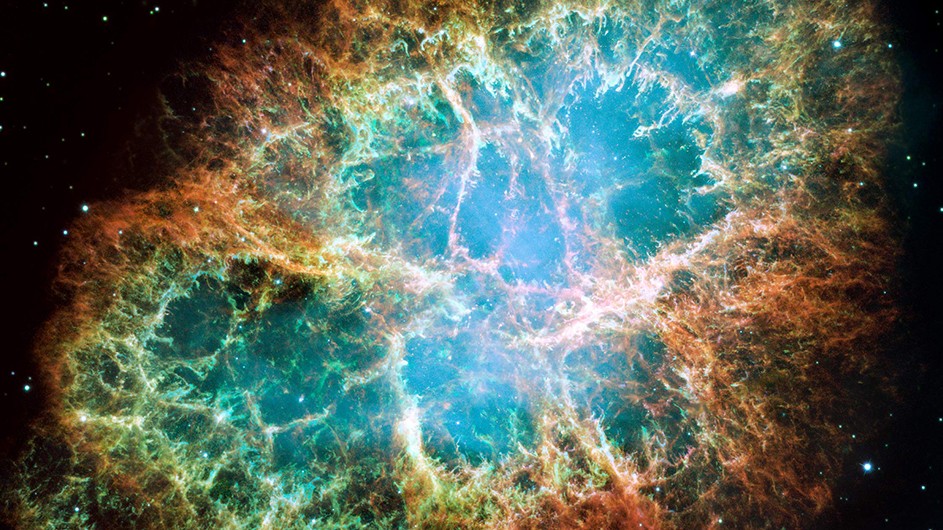
For decades, scientists have speculated about the origin of the electromagnetic radiation emitted from celestial regions that host black holes and neutron stars -- the most mysterious objects in the universe. Astrophysicists believe that this high-energy radiation -- which makes... Continue Reading →

Using the first new method in half a century for measuring the size of the proton via electron scattering, the PRad collaboration has produced a new value for the proton's radius in an experiment conducted at the Department of Energy's... Continue Reading →
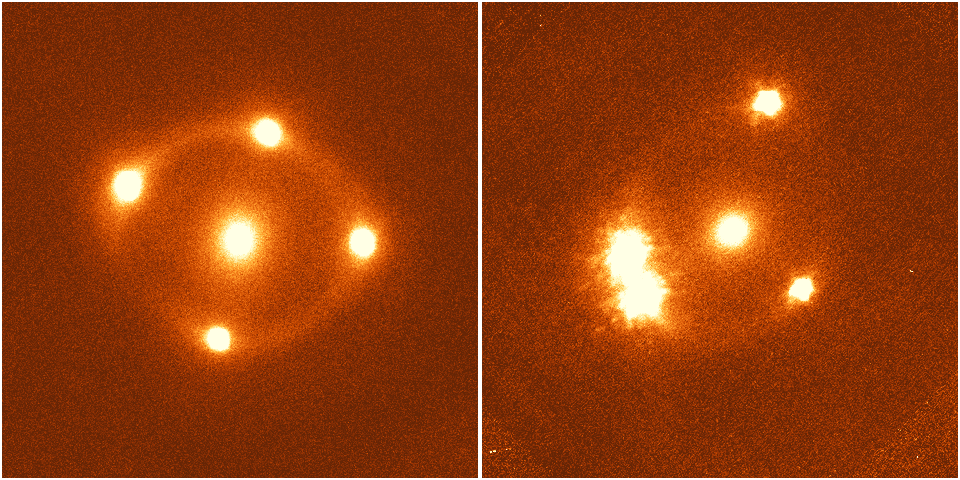
New measurements of the rate of expansion of the universe, led by astronomers at the University of California, Davis, add to a growing mystery: Estimates of a fundamental constant made with different methods keep giving different results. "There's a lot... Continue Reading →

Giant molecules can be in two places at once, thanks to quantum physics. That's something that scientists have long known is theoretically true based on a few facts: Every particle or group of particles in the universe is also a wave... Continue Reading →

The search narrows for a mysterious form of matter predicted from Einstein's theory of special relativity. After more than a decade of looking, scientists at the world's largest particle collider believe that they are on the verge of finding it. But... Continue Reading →

Neutron stars -- the compressed remains of massive stars gone supernova -- are the densest "normal" objects in the known universe. (Black holes are technically denser, but far from normal.) Just a single sugar-cube worth of neutron-star material would weigh... Continue Reading →

A University of Queensland-led international team of researchers say they have discovered "a new kind of quantum time order." UQ physicist Dr Magdalena Zych said the discovery arose from an experiment the team designed to bring together elements of the... Continue Reading →
 Scents of Science