
Running barefoot is better than running with shoes for your working memory, according to a new study published by researchers at the University of North Florida. The experiment, designed by lead researcher Dr. Ross Alloway, undertaken with Dr. Tracy Alloway,... Continue Reading →

If a mother picks up an infection during pregnancy, her immune system will kick into action to clear the infection – but this self-defense mechanism may also have a small influence how her child’s brain develops in the womb, in... Continue Reading →

Normal function of the brain’s control centers is dependent upon adequate supply of oxygen and nutrients through a dense network of blood vessels. Blood is supplied to the brain, face, and scalp via two major sets of vessels: the right... Continue Reading →

An estimated 50 to 70 million Americans have some type of sleep disorder, according to the National Sleep Foundation. Some turn to melatonin supplements to help them fall asleep. Melatonin is a hormone known to promote sleep, but its underlying... Continue Reading →

Parts of the brain not traditionally associated with learning science become active when people are confronted with solving physics problems, a new study shows. The researchers, led by Eric Brewe, PhD, an associate professor in Drexel University’s College of Arts... Continue Reading →

The human brain is an exquisitely complex, organic CPU, made of trillions of connections between many billions of neurons. Understanding such a complicated organ is a massive scientific undertaking, and researchers often use simplified models to uncover small pieces of... Continue Reading →
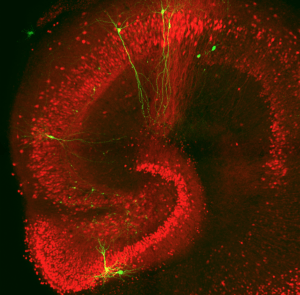
The brain has an incredible capacity to support a lifetime of learning and memory. Each new experience fundamentally alters the connections between cells in the brain called synapses. To accommodate synaptic alterations, certain areas of the brain are highly plastic,... Continue Reading →

Psychologists at the University of Sussex have found a link between depression and an acceleration of the rate at which the brain ages. Although scientists have previously reported that people with depression or anxiety have an increased risk of dementia... Continue Reading →
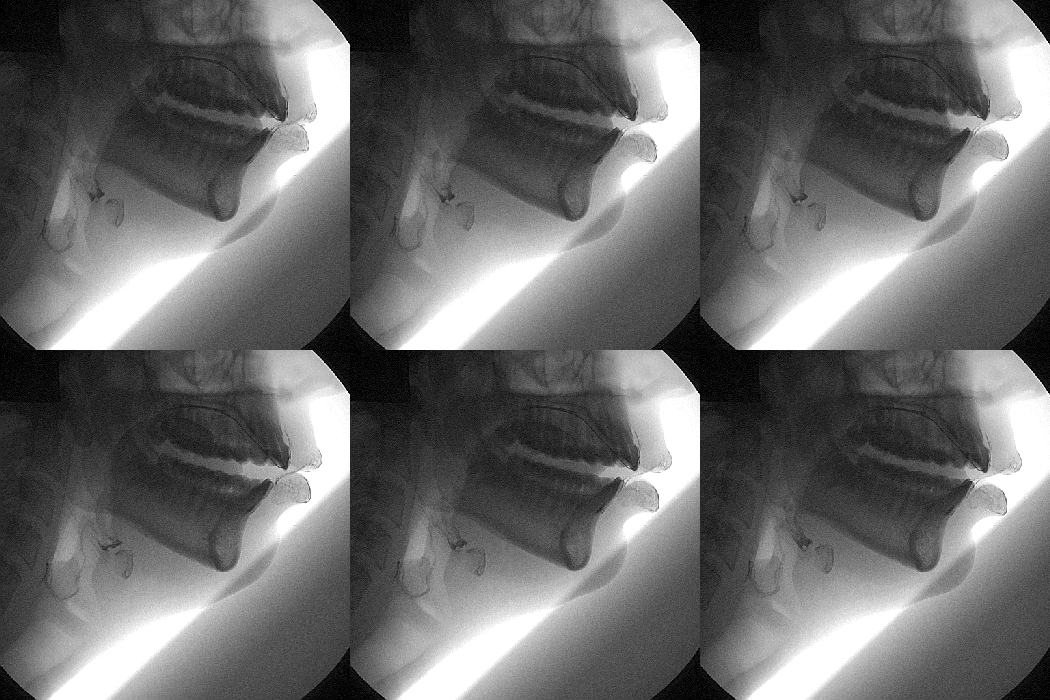
When we speak, we unconsciously pronounce some words more slowly than others, and sometimes we make brief pauses or throw in meaningless sounds like “uhm”. Such slow-down effects provide key evidence on how our brains process language. They point to... Continue Reading →
 Scents of Science