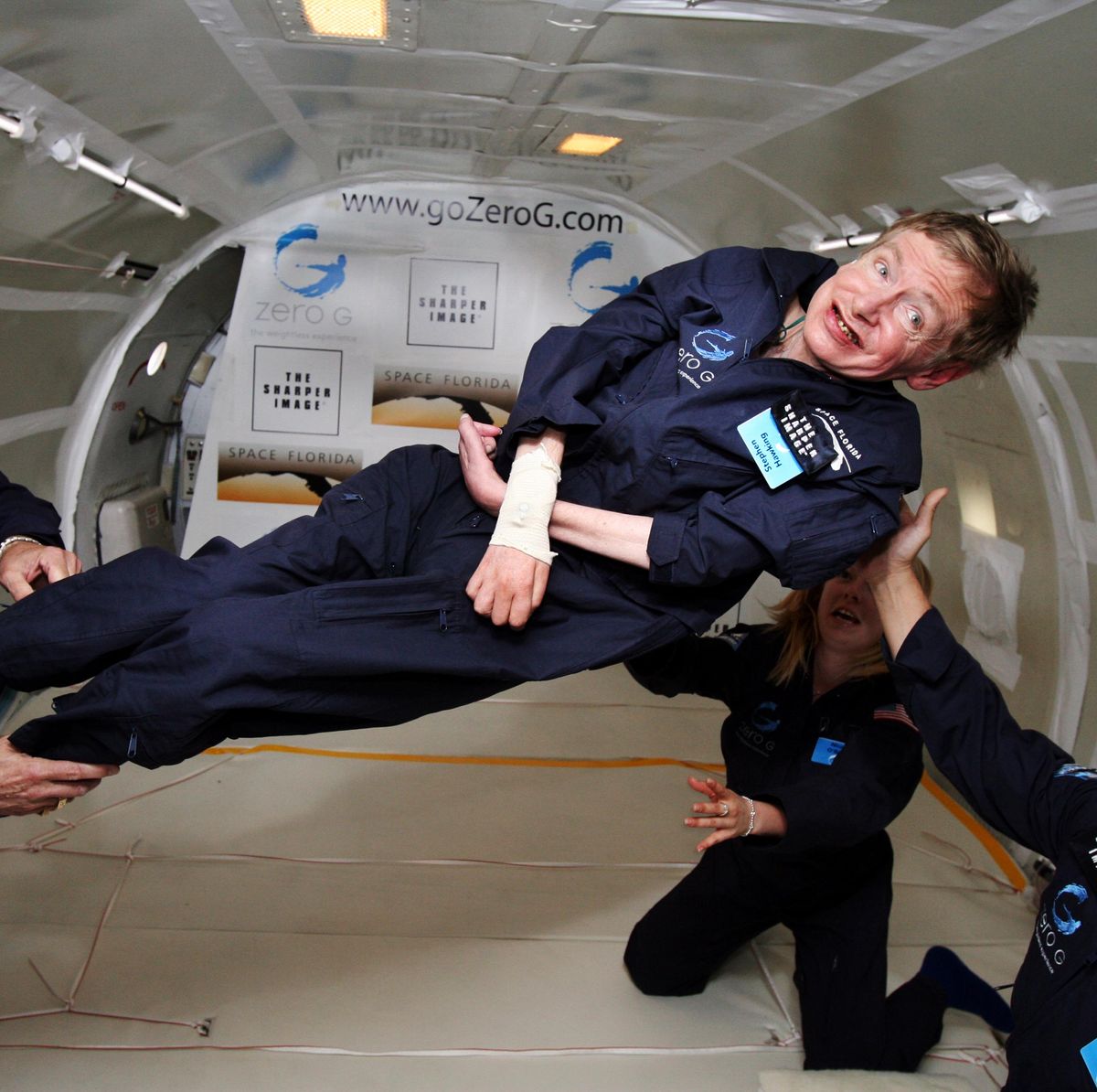
Stephen was born in Oxford on 8 January 1942, the three hundredth anniversary of the death of Galileo Galilei. His father, Frank Hawking, came from a family of tenant farmers in Yorkshire who suffered hard times during the agricultural depression at the beginning of the twentieth century. Although financially stretched, the family was able to send Frank to Oxford, where he studied medicine. His research expertise was in tropical medicine, which involved regular field trips to East Africa. At the beginning of the Second World War, despite volunteering for military service, the authorities judged that it would be best if Frank continued his medical research during the war years. Stephen’s mother, Isobel Walker, was born in Dunfermline in Scotland, but the family moved to Devon when she was 12. Isobel gained entrance to the University of Oxford, where she studied economics, politics and philosophy. She then worked for the Inland Revenue, but this proved not to be to her taste and she subsequently became a school teacher. She was a free-thinking radical and a strong influence on her son.
Stephen Hawking was an average student at school, deeply interested in science. After winning a scholarship in Natural Sciences at age 17, he graduated at age 20 with a first-class honors degree in Physics from University College, Oxford.
Thereafter, Hawking carried out research at Trinity Hall, University of Cambridge, for a PhD in Astronomy and Cosmology.
In his early days at Cambridge, at age 21, Hawking was diagnosed with Amyotrophic lateral sclerosis (ALS), a motor neuron disease in which the nerves controlling the muscles become inactive while the sensory nerves function normally. At first his doctors expected him to die within two years.
Due to this sustained condition, it took him about 40 hours to devise a 45 minute lecture.
Hawking was known for bringing about a limited union between two very different fields: Albert Einstein’s general theory of relativity and quantum theory.
At one time it was thought that absolutely nothing could escape from a black hole. Hawking’s equations produced an amazing result – that over time black holes can lose energy – now known as Hawking radiation – hence they can shrink and ‘evaporate,’ disappearing from the universe.
Stephen Hawking died peacefully, age 76, at home, on March 14, 2018, in Cambridge, UK. His ashes were laid to rest in London’s Westminster Abbey between the final resting places of Isaac Newton and Charles Darwin.
Bio: https://royalsocietypublishing.org/doi/10.1098/rsbm.2019.0001
https://www.famousscientists.org/stephen-hawking/
 Scents of Science
Leave a comment