
Big, beautiful spiral galaxy NGC 7331 is often touted as an analog to our own Milky Way. About 50 million light-years distant in the northern constellation Pegasus, NGC 7331 was recognized early on as a spiral nebula and is actually one of the brighter galaxies not included in... Continue Reading →
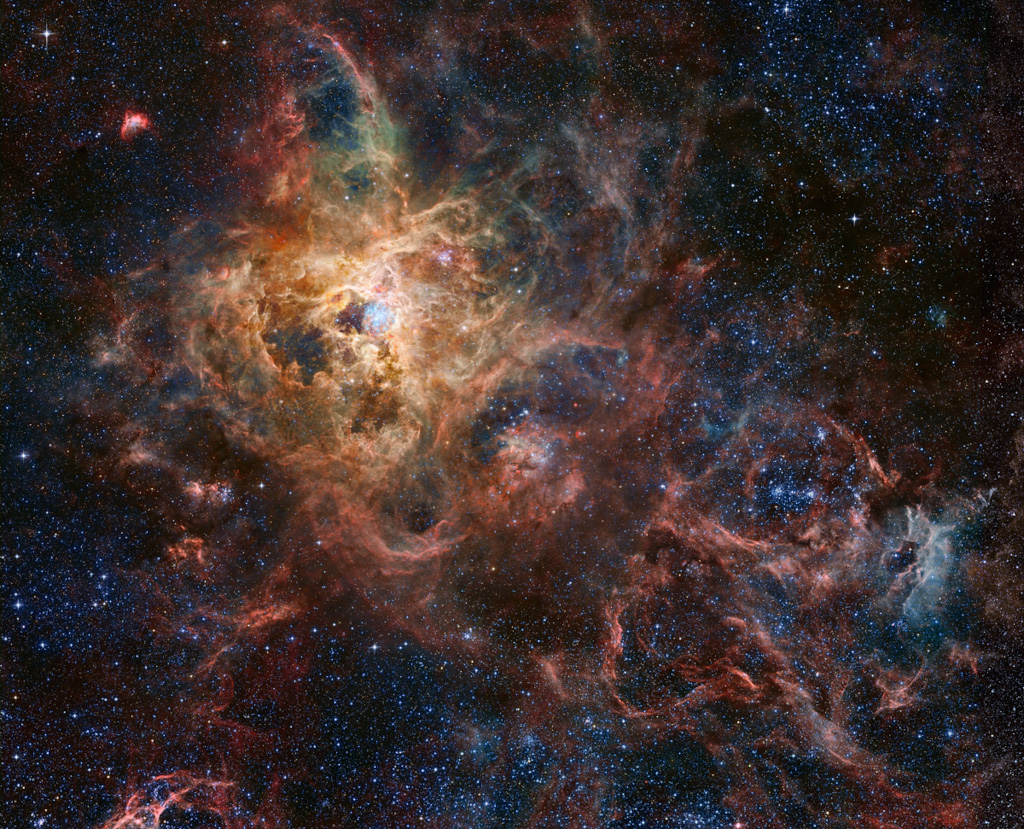
The Tarantula Nebula, also known as 30 Doradus, is more than a thousand light-years in diameter, a giant star forming region within nearby satellite galaxy the Large Magellanic Cloud. About 180 thousand light-years away, it's the largest, most violent star forming... Continue Reading →
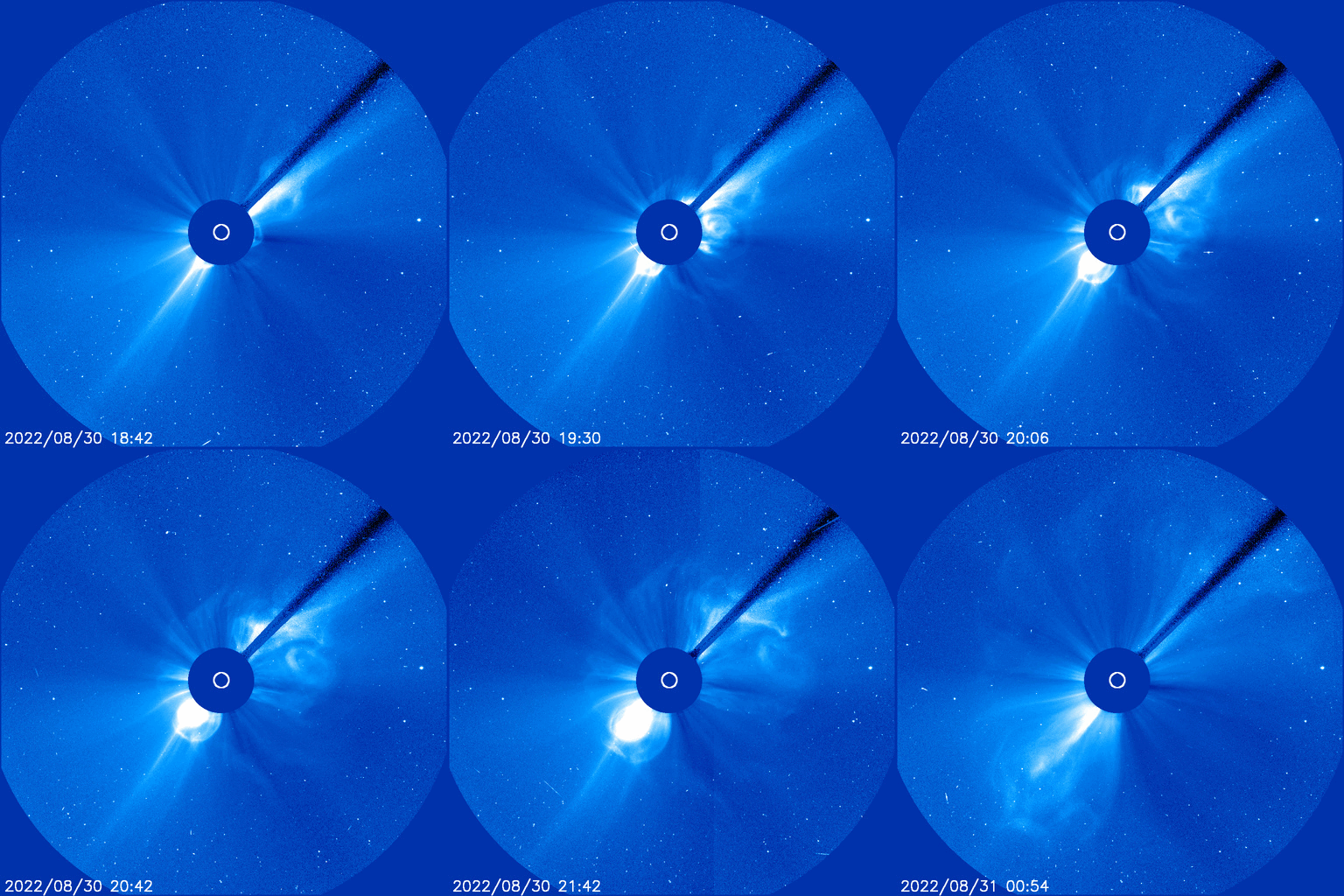
Large coronal mass ejection (CME) was recorded by the Solar and Heliospheric Observatory (SOHO) on 30 August 2022. The CME struck ESA's Solar Orbiter spacecraft as it performed a flyby of Venus. Credit: ESA/NASA SOHO

Earlier this month, the Sun exhibited one of the longer filaments on record. Visible as the bright curving streak around the image center, the snaking filament's full extent was estimated to be over half of the Sun's radius -- more than... Continue Reading →

Fans of our fair planet might recognize the outlines of these cosmic clouds. On the left, bright emission outlined by dark, obscuring dust lanes seems to trace a continental shape, lending the popular name North America Nebula to the emission region cataloged as NGC... Continue Reading →
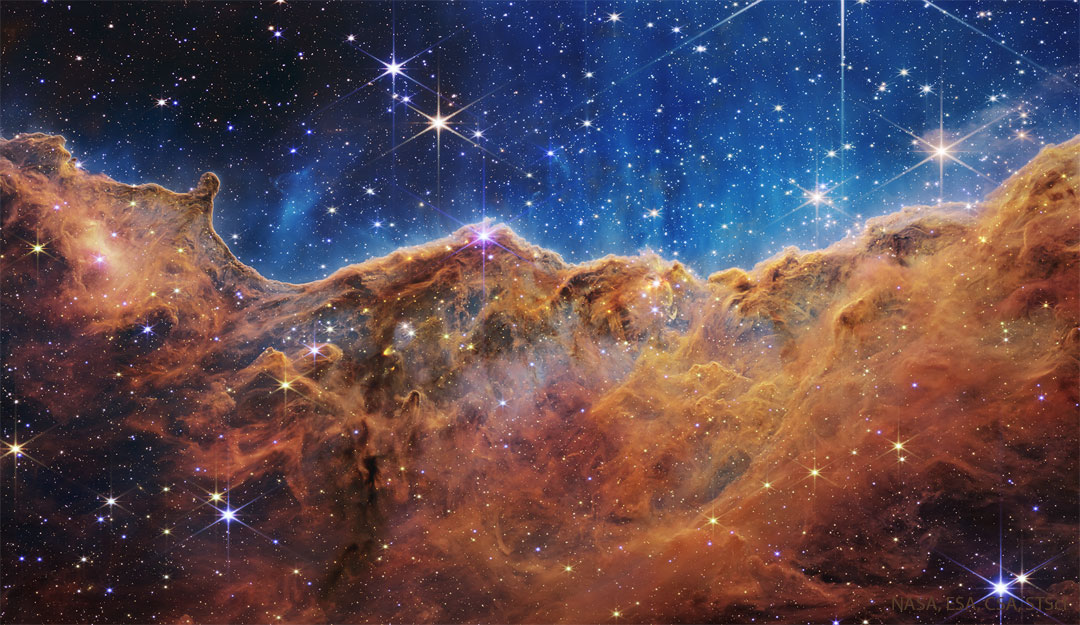
Stars created these cliffs. Specifically, the destructive winds and energetic light from the stars in the open cluster NGC 3324 eroded away part of a mountain of dark interstellar dust in the northern part of the Carina Nebula. Several of these stars are visible toward the top of this highly detailed image taken... Continue Reading →

Artemis I, formerly Exploration Mission-1,will be the first integrated flight test of NASA’s Deep Space Exploration Systems: the Orion spacecraft, Space Launch System (SLS) rocket, with the newly upgraded Exploration Ground Systems at Kennedy Space Center in Cape Canaveral, Florida.... Continue Reading →

The famous Horsehead Nebula in Orion is not alone. A deep exposure shows that the dark familiar shaped indentation, visible just right of center, is part of a vast complex of absorbing dust and glowing gas. The featured spectacular picture details an intricate tapestry of gaseous wisps and dust-laden filaments that were... Continue Reading →
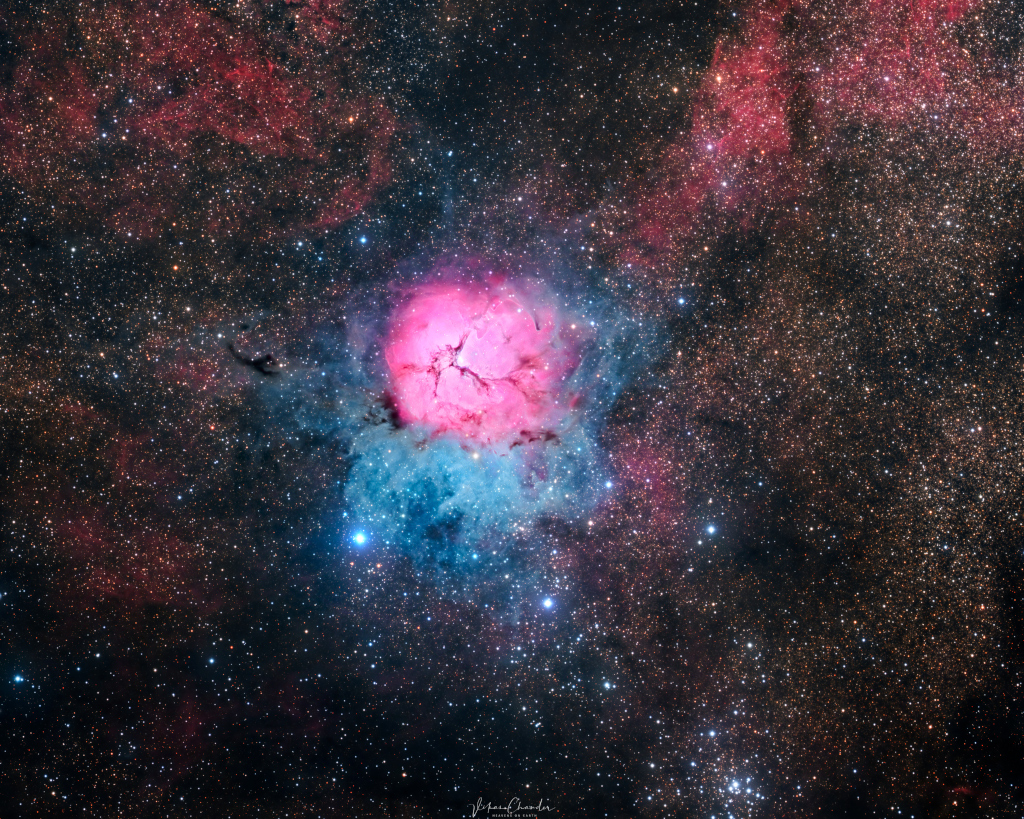
The beautiful Trifid Nebula is a cosmic study in contrasts. Also known as M20, it lies about 5,000 light-years away toward the nebula rich constellation Sagittarius. A star forming region in the plane of our galaxy, the Trifid does illustrate three different types of astronomical... Continue Reading →
 Scents of Science