
Mars exploration rover Opportunity's parting panorama from Perseverance Valley spans 360 degrees in this false color mosaic. The scene is composed of 354 individual images recorded through 3 different color filters by the rover's panoramic camera from May 13 through June 10, 2018. A... Continue Reading →
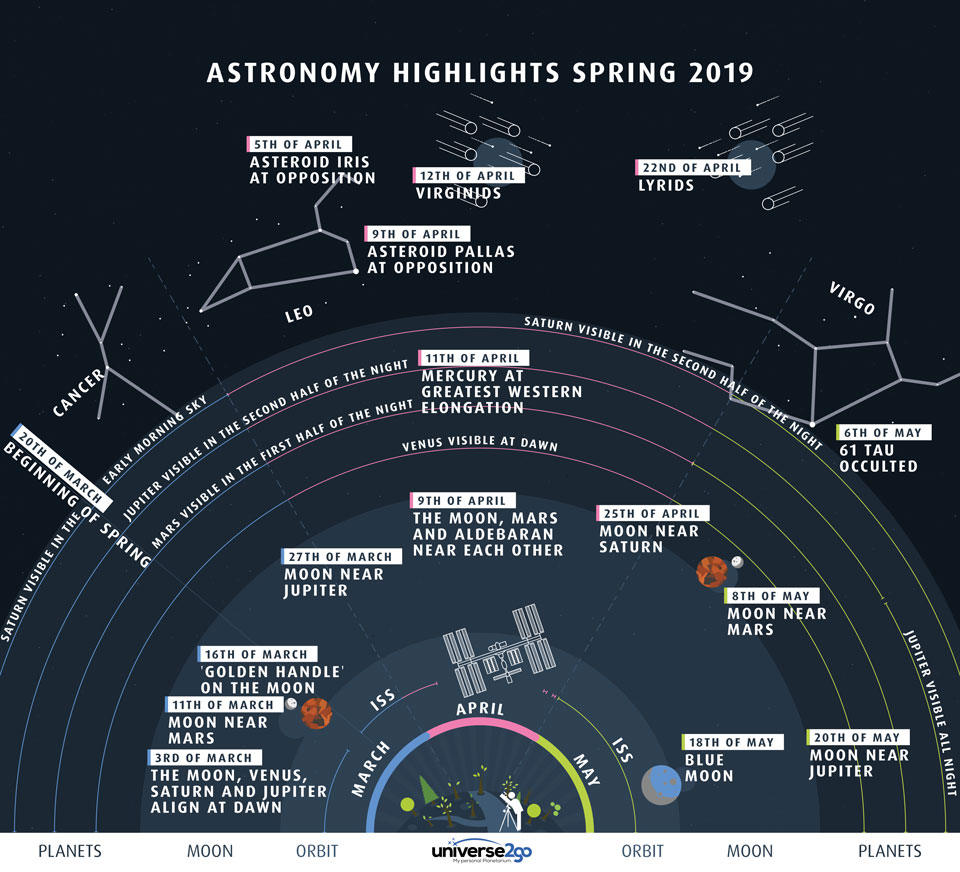
What can you see in the night sky this season? The featured graphic gives a few highlights for Earth's northern hemisphere. Viewed as a clock face centered at the bottom, early (northern) spring sky events fan out toward the left, while late... Continue Reading →
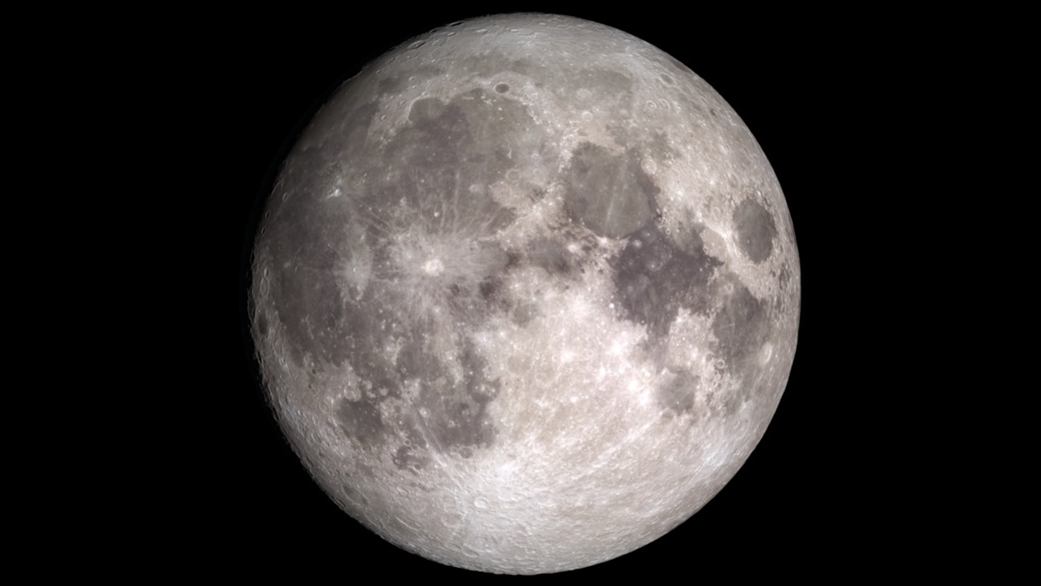
Scientists, using an instrument aboard NASA’s Lunar Reconnaissance Orbiter (LRO), have observed water molecules moving around the dayside of the Moon. A paper published in Geophysical Research Letters describes how Lyman Alpha Mapping Project (LAMP) measurements of the sparse layer... Continue Reading →
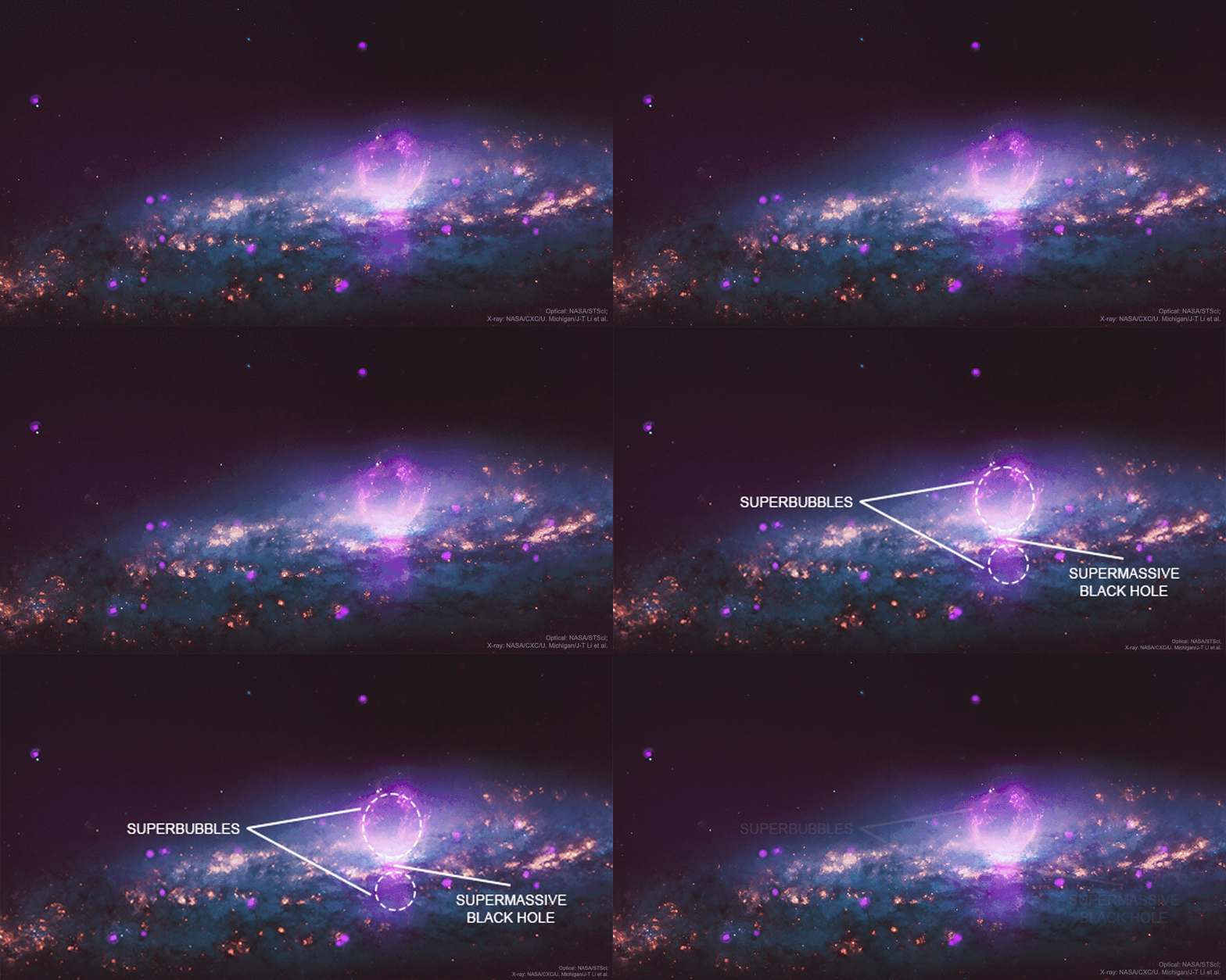
What created these huge galactic superbubbles? Two of these unusual bubbles, each spanning thousands of light-years, were recently discovered near the center of spiral galaxy NGC 3079. The superbubbles, shown in purple on the image right, are so hot they emit X-rays detected by NASA's... Continue Reading →

The bright clusters and nebulae of planet Earth's night sky are often named for flowers or insects. Though its wingspan covers over 3 light-years, NGC 6302 is no exception. With an estimated surface temperature of about 250,000 degrees C, the dying central star of this particular planetary... Continue Reading →

On January 1, New Horizons swooped to within 3,500 kilometers of the Kuiper Belt world known as Ultima Thule. That's about 3 times closer than its July 2015 closest approach to Pluto. The spacecraft's unprecedented feat of navigational precision, supported by... Continue Reading →
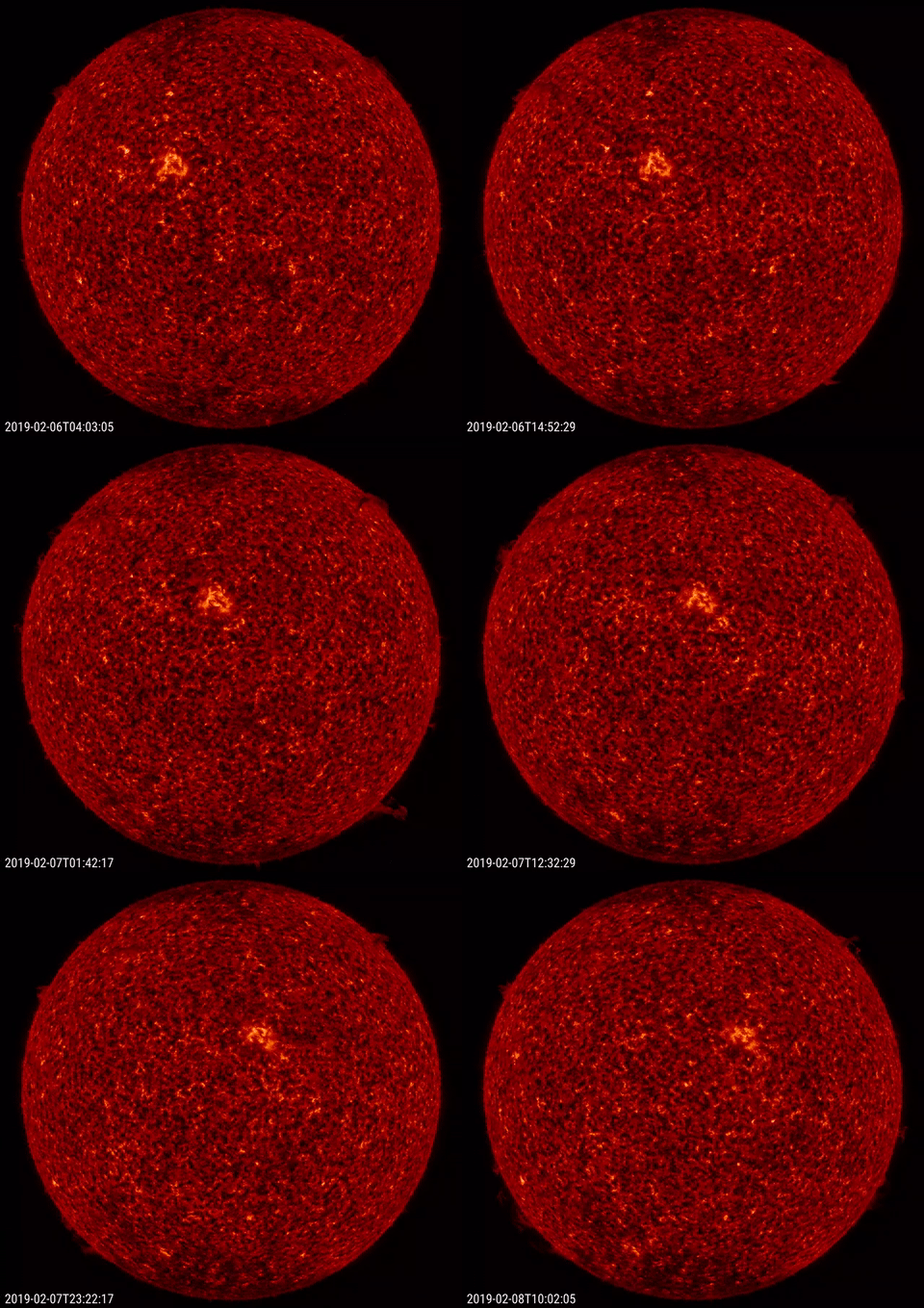
The SDO spacecraft is in another eclipse season as of Feb. 6, 2019. This begins a several week period when the Earth briefly blocks SDO’s view of the Sun each day. In fact, because SDO orbits above the Mountain Time... Continue Reading →
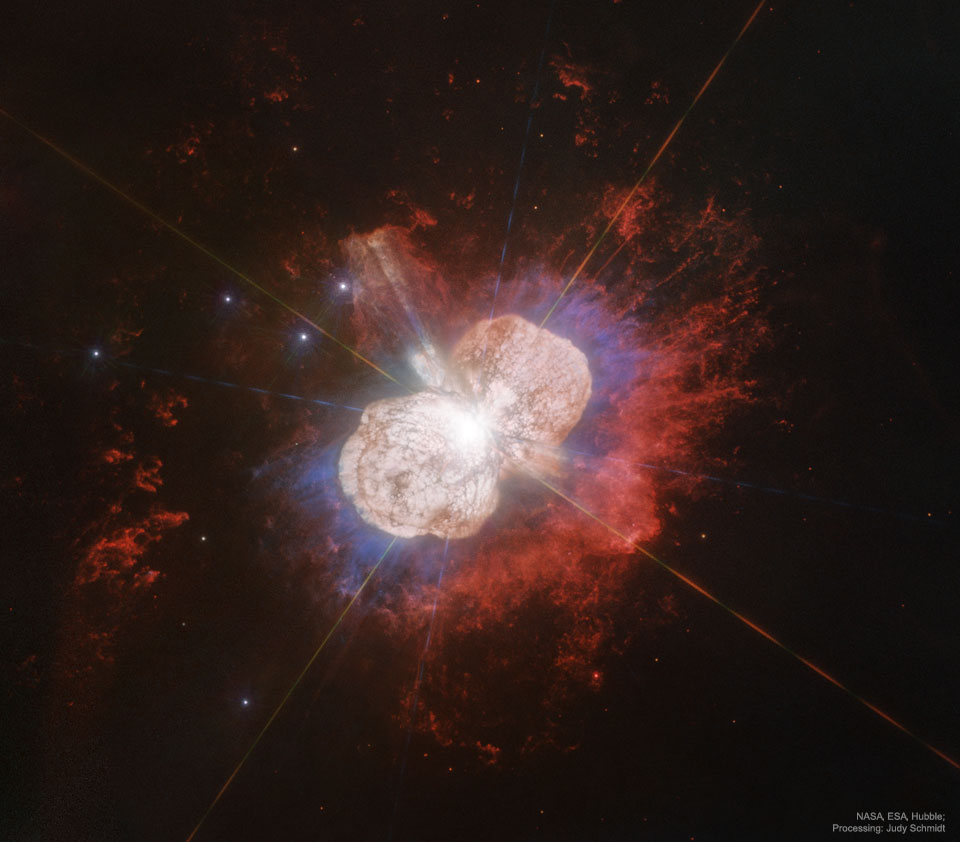
Eta Carinae may be about to explode. But no one knows when - it may be next year, it may be one million years from now. Eta Carinae's mass - about 100 times greater than our Sun - makes it an excellent candidate... Continue Reading →

Clouds of glowing hydrogen gas fill this colorful skyscape in the faint but fanciful constellation Monoceros, the Unicorn. A star forming region cataloged as NGC 2264, the complex jumble of cosmic gas and dust is about 2,700 light-years distant and mixes reddish emission... Continue Reading →
 Scents of Science