
Is this galaxy jumping through a giant ring of stars? Probably not. Although the precise dynamics behind the featured image is yet unclear, what is clear is that the pictured galaxy, NGC 7714, has been stretched and distorted by a recent collision with a... Continue Reading →

A team led by Carnegie's Scott S. Sheppard has found 20 new moons orbiting Saturn. This brings the ringed planet's total number of moons to 82, surpassing Jupiter, which has 79. The discovery was announced Monday by the International Astronomical... Continue Reading →
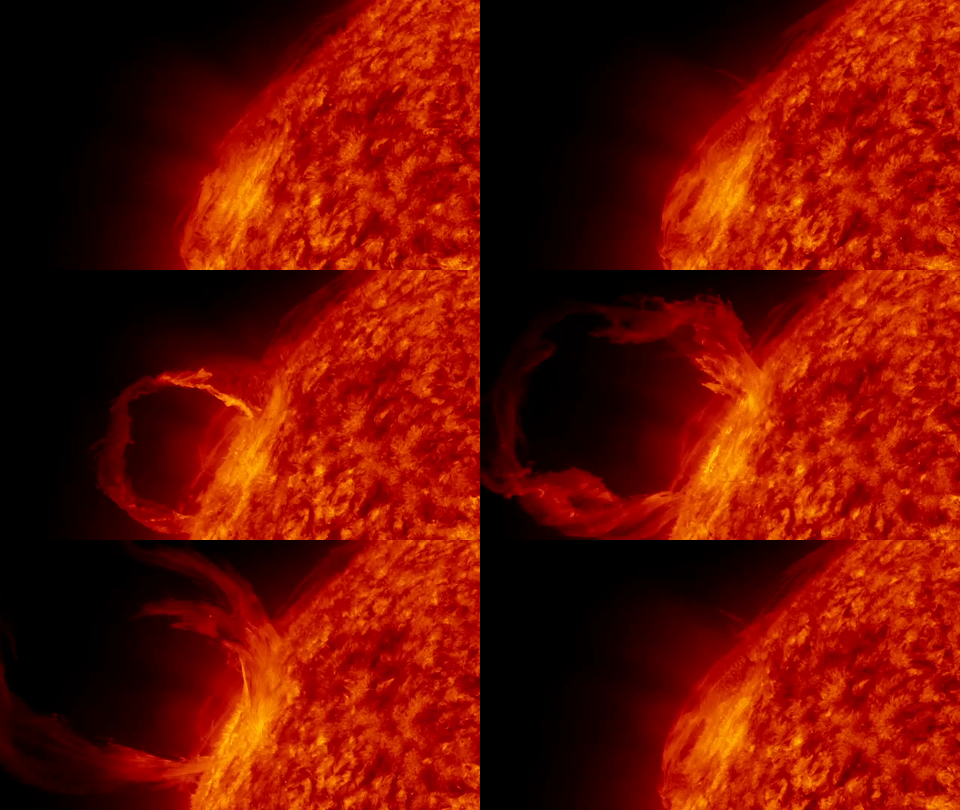
Soon after the instruments opened their doors, the Sun began performing for SDO with this beautiful prominence eruption. This AIA data is from March 30, 2010, showing a wavelength band that is centered around 304 Å. This extreme ultraviolet emission... Continue Reading →

What's that dark spot on Jupiter? It's the shadow of Jupiter's most volcanic moon Io. Since Jupiter shines predominantly by reflected sunlight, anything that blocks that light leaves a shadow. If you could somehow be in that shadow, you would see a total eclipse... Continue Reading →

Put an ear to the ground on Mars and you'll be rewarded with a symphony of sounds. Granted, you'll need superhuman hearing, but NASA's InSight lander comes equipped with a very special "ear." The spacecraft's exquisitely sensitive seismometer, called the Seismic... Continue Reading →
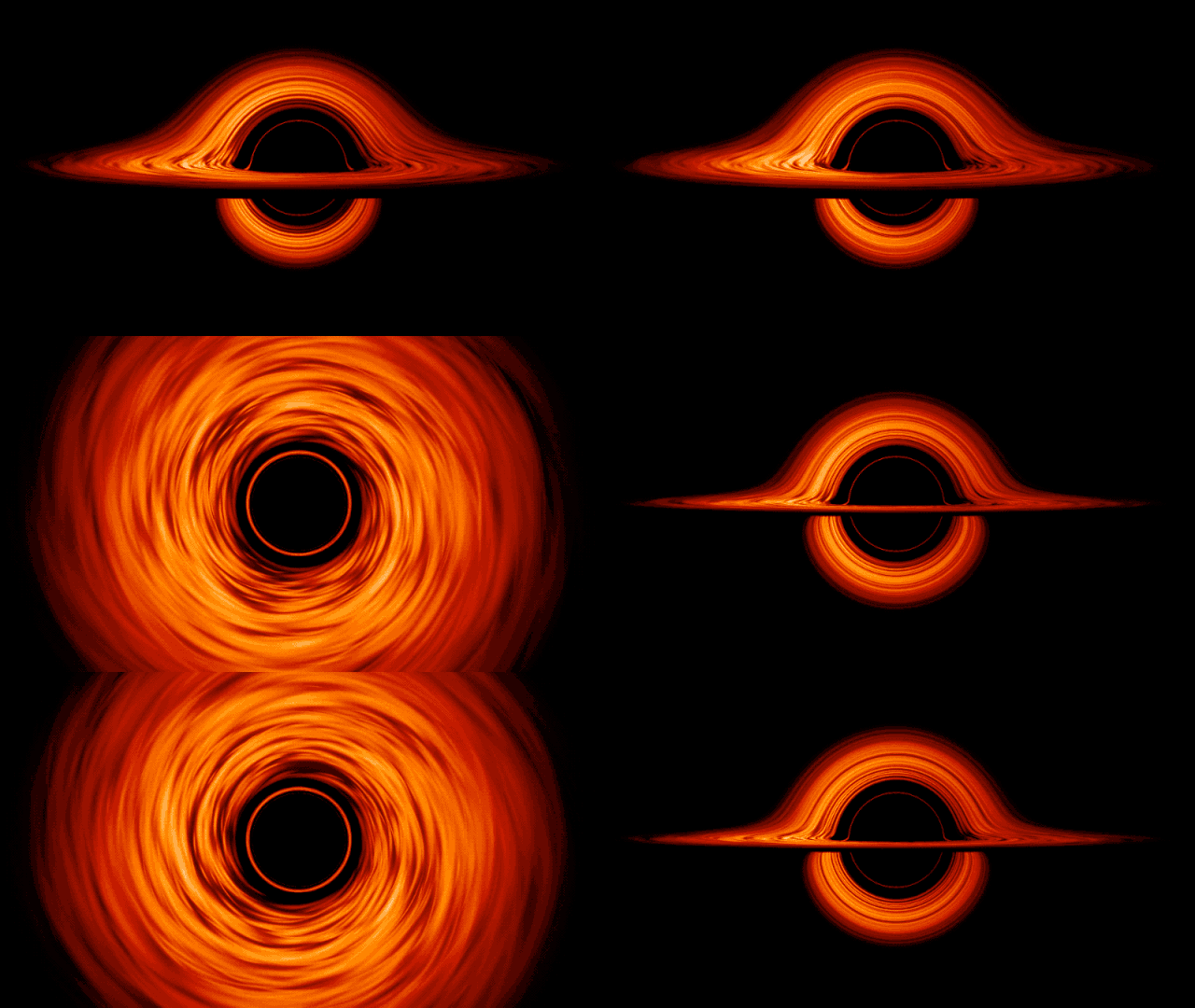
This new visualization of a black hole illustrates how its gravity distorts our view, warping its surroundings as if seen in a carnival mirror. The visualization simulates the appearance of a black hole where infalling matter has collected into a... Continue Reading →

Billions of years ago, something slammed into the dark side of the moon and carved out a very, very large hole. Stretching 1,550 miles (2,500 kilometers) wide and 8 miles (13 km) deep, the South Pole-Aitken basin, as the tremendous hole is known... Continue Reading →

For 400 years people have tracked sunspots, the dark patches that appear for weeks at a time on the sun's surface. They have observed but been unable to explain why the number of spots peaks every 11 years. A University... Continue Reading →

The sun and its atmosphere consist of several zones or layers. From the inside out, the solar interior consists of: the Core (the central region where nuclear reactions consume hydrogen to form helium. These reactions release the energy that ultimately leaves the... Continue Reading →
 Scents of Science