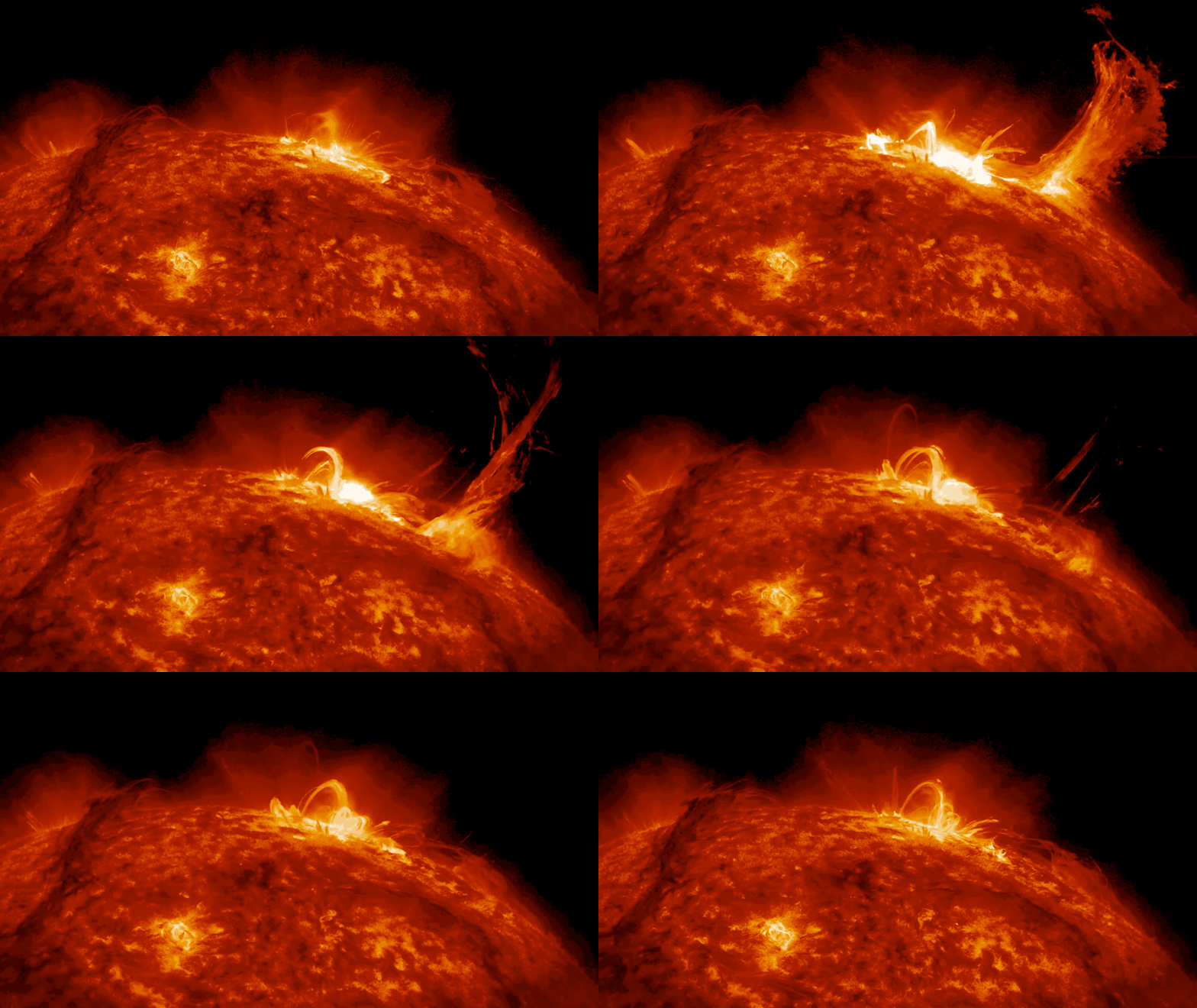
Seen from Earth, solar flares put on an elegant show. But these dancing plasma ribbons are the shrapnel of violent explosions. The energetic process that fuels them, known as magnetic reconnection, doesn't just power flares. Magnetic reconnection shapes the behavior... Continue Reading →

Animation showing the trajectory of Solar Orbiter around the Sun, highlighting the gravity assist manoeuvres that will enable the spacecraft to change inclination to observe the Sun from different perspectives. During the initial cruise phase, which lasts until November 2021,... Continue Reading →
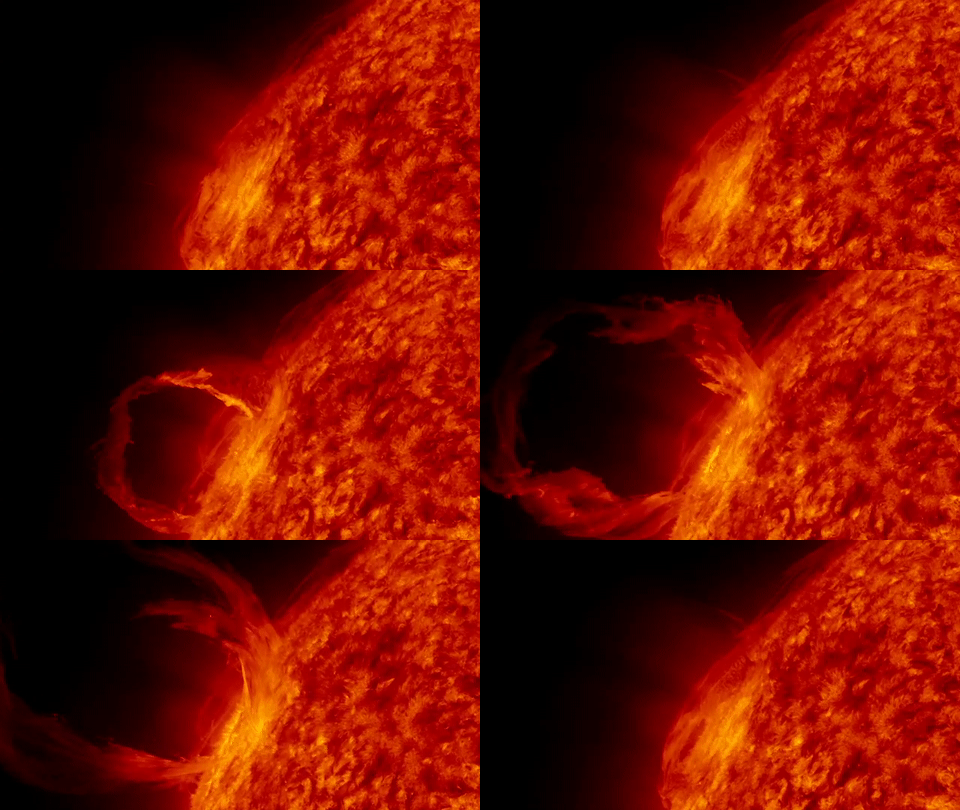
Soon after the instruments opened their doors, the Sun began performing for SDO with this beautiful prominence eruption. This AIA data is from March 30, 2010, showing a wavelength band that is centered around 304 Å. This extreme ultraviolet emission... Continue Reading →

The sun and its atmosphere consist of several zones or layers. From the inside out, the solar interior consists of: the Core (the central region where nuclear reactions consume hydrogen to form helium. These reactions release the energy that ultimately leaves the... Continue Reading →
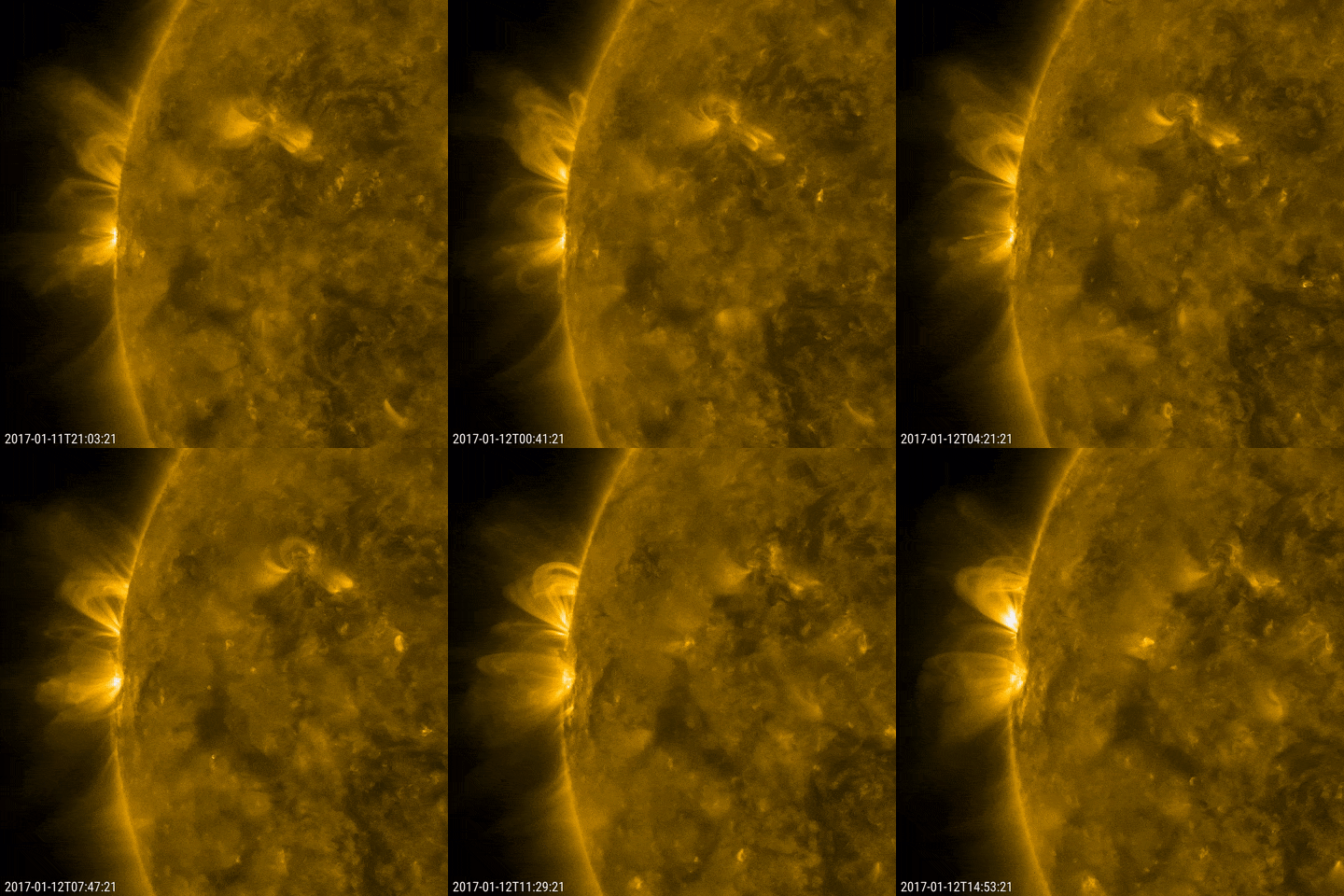
Magnetic arcs of plasma that spiraled above two active regions held their shape fairly well over 18 hours (Jan. 11-12, 2017). The charged plasma is being controlled by the magnetic field lines of the active regions. The field lines become... Continue Reading →

The solar system has one less comet. The Solar and Heliospheric Observatory (SOHO) watched a comet dive toward the sun. The dirty snowball went in--but it didn't come back out again. The comet, R.I.P., was a member of the Kreutz... Continue Reading →

It's one of the greatest and longest-running mysteries surrounding, quite literally, our sun -- why is its outer atmosphere hotter than its fiery surface? University of Michigan researchers believe they have the answer, and hope to prove it with help... Continue Reading →

The ESA-JAXA BepiColombo mission to Mercury has been firing its electric propulsion thrusters since December in the first of 22 ‘thruster burn arcs’ that will steer the spacecraft to its destination. While taking routine images with the Mercury Transfer Module (MTM)’s solar... Continue Reading →

On Mar. 6, 2019, SDO observed a long lunar transit - with a twist. The shadow of the Moon in SDO's images first touched the limb of the Sun at 2200 UTC (5pm EST) on Mar. 6, making its way... Continue Reading →
 Scents of Science