
The sun sported four smallish prominences along its edge at about the same time (Dec. 12-14, 2018). They were at the positions of 2 o'clock, 5 o'clock, 7 o'clock, and 10 o'clock. The largest and most active of the prominences... Continue Reading →
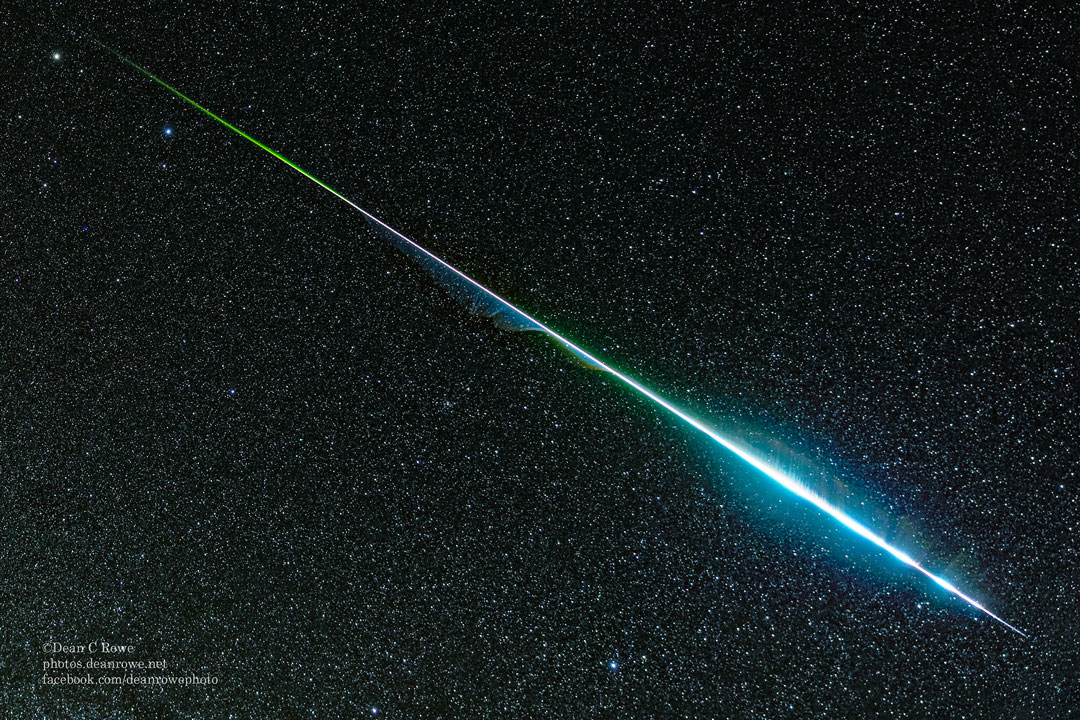
Meteors can be colorful. While the human eye usually cannot discern many colors, cameras often can. Pictured is a Geminid captured by camera during last week's meteor shower that was not only impressively bright, but colorful. The radiant grit cast off by asteroid 3200 Phaethon blazed a path across Earth's atmosphere longer... Continue Reading →

New NASA research confirms that Saturn is losing its iconic rings at the maximum rate estimated from Voyager 1 & 2 observations made decades ago. The rings are being pulled into Saturn by gravity as a dusty rain of ice... Continue Reading →

In space, the human body loses muscle mass. Although living in microgravity requires no heavy lifting, this loss of muscle reduces physical performance. Decreased muscle mass could also prove particularly problematic on future missions to destinations such as the Moon... Continue Reading →

On October 29, 2018, NASA's Juno probe successfully performed her Perijove-16 Jupiter flyby.This time, Juno's spin axis was pointed away from Earth, in order to obtain a better view to Jupiter for Juno's instruments. At the same time, solar conjunction... Continue Reading →

What is the nearest major galaxy to our own Milky Way Galaxy? Andromeda. In fact, our Galaxy is thought to look much like Andromeda. Together these two galaxies dominate the Local Group of galaxies. The diffuse light from Andromeda is caused by the hundreds of billions of stars that... Continue Reading →
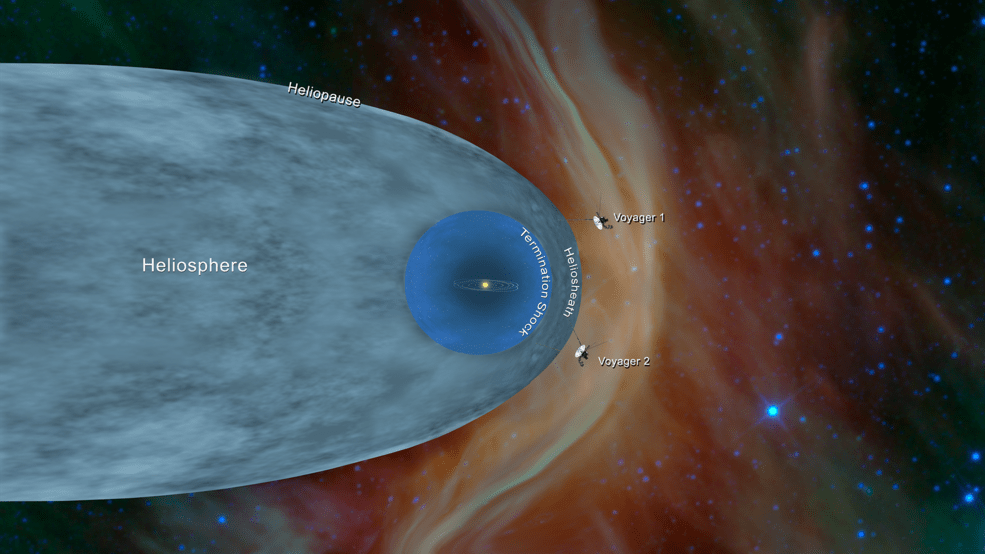
For the second time in history, a human-made object has reached the space between the stars. NASA’s Voyager 2 probe now has exited the heliosphere – the protective bubble of particles and magnetic fields created by the Sun. Voyager 2 now is... Continue Reading →
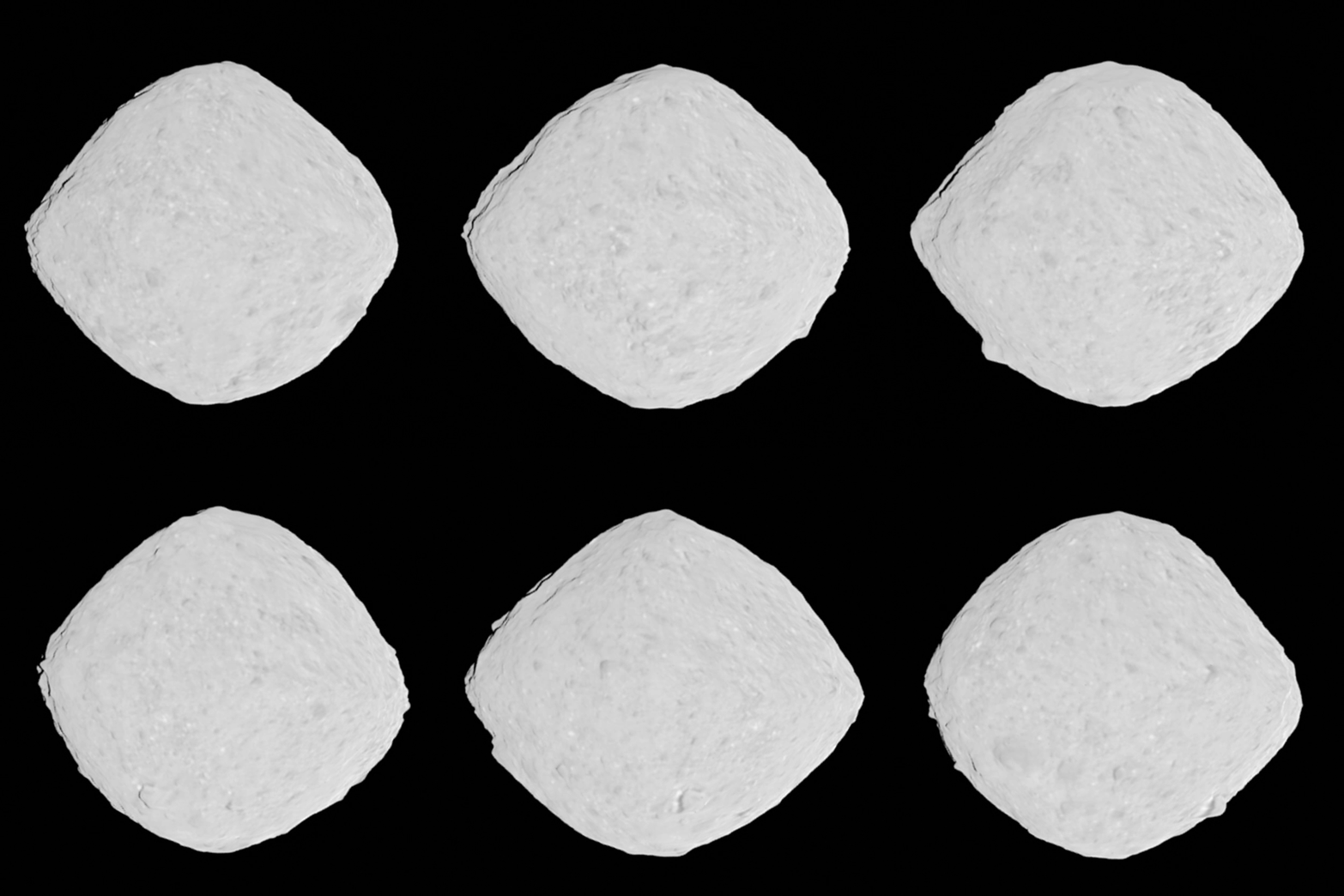
OSIRIS-REx mission recently arrived at its destination, asteroid Bennu. On approach, data from the spacecraft’s spectrometers revealed chemical signatures of water trapped in clay minerals. While Bennu itself is too small to have ever hosted liquid water, the finding indicates... Continue Reading →

This is NASA InSight's first full selfie on Mars. It displays the lander's solar panels and deck. On top of the deck are its science instruments, weather sensor booms and UHF antenna. The selfie was taken on Dec. 6, 2018... Continue Reading →
 Scents of Science