
They may look like modern mechanical dinosaurs but they are enormous swiveling eyes that watch the sky. The High Energy Stereoscopic System (H.E.S.S.) Observatory is composed of four 12-meter reflecting-mirror telescopes surrounding a larger telescope housing a 28-meter mirror. They are designed to detect... Continue Reading →

This was an unusual night to look in the direction of the Bull. The constellation Taurus is always well known for hosting two bright star clusters -- the Pleaides, visible on the right, and the comparatively diffuse Hyades, visible on the left. This night... Continue Reading →
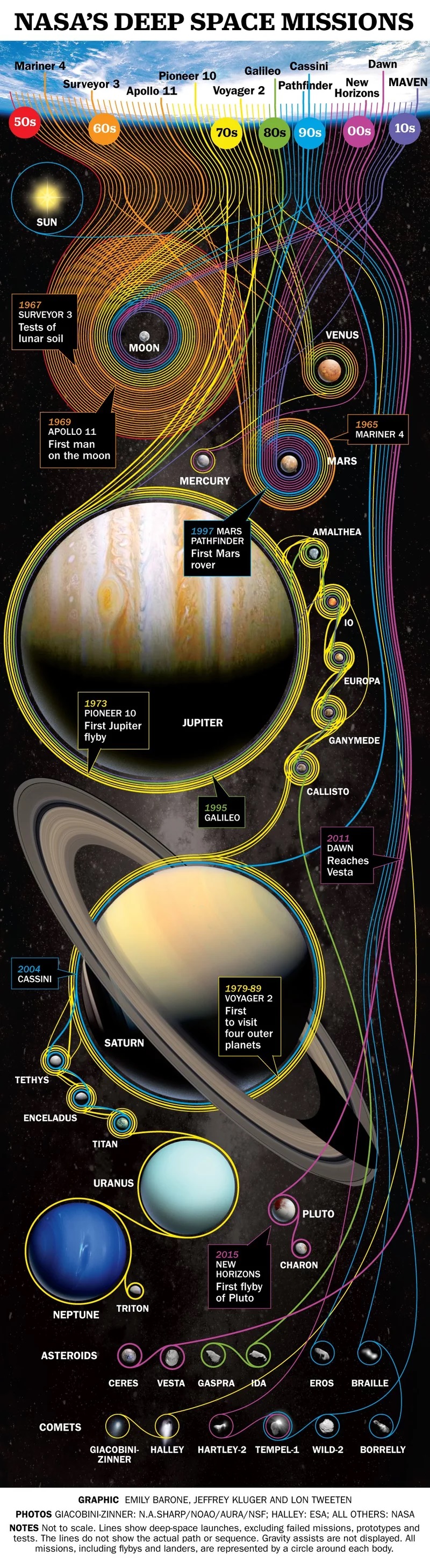
Generations of exploration have seen spacecraft bearing both the American flag and the NASA logo ranging throughout the solar system. The diagram, color-coded by decade, tracks most of those journeys. It is an illustration of ambition, of innovation, even of... Continue Reading →

Why are these people shooting a powerful laser into the center of our Galaxy? Fortunately, this is not meant to be the first step in a Galactic war. Rather, astronomers at the Very Large Telescope (VLT) site in Chile are trying to measure the distortions... Continue Reading →
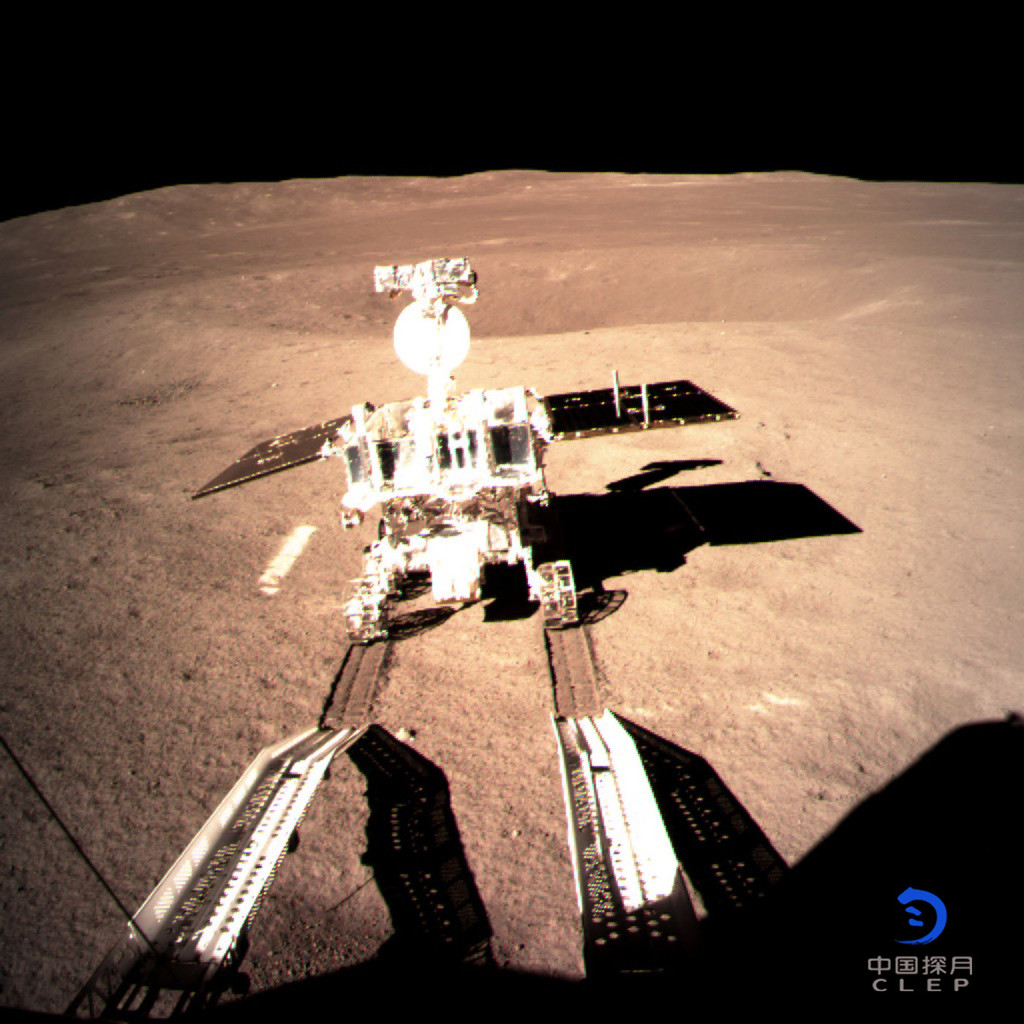
On January 3, the Chinese Chang'e-4 spacecraft made the first successful landing on the Moon's farside. Taken by a camera on board the lander, this image is from the landing site inside Von Karman crater. It shows the desksized, six-wheeled Yutu 2 (Jade Rabbit 2)... Continue Reading →
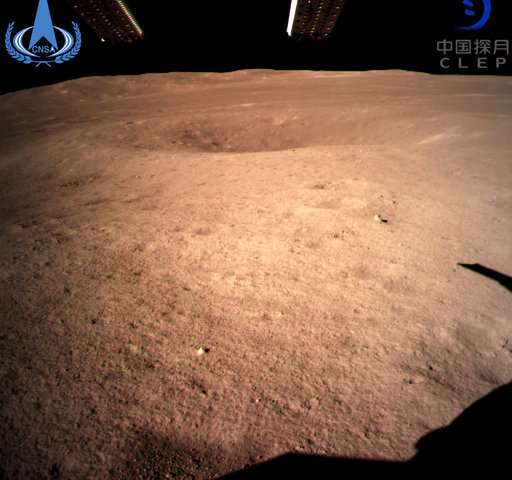
For the first time in history, a space mission has touched down on the far side of the moon. China’s Chang’e-4 probe landed in the oldest and deepest basin on the moon’s surface. One challenge of sending a probe to... Continue Reading →

The space shuttle Endeavour, mission STS-88, launched Dec. 6, 1998, from NASA’s Kennedy Space Center carrying the U.S.-built Unity connecting module and two pressurized mating adapters. Unity was the first piece of the International Space Station provided by the United... Continue Reading →

On January 1 New Horizons encountered the Kuiper Belt object nicknamed Ultima Thule. Some 6.5 billion kilometers from the Sun, Ultima Thule is the most distant world ever explored by a spacecraft from Earth. This historic image, the highest resolution image released so far, was... Continue Reading →
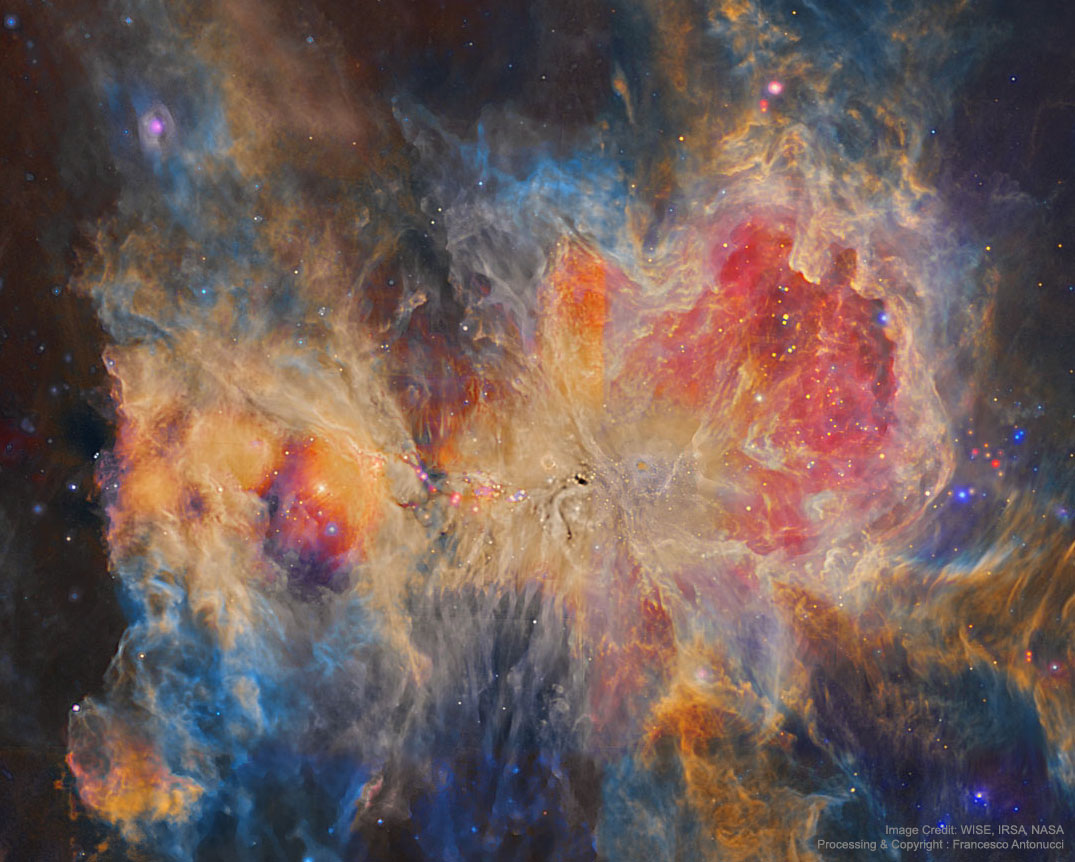
The Great Nebula in Orion is an intriguing place. Visible to the unaided eye, it appears as a small fuzzy patch in the constellation of Orion. But this image, an illusory-color four-panel mosaic taken in different bands of infrared light with the Earth orbiting WISE observatory,... Continue Reading →
 Scents of Science