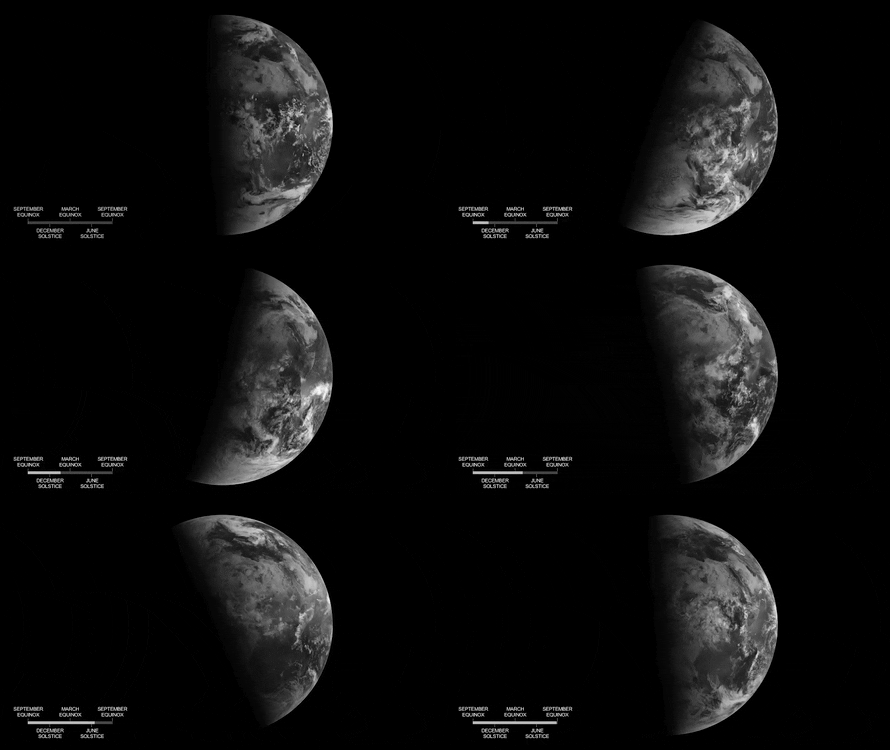
https://www.youtube.com/watch?time_continue=12&v=LUW51lvIFjg Welcome to an equinox on planet Earth. Today is the first day of spring in our fair planet's northern hemisphere, fall in the southern hemisphere, with day and night nearly equal around the globe. At an equinox Earth's terminator, the dividing... Continue Reading →

On Mar. 6, 2019, SDO observed a long lunar transit - with a twist. The shadow of the Moon in SDO's images first touched the limb of the Sun at 2200 UTC (5pm EST) on Mar. 6, making its way... Continue Reading →

Mars exploration rover Opportunity's parting panorama from Perseverance Valley spans 360 degrees in this false color mosaic. The scene is composed of 354 individual images recorded through 3 different color filters by the rover's panoramic camera from May 13 through June 10, 2018. A... Continue Reading →
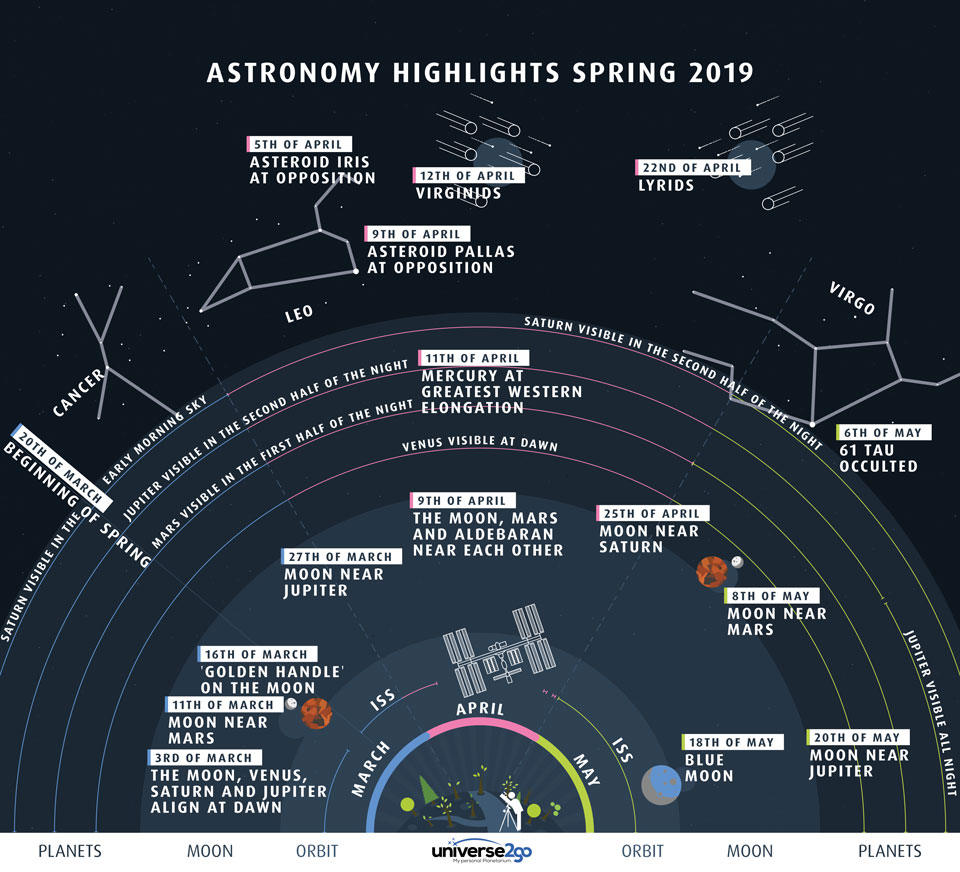
What can you see in the night sky this season? The featured graphic gives a few highlights for Earth's northern hemisphere. Viewed as a clock face centered at the bottom, early (northern) spring sky events fan out toward the left, while late... Continue Reading →
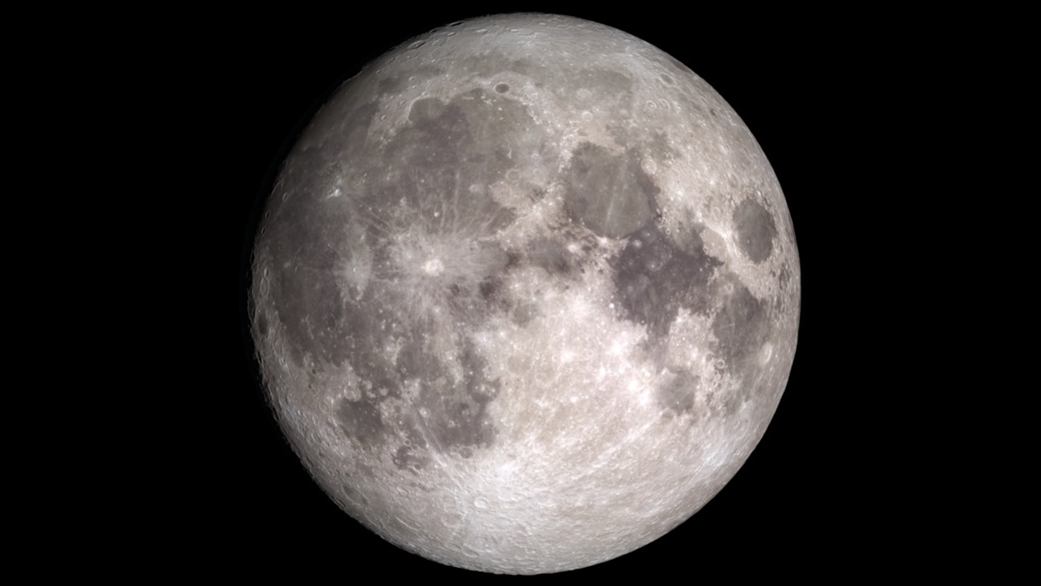
Scientists, using an instrument aboard NASA’s Lunar Reconnaissance Orbiter (LRO), have observed water molecules moving around the dayside of the Moon. A paper published in Geophysical Research Letters describes how Lyman Alpha Mapping Project (LAMP) measurements of the sparse layer... Continue Reading →
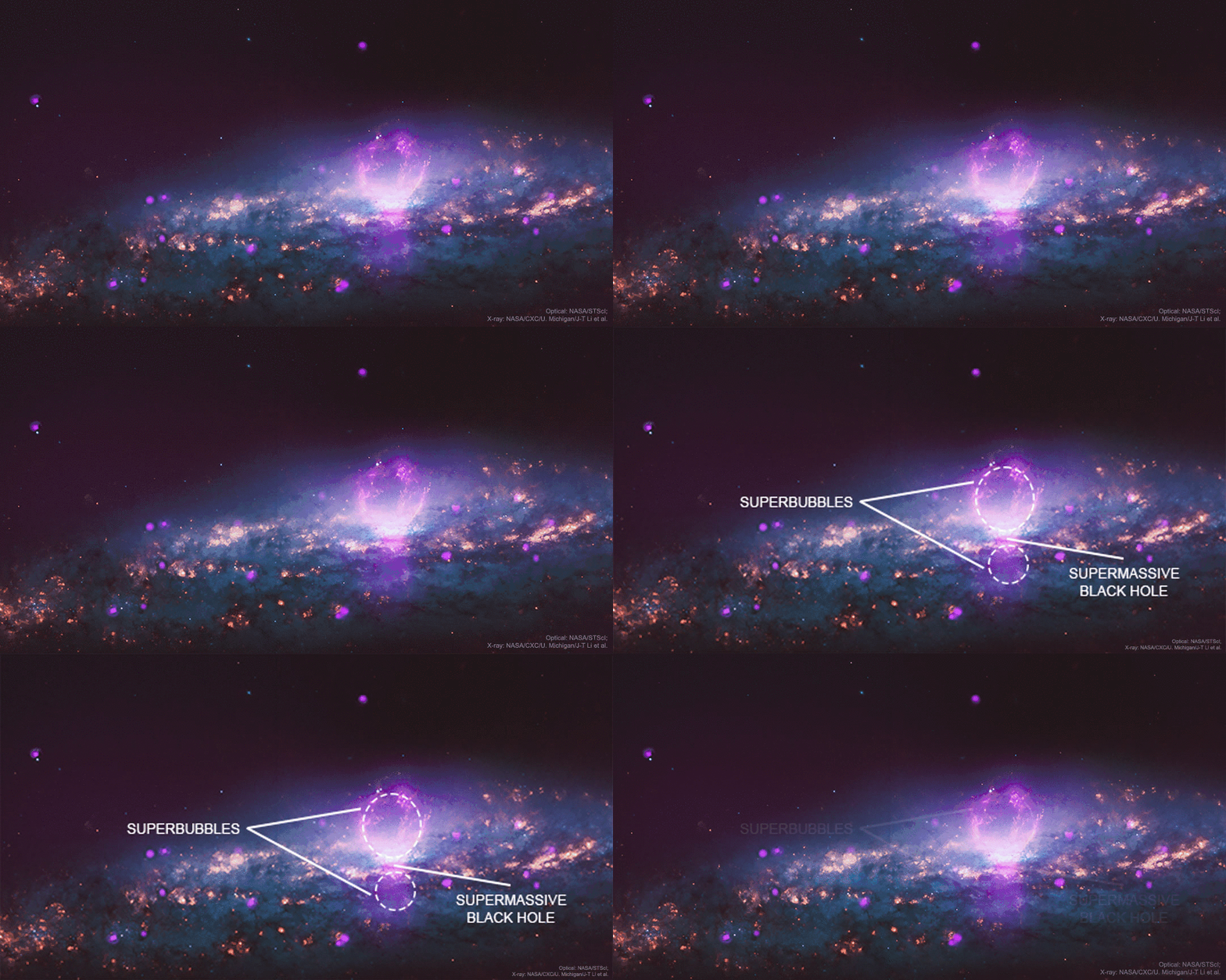
What created these huge galactic superbubbles? Two of these unusual bubbles, each spanning thousands of light-years, were recently discovered near the center of spiral galaxy NGC 3079. The superbubbles, shown in purple on the image right, are so hot they emit X-rays detected by NASA's... Continue Reading →

The bright clusters and nebulae of planet Earth's night sky are often named for flowers or insects. Though its wingspan covers over 3 light-years, NGC 6302 is no exception. With an estimated surface temperature of about 250,000 degrees C, the dying central star of this particular planetary... Continue Reading →

On January 1, New Horizons swooped to within 3,500 kilometers of the Kuiper Belt world known as Ultima Thule. That's about 3 times closer than its July 2015 closest approach to Pluto. The spacecraft's unprecedented feat of navigational precision, supported by... Continue Reading →
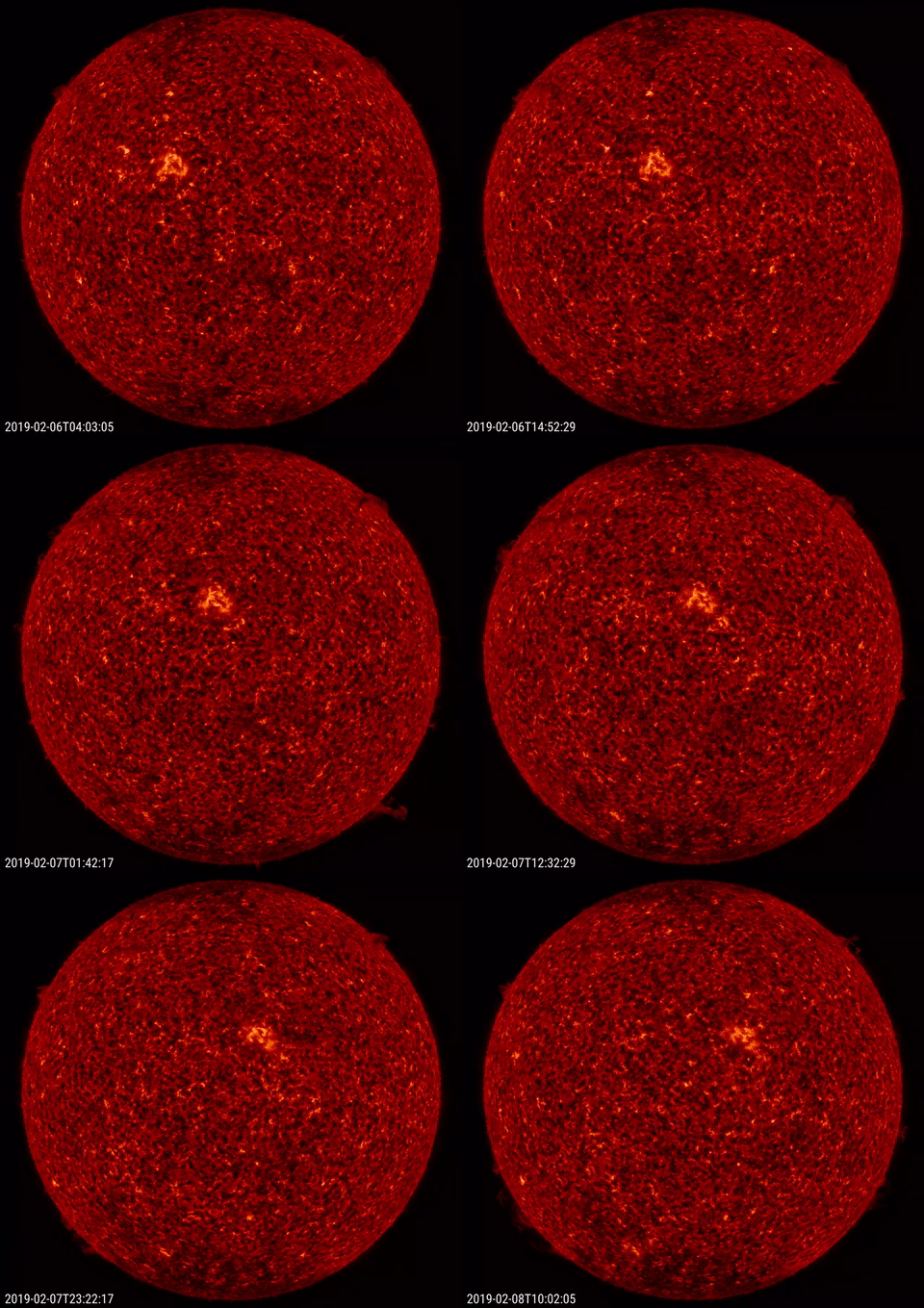
The SDO spacecraft is in another eclipse season as of Feb. 6, 2019. This begins a several week period when the Earth briefly blocks SDO’s view of the Sun each day. In fact, because SDO orbits above the Mountain Time... Continue Reading →
 Scents of Science