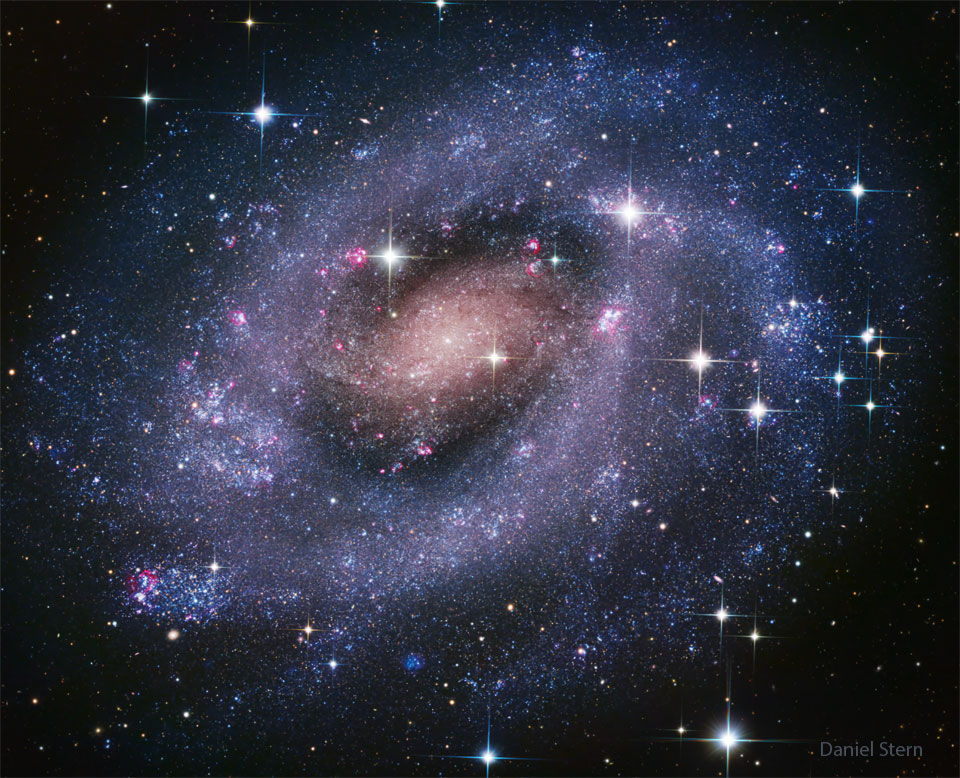
This galaxy is unusual for how many stars it seems that you can see. Stars are so abundantly evident in this deep exposure of the spiral galaxy NGC 300 because so many of these stars are bright blue and grouped into resolvable bright star... Continue Reading →
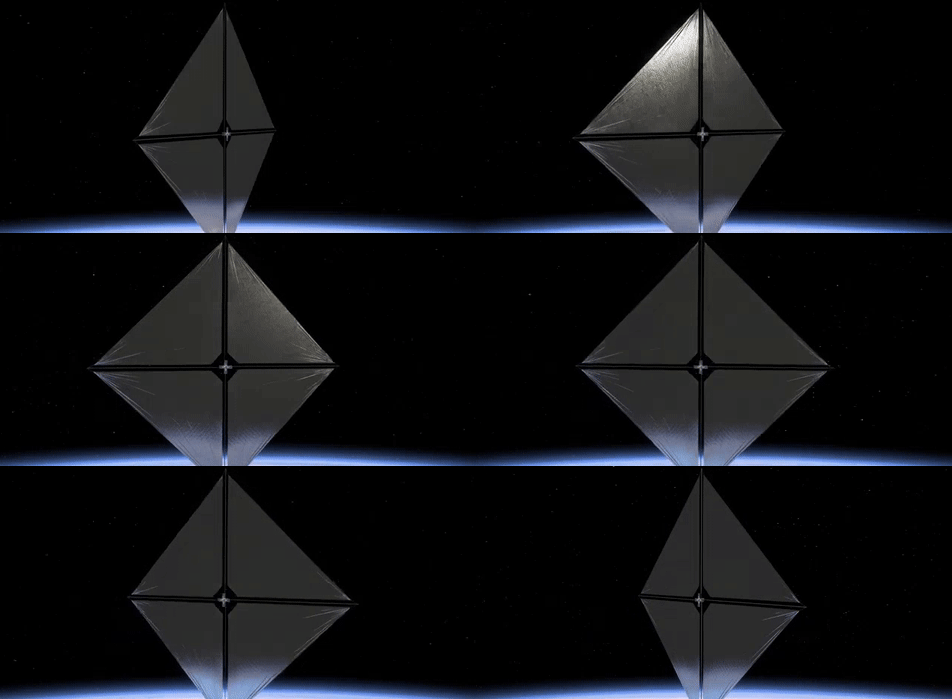
Sailing through space might sound like something out of science fiction, but the concept is no longer limited to books or the big screen. A next-generation solar sail technology – known as the Advanced Composite Solar Sail System – will launch aboard... Continue Reading →

A mere 280 light-years from Earth, tidally locked, Jupiter-sized exoplanet WASP-43b orbits its parent star once every 0.8 Earth days. That puts it about 2 million kilometers (less than 1/25th the orbital distance of Mercury) from a small, cool sun.... Continue Reading →

The well-known Pleiades star cluster is slowly destroying part of a passing cloud of gas and dust. The Pleiades is the brightest open cluster of stars on Earth's sky and can be seen from almost any northerly location with the unaided eye. Over the past 100,000 years,... Continue Reading →

Sometimes, it's the stars that are the hardest to see that are the most interesting. IC 348 is a young star cluster that illuminates surrounding filamentary dust. The stringy and winding dust appears pink in this recently released infrared image from the Webb Space Telescope.... Continue Reading →

Carrying NASA scientific instruments as part of its Commercial Lunar Payload Services initiative, Astrobotic’s Peregrine lander launched on United Launch Alliance’s (ULA) Vulcan rocket at 2:18 a.m. EST from Launch Complex 41 at Cape Canaveral Space Force Station in Florida. Peregrine has... Continue Reading →

Venus goes through phases. Just like our Moon, Venus can appear as a full circular disk, a thin crescent, or anything in between. Venus, frequently the brightest object in the post-sunset or pre-sunrise sky, appears so small, however, that it usually requires binoculars or a small telescope to... Continue Reading →
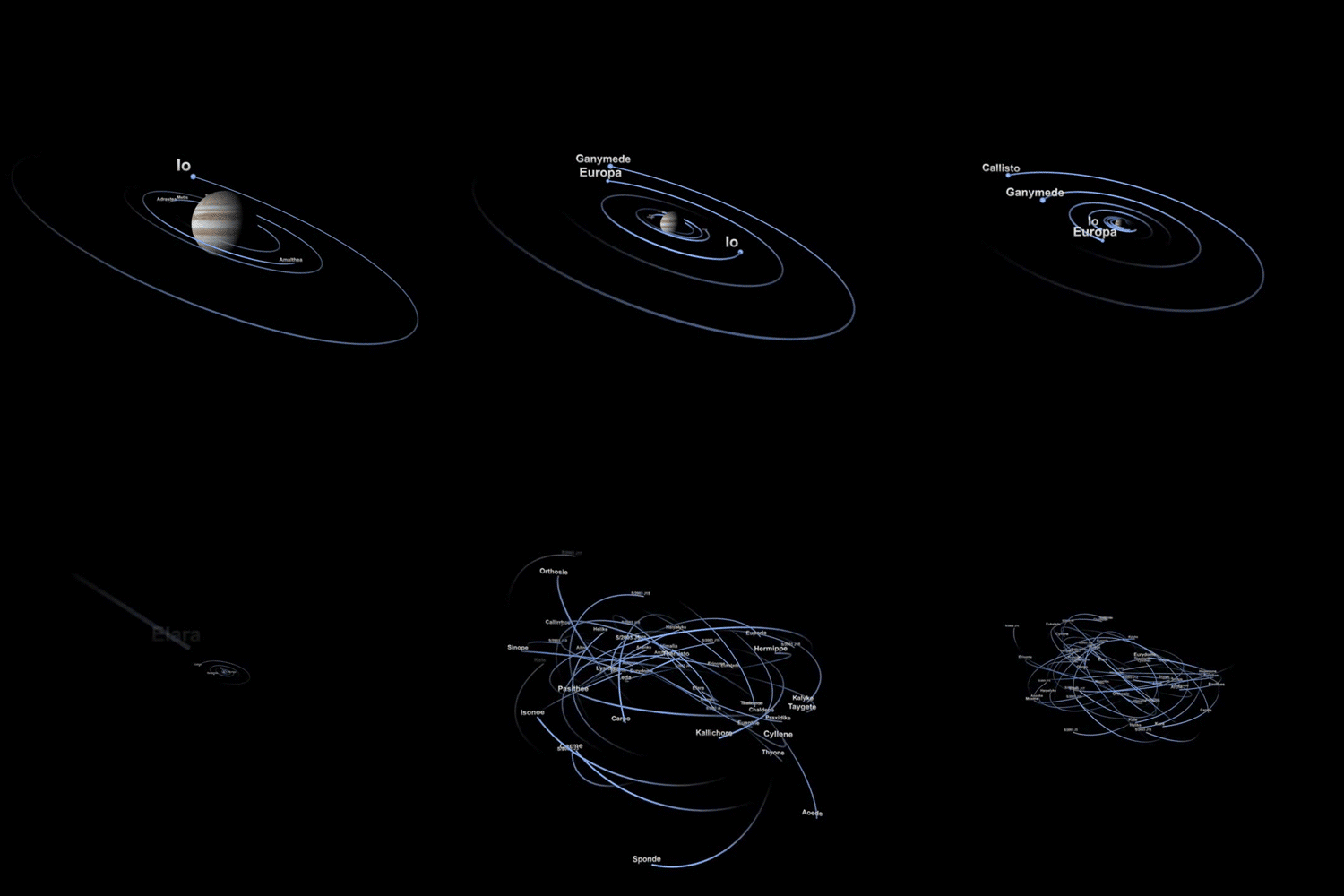
Probably the most significent contribution that Galileo Galilei made to science was the discovery of the four satellites around Jupiter that are now named in his honor. Galileo first observed the moons of Jupiter on January 7, 1610 through a... Continue Reading →

To some it looks like a cat's eye. To others, perhaps like a giant cosmic conch shell. It is actually one of the brightest and most highly detailed planetary nebula known, composed of gas expelled in the brief yet glorious phase near the end... Continue Reading →
 Scents of Science