
These cosmic dust clouds drift some 1,300 light-years away along the fertile starfields of the constellation Cepheus. The beautiful Iris Nebula, also known as NGC 7023, blossoms at the upper left. Not the only nebula in the sky to evoke the imagery... Continue Reading →
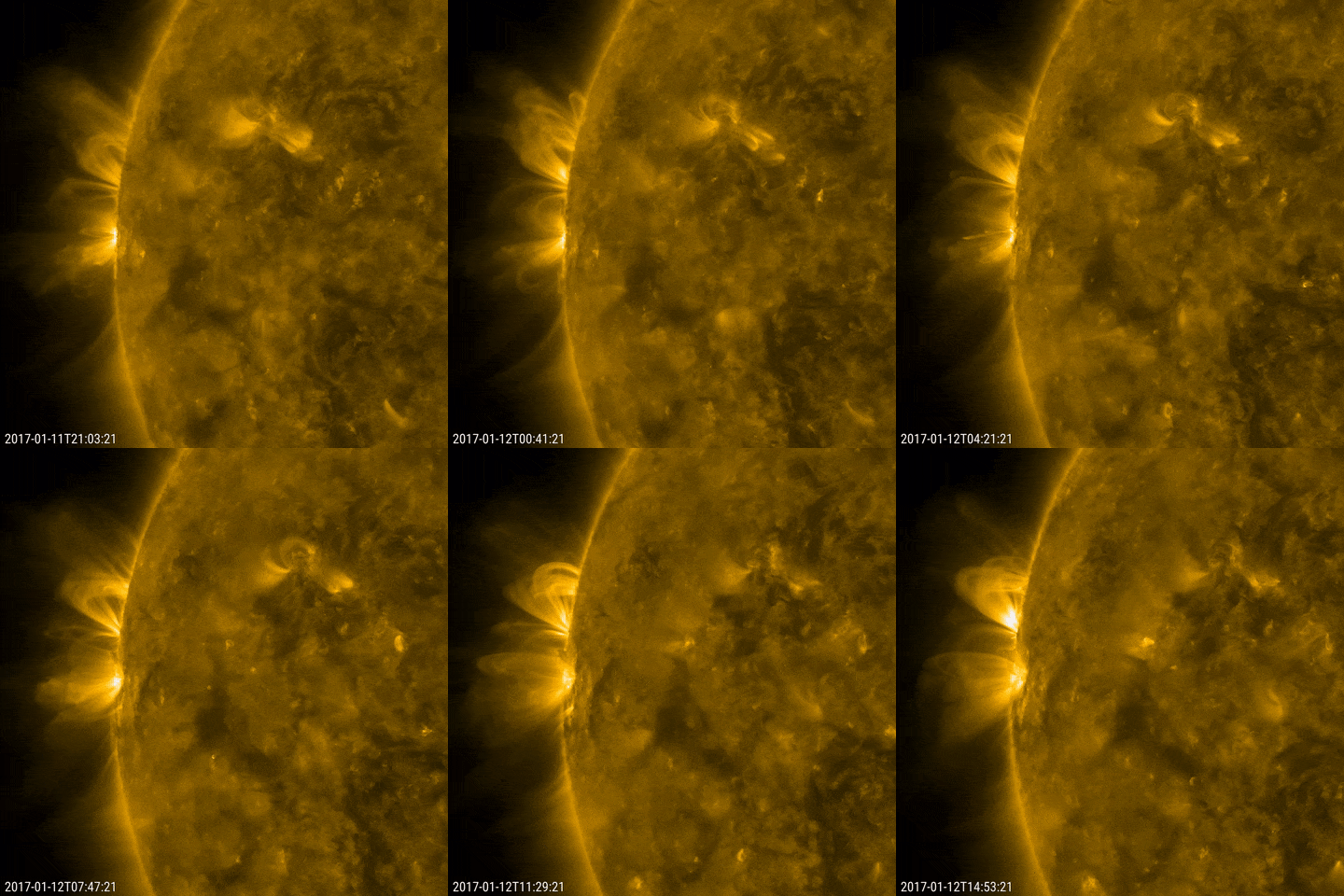
Magnetic arcs of plasma that spiraled above two active regions held their shape fairly well over 18 hours (Jan. 11-12, 2017). The charged plasma is being controlled by the magnetic field lines of the active regions. The field lines become... Continue Reading →

STEVE (the Strong Thermal Emissions Velocity Enhancement) is a spectacular and colorful celestial phenomenon that was first spotted in 2016. Scientists have studied the particles associated with STEVE for decades, but only recently have they witnessed the phenomenon in the sky.... Continue Reading →
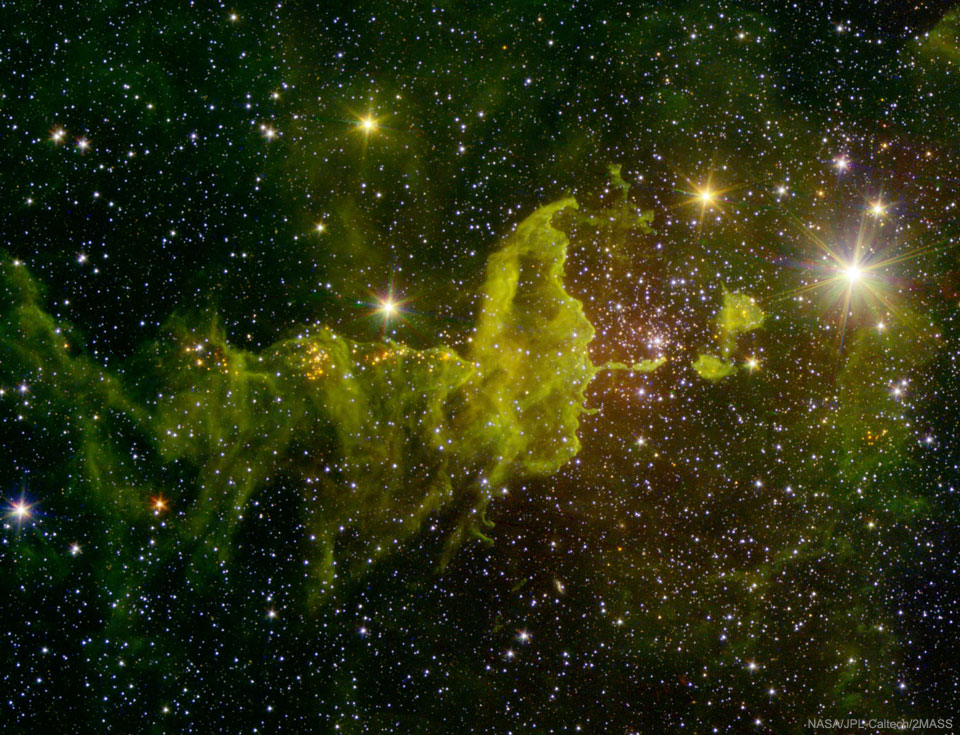
Will the spider ever catch the fly? Not if both are large emission nebulas toward the constellation of the Charioteer (Auriga). The spider-shaped gas cloud on the left is actually an emission nebula labelled IC 417, while the smaller fly-shaped cloud on the right... Continue Reading →

While hunting for comets in the skies above 18th century France, astronomer Charles Messier diligently kept a list of the things he encountered that were definitely not comets. This is number 27 on his now famous not-a-comet list. In fact, 21st century astronomers... Continue Reading →

Is this a painting or a photograph? In this classic celestial still life composed with a cosmic brush, dusty nebula NGC 2170, also known as the Angel Nebula, shines near the image center. Reflecting the light of nearby hot stars, NGC 2170 is joined by other... Continue Reading →
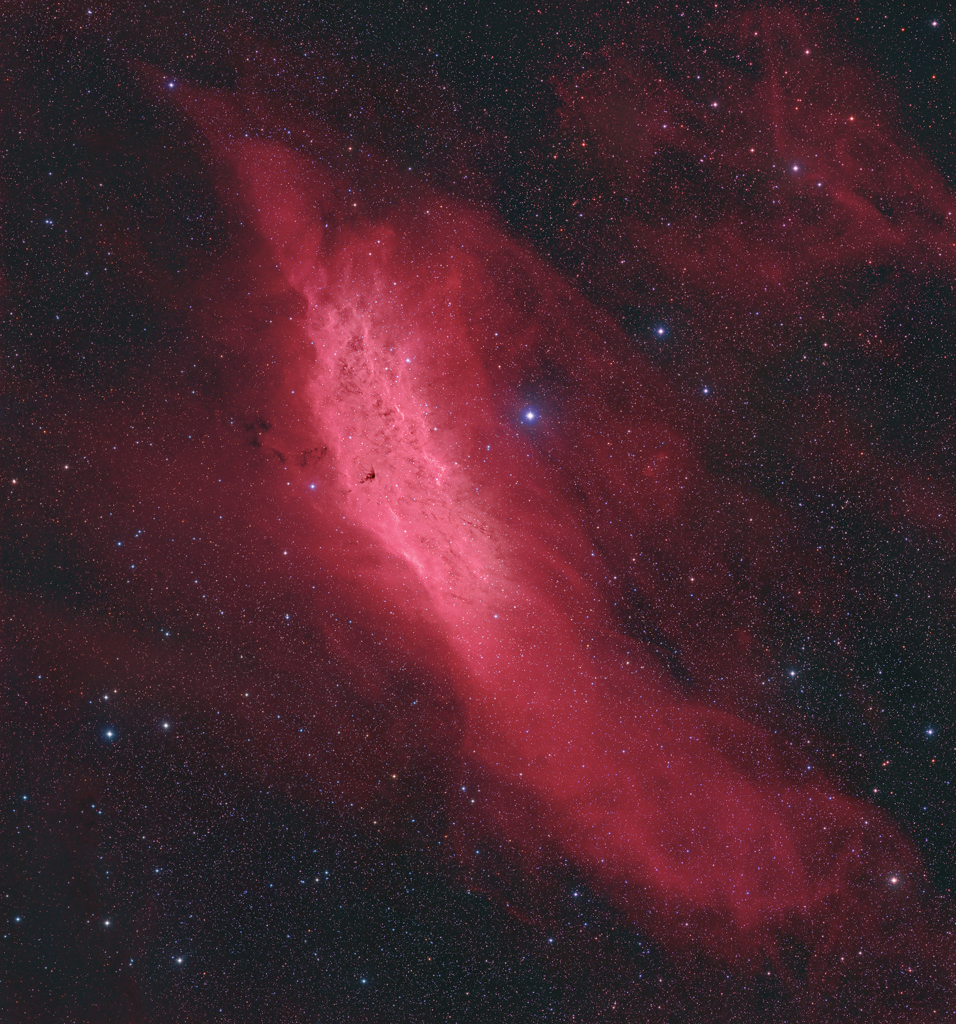
Drifting through the Orion Arm of the spiral Milky Way Galaxy, this cosmic cloud by chance echoes the outline of California on the west coast of the United States. Our own Sun also lies within the Milky Way's Orion Arm, only about 1,500 light-years from... Continue Reading →

What would it look like to orbit a black hole? Many black holes are surrounded by swirling pools of gas known as accretion disks. These disks can be extremely hot, and much of the orbiting gas will eventually fall through the black hole'sevent... Continue Reading →
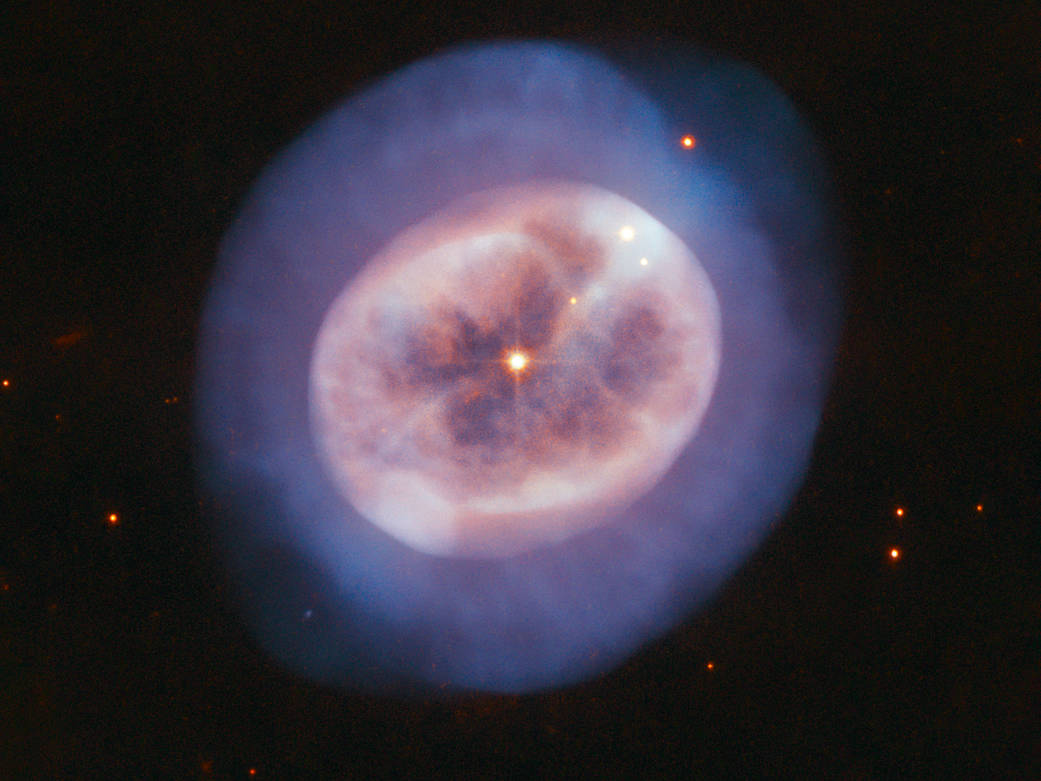
Although it looks more like an entity seen through a microscope than a telescope, this rounded object, named NGC 2022, is certainly not algae or tiny, blobby jellyfish. Instead, it is a vast orb of gas in space, cast off... Continue Reading →
 Scents of Science