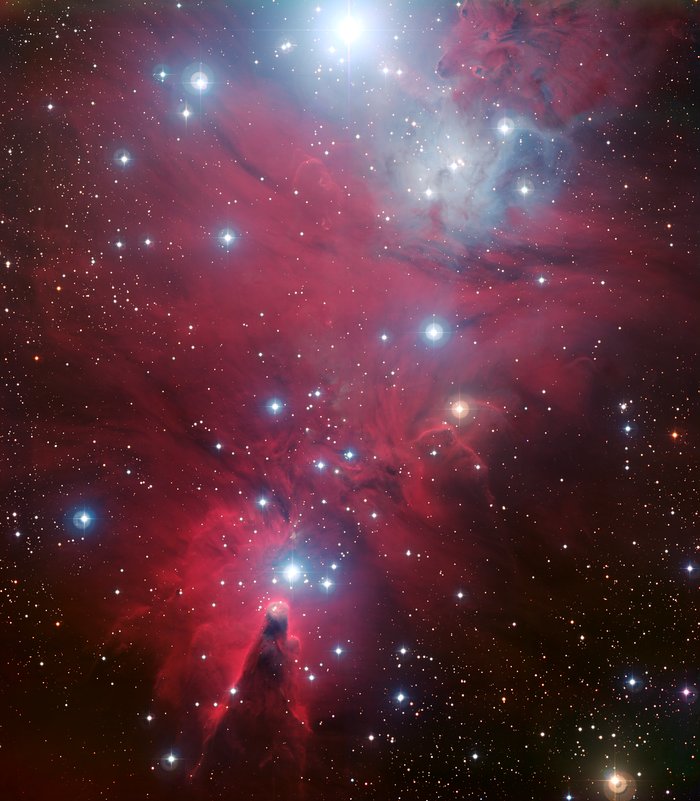
This colour image of the region known as NGC 2264 — an area of sky that includes the sparkling blue baubles of the Christmas Tree star cluster and the Cone Nebula — was created from data taken through four different... Continue Reading →
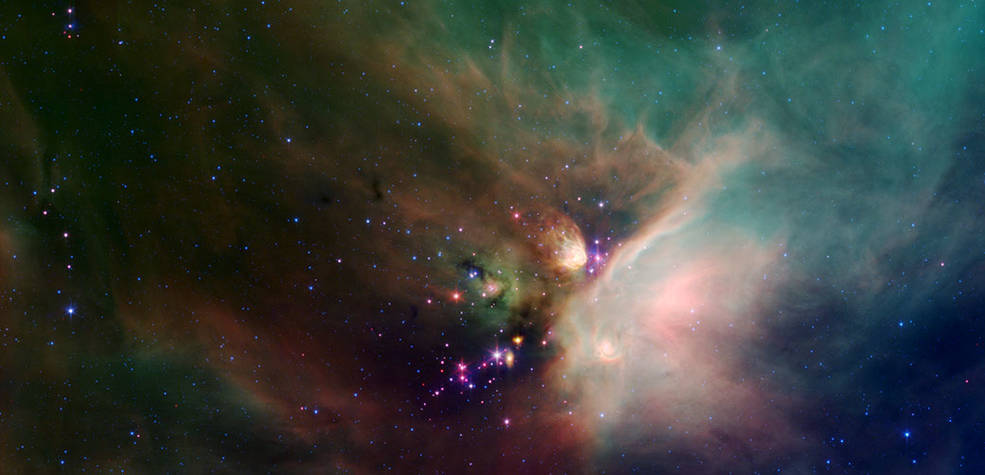
Newborn stars peek out from beneath their natal blanket of dust in this dynamic image of the Rho Ophiuchi dark cloud from NASA's Spitzer Space Telescope. Called "Rho Oph" by astronomers, it's one of the closest star-forming regions to our... Continue Reading →

Rochester Institute of Technology and the Instituto Argentino de Radioastronomía (IAR) have collaborated to make the first pulsar observations from South America. A new paper published in Astronomy and Astrophysics outlines how the team upgraded two radio telescopes in Argentina that lay... Continue Reading →
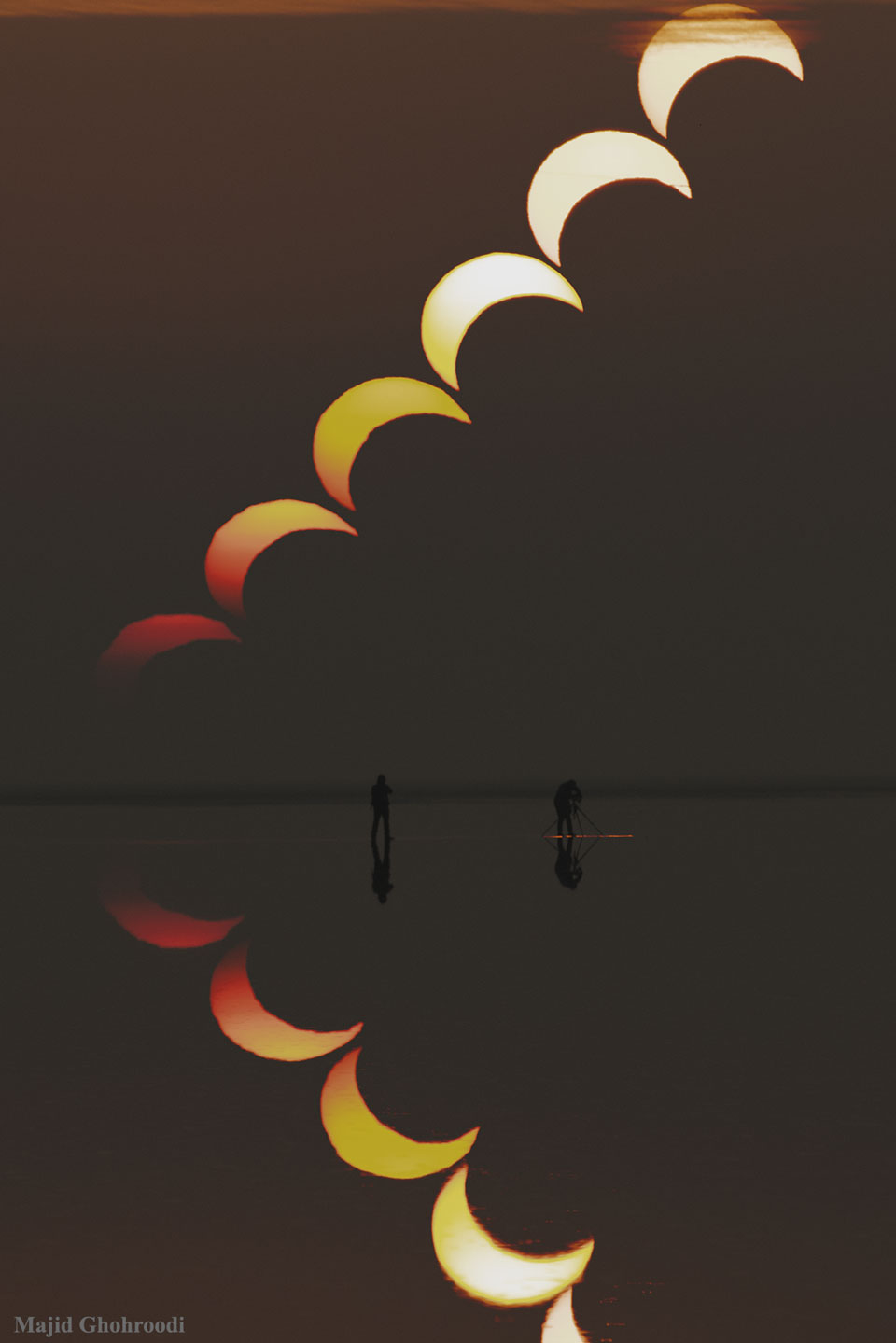
What's happened to the Sun? Yesterday, if you were in the right place at the right time, you could see the Sun rise partially eclipsed by the Moon. The unusual sight was captured in dramatic fashion in the featured image not only directly,... Continue Reading →

Astronomers using ESO's Very Large Telescope have observed reservoirs of cool gas around some of the earliest galaxies in the Universe. These gas halos are the perfect food for supermassive black holes at the centre of these galaxies, which are... Continue Reading →
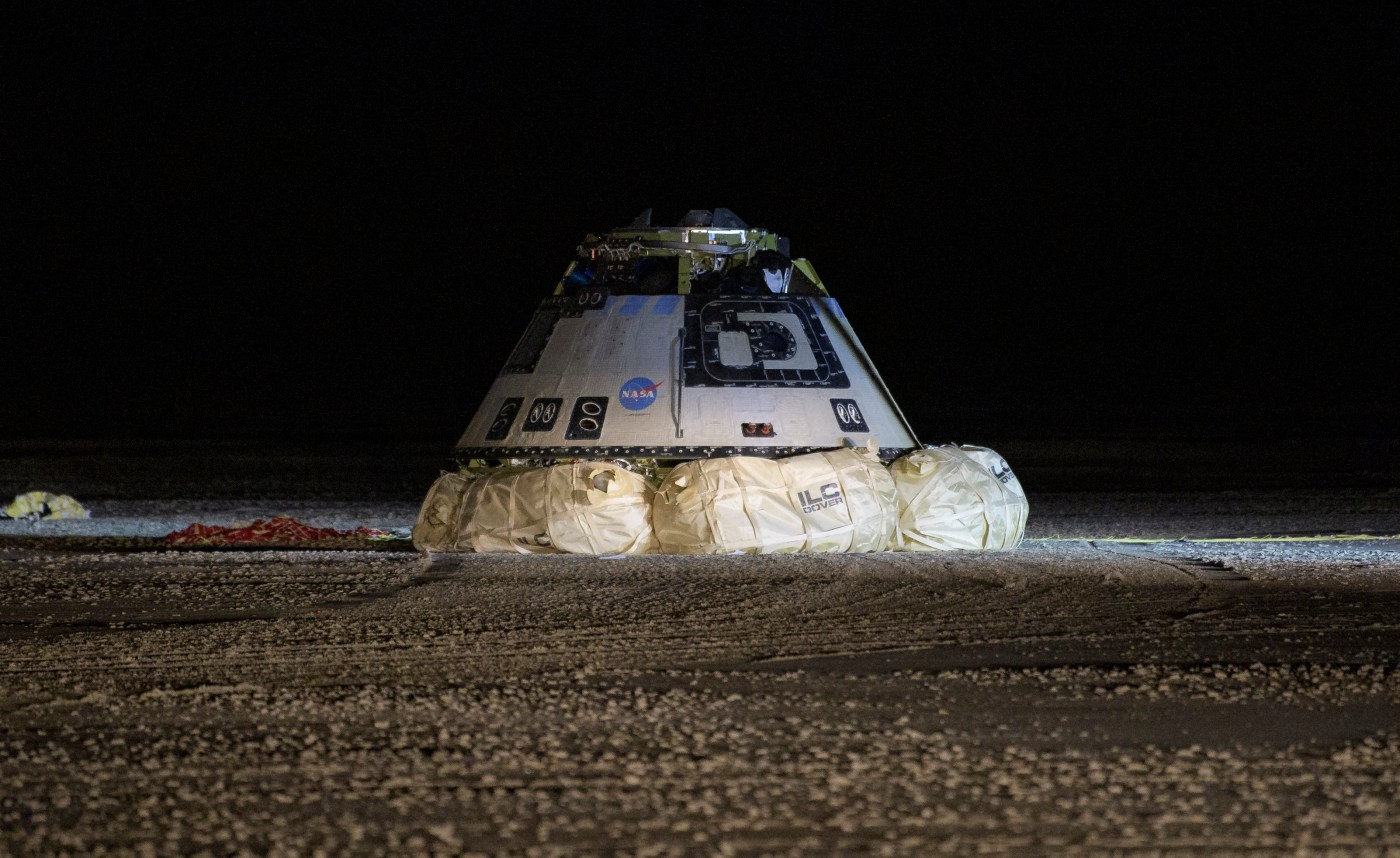
Boeing’s CST-100 Starliner spacecraft completed the first land touchdown of a human-rated capsule in U.S. history Sunday at White Sands Space Harbor in New Mexico, wrapping up the company’s uncrewed Orbital Flight Test as part of NASA’s Commercial Crew Program. Starliner... Continue Reading →
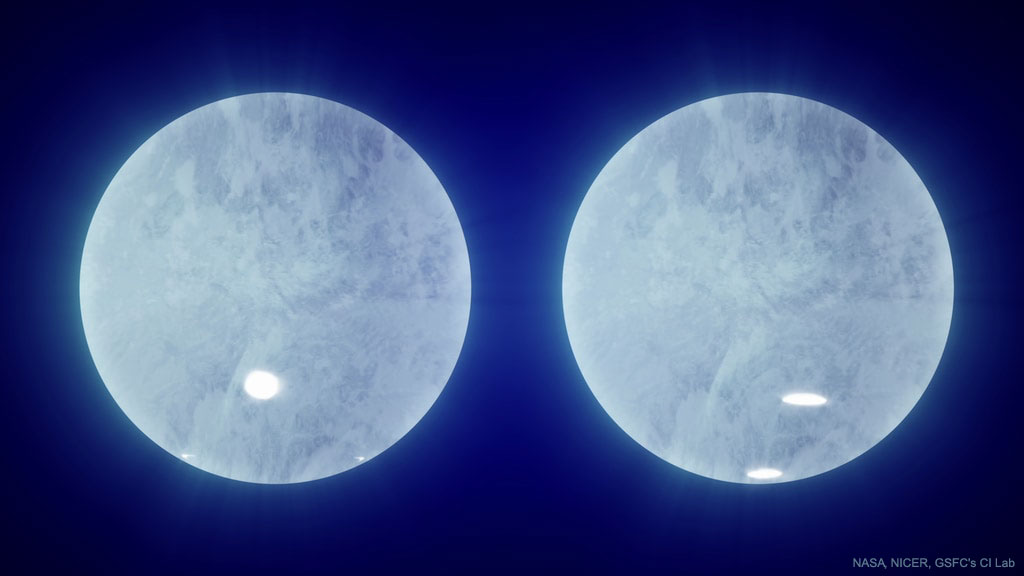
What do neutron stars look like? Previously these city-sized stars were too small and too far away to resolve. Recently, however, the first maps of the locations and sizes of hotspots on a neutron star's surface have been made by carefully modeling how the rapid spin... Continue Reading →
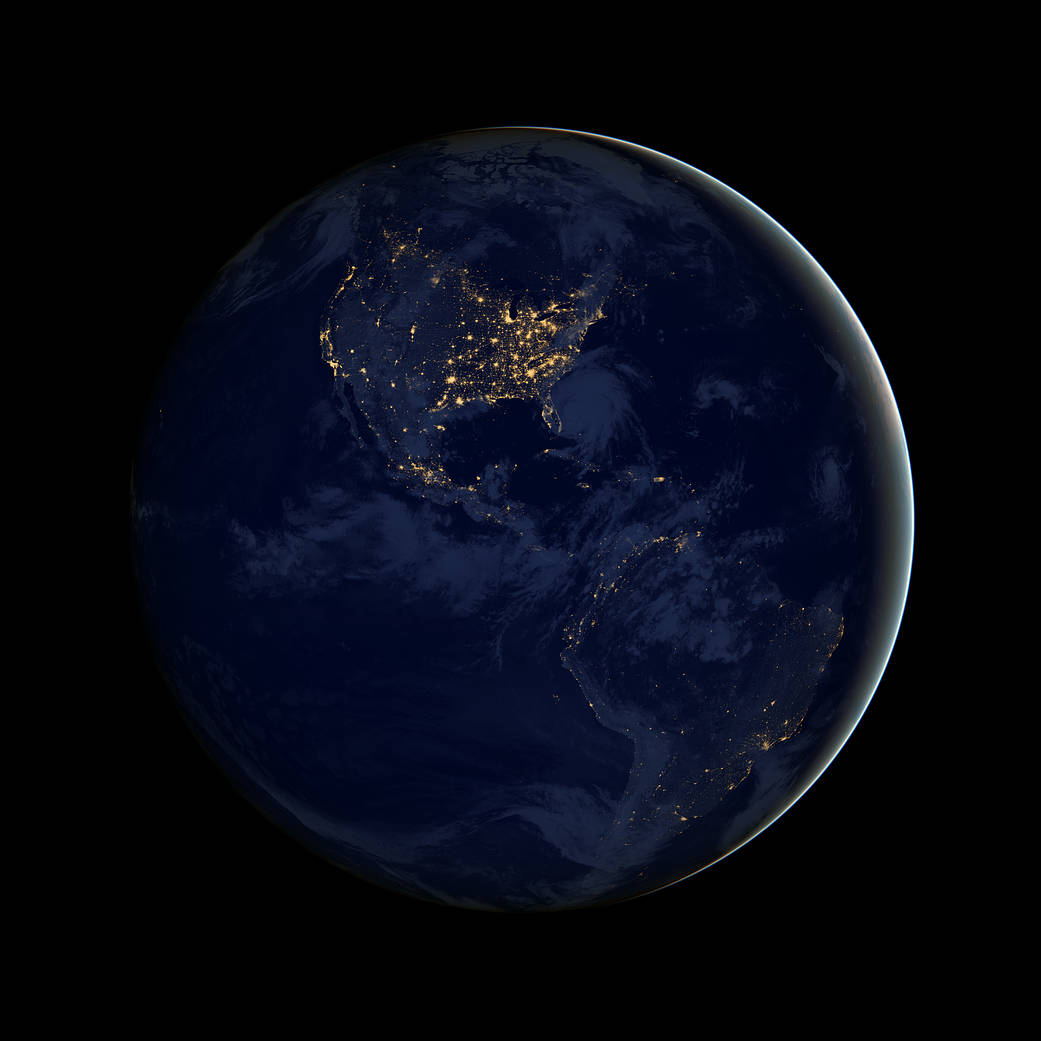
This image of North and South America at night is a composite assembled from data acquired by the Suomi NPP satellite in April and October 2012. The new data was mapped over existing Blue Marble imagery of Earth to provide a realistic view of... Continue Reading →

Astrophysicists are redrawing the textbook image of pulsars, the dense, whirling remains of exploded stars, thanks to NASA’s Neutron star Interior Composition Explorer (NICER), an X-ray telescope aboard the International Space Station. Using NICER data, scientists have obtained the first precise and... Continue Reading →
 Scents of Science