
Two days after touching down on asteroid Bennu, NASA's OSIRIS-REx mission team received on Thursday, Oct. 22, images that confirm the spacecraft has collected more than enough material to meet one of its main mission requirements -- acquiring at least... Continue Reading →

The Royal Swedish Academy of Sciences has decided to award the Nobel Prize in Physics 2020 with one half to Roger Penrose, University of Oxford, UK, "for the discovery that black hole formation is a robust prediction of the general... Continue Reading →
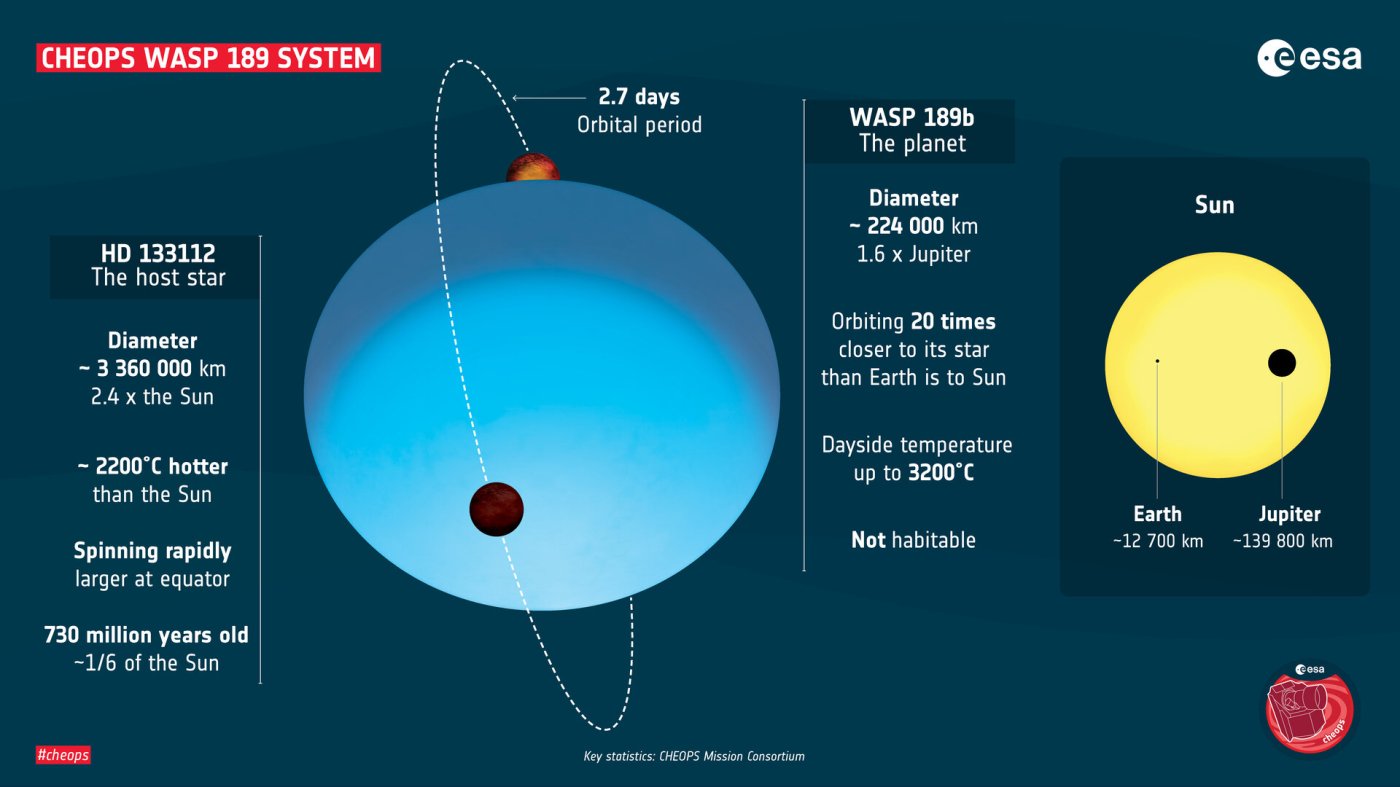
ESA’s new exoplanet mission, Cheops, has found a nearby planetary system to contain one of the hottest and most extreme extra-solar planets known to date: WASP-189 b. The finding, the very first from the mission, demonstrates Cheops’ unique ability to... Continue Reading →

A team of researchers at the University of Warsaw has created the most accurate 3-D model of the Milky Way Galaxy to date. In their paper published in the journal Science, the group explains how they used measurements from a... Continue Reading →
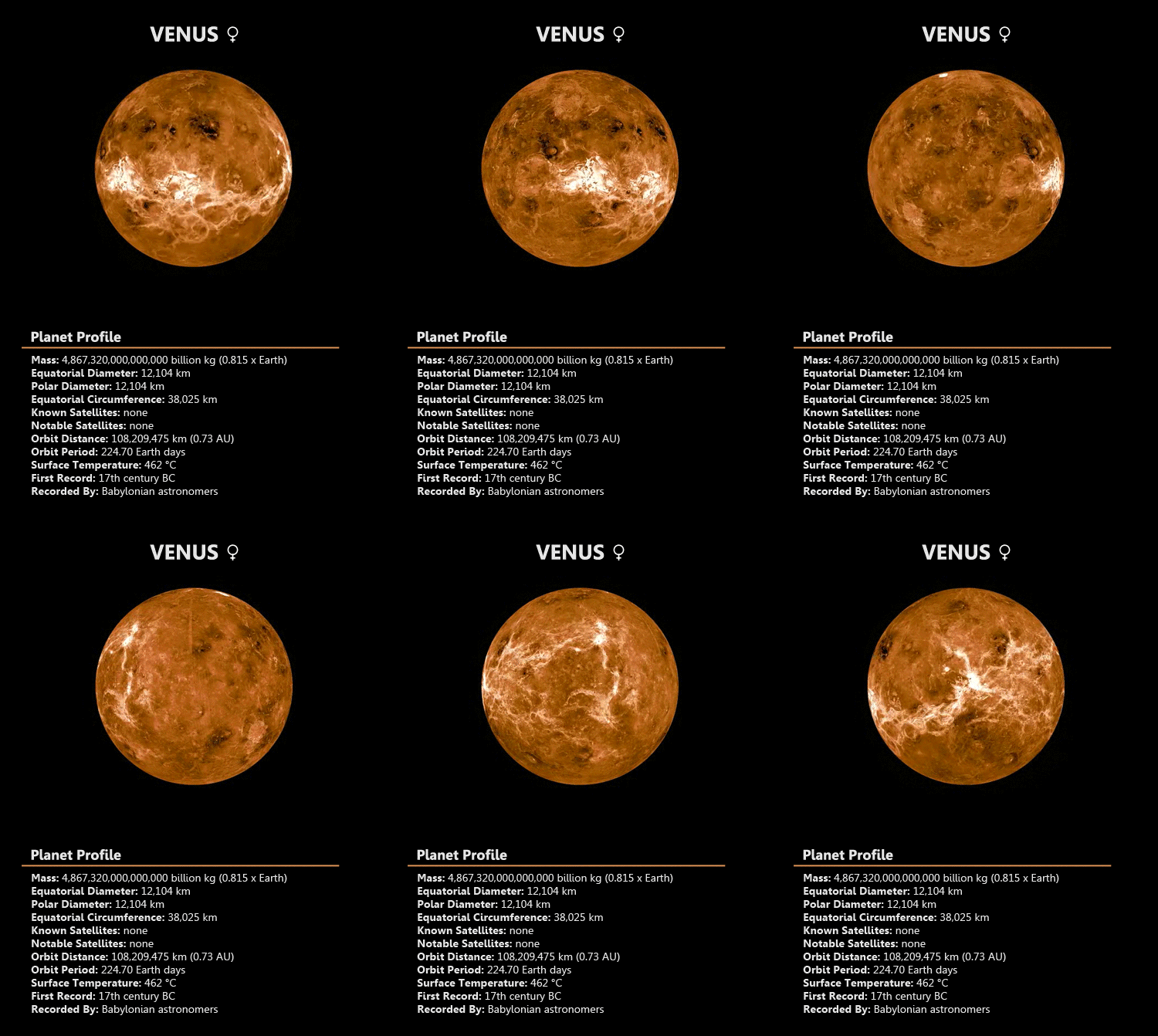
An international team of astronomers announced the discovery of a rare molecule -- phosphine -- in the clouds of Venus. On Earth, this gas is only made industrially or by microbes that thrive in oxygen-free environments. Astronomers have speculated for... Continue Reading →

Data from NASA instruments aboard the ESA (European Space Agency) Rosetta mission have helped reveal that comet 67P/Churyumov-Gerasimenko has its own far-ultraviolet aurora. It is the first time such electromagnetic emissions in the far-ultraviolet have been documented on a celestial... Continue Reading →
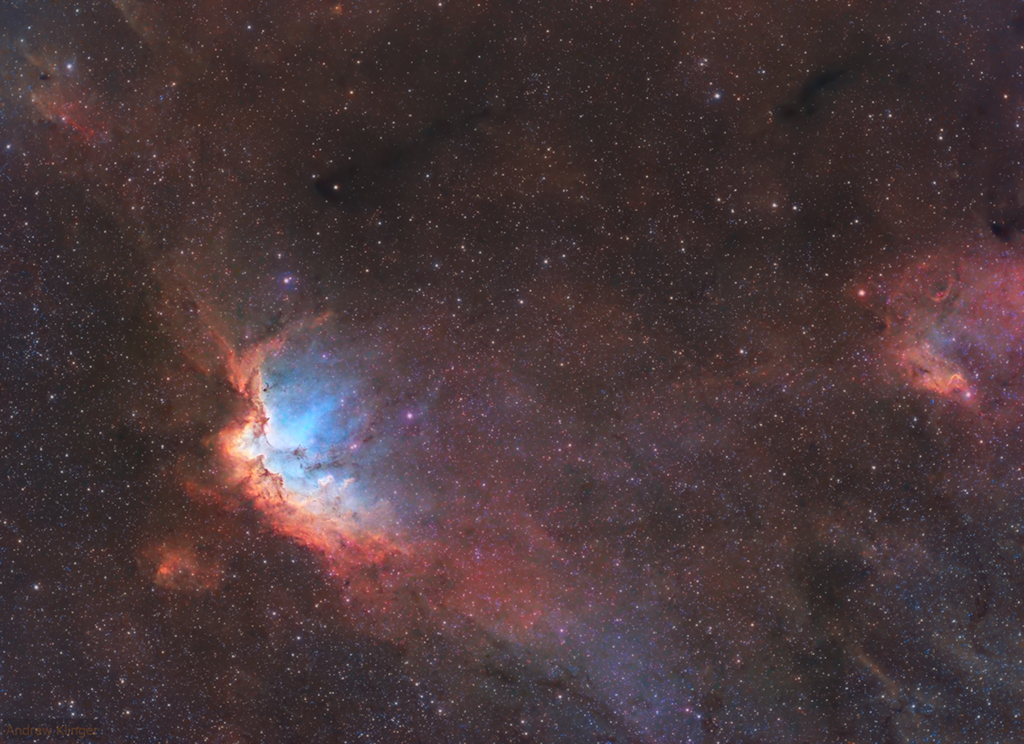
Open star cluster NGC 7380 is still embedded in its natal cloud of interstellar gas and dust popularly known as the Wizard Nebula. Seen on the left, with foreground and background stars along the plane of our Milky Way galaxy it lies some 8,000 light-years... Continue Reading →

While appearing as a delicate and light veil draped across the sky, this image from the NASA/ESA Hubble Space Telescope actually depicts a small section of the Cygnus supernova blast wave, located around 2,400 light-years away. The name of the supernova remnant comes from... Continue Reading →

In a landmark study, scientists using NASA's Hubble Space Telescope have mapped the immense envelope of gas, called a halo, surrounding the Andromeda galaxy, our nearest large galactic neighbor. Scientists were surprised to find that this tenuous, nearly invisible halo... Continue Reading →
 Scents of Science