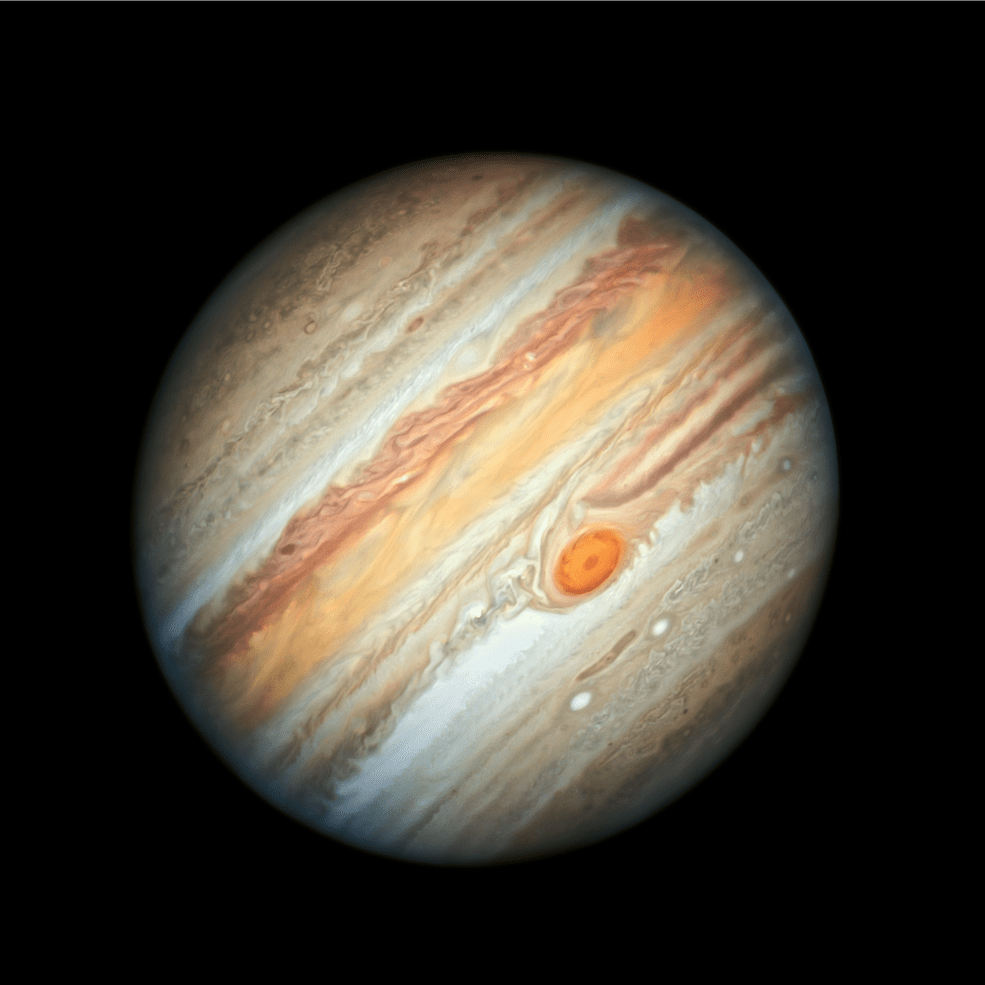
This new Hubble Space Telescope view of Jupiter, taken on June 27, 2019, reveals the giant planet's trademark Great Red Spot, and a more intense color palette in the clouds swirling in Jupiter's turbulent atmosphere than seen in previous years.... Continue Reading →

Dark matter, which researchers believe make up about 80% of the universe's mass, is one of the most elusive mysteries in modern physics. What exactly it is and how it came to be is a mystery, but a new Johns... Continue Reading →

This single, 251-second long exposure follows the early flight of an Atlas V rocket on August 8, streaking eastward toward the dawn from Cape Canaveral Air Force Station, planet Earth. The launch of the United Launch Alliance rocket was at 6:13am local... Continue Reading →

In a room filled with expansive computer screens and blinking lights at NASA’s Johnson Space Centerin Houston, scientists work daily shifts to monitor space weather conditions for astronauts on the space station. Known as space environment officers, they’re the lifeguards of... Continue Reading →

A study of newborn infants has identified a compound produced by gut bacteria that appears to predispose certain infants to allergies and asthma later in life. “We have discovered a specific bacterial lipid in the neonatal gut that promotes immune dysfunction... Continue Reading →

If the sight of a skittering bug makes you squirm, you may want to look away -- a new insect-sized robot created by researchers at the University of California, Berkeley, can scurry across the floor at nearly the speed of... Continue Reading →
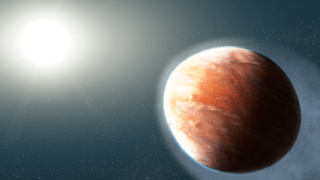
How can a planet be "hotter than hot?" The answer is when heavy metals are detected escaping from the planet's atmosphere, instead of condensing into clouds. Observations by NASA's Hubble Space Telescope reveal magnesium and iron gas streaming from the... Continue Reading →

A team of researchers from Carnegie Mellon University has published a paper in Science that details a new technique allowing anyone to 3D bioprint tissue scaffolds out of collagen, the major structural protein in the human body. This first-of-its-kind method brings the... Continue Reading →

For years, scientists thought the brain lacked a lymphatic system, raising questions about how fluid, macromolecules, and immune cells escape the organ. In 2015, two studies in mice provided evidence that the brain does in fact have a traditional lymphatic system in... Continue Reading →
 Scents of Science