
A nationwide team of researchers has found an antibody that protects mice against a wide range of potentially lethal influenza viruses, advancing efforts to design of a universal vaccine that could either treat or protect people against all strains of... Continue Reading →

How bacteria live -- whether as independent cells or in a communal biofilm -- determines how they evolve antibiotic resistance, which could lead to more personalized approaches to antimicrobial therapy and infection control. University of Pittsburgh School of Medicine researchers... Continue Reading →

Georgetown University neuroscientists say they have identified how people can have a "crash in visual processing" -- a bottleneck of feed-forward and feedback signals that can cause us not to be consciously aware of stimuli that our brain recognized. In... Continue Reading →
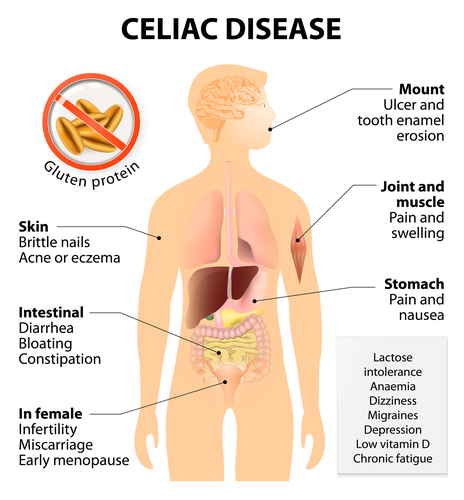
Results of a new phase 2 clinical trial using technology developed at Northwestern Medicine show it is possible to induce immune tolerance to gluten in individuals with celiac disease. The findings may pave the way for treated celiac patients to... Continue Reading →

A widely-used gas that is currently produced from fossil fuels can instead be made by an 'artificial leaf' that uses only sunlight, carbon dioxide and water, and which could eventually be used to develop a sustainable liquid fuel alternative to... Continue Reading →

Since its invention during the Second World War for soldiers stationed in countries where malaria transmission rates were high, researchers have worked to pinpoint precisely how DEET actually affects mosquitos. Past studies have analyzed the chemical structure of the repellent, studied... Continue Reading →

A better understanding of the metabolic processes in the brain -- specifically disturbances resulting from neurodegenerative diseases -- has important implications for potential treatments. The research was presented at Neuroscience 2019, the annual meeting of the Society for Neuroscience and... Continue Reading →

Prolonged exposure to blue light, such as that which emanates from your phone, computer and household fixtures, could be affecting your longevity, even if it's not shining in your eyes. New research at Oregon State University suggests that the blue... Continue Reading →

If you step on a tack, neurons in your brain will register two things: that there’s a piercing physical sensation in your foot, and that it’s not pleasant. A team of scientists at Stanford University has identified a bundle of... Continue Reading →
 Scents of Science