
Temporary loss of smell, or anosmia, is the main neurological symptom and one of the earliest and most commonly reported indicators of COVID-19. Studies suggest it better predicts the disease than other well-known symptoms such as fever and cough, but... Continue Reading →
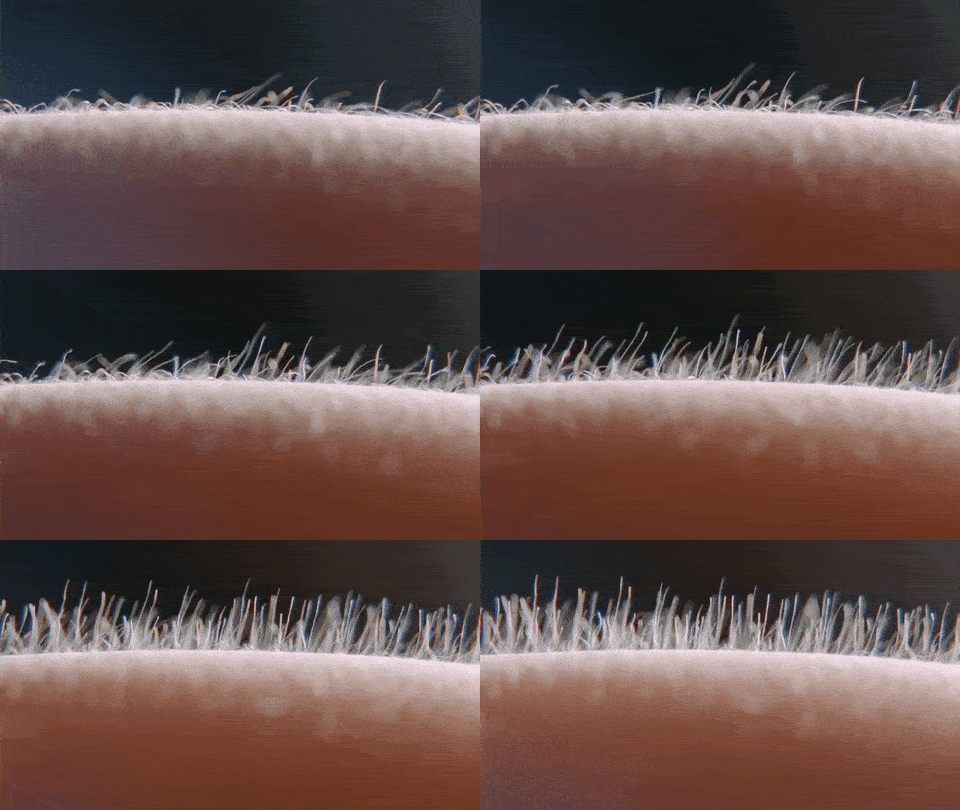
If you've ever wondered why we get goosebumps, you're in good company -- so did Charles Darwin, who mused about them in his writings on evolution. Goosebumps might protect animals with thick fur from the cold, but we humans don't... Continue Reading →

Staring at a deep red light for three minutes a day can significantly improve declining eyesight, finds a new UCL-led study, the first of its kind in humans. Scientists believe the discovery, published in the Journals of Gerontology, could signal the... Continue Reading →

Thousands of words, big and small, are crammed inside our memory banks just waiting to be swiftly withdrawn and strung into sentences. In a recent study of epilepsy patients and healthy volunteers, National Institutes of Health researchers found that our... Continue Reading →

Using the European Southern Observatory's Very Large Telescope (VLT), astronomers have discovered the absence of an unstable massive star in a dwarf galaxy. Scientists think this could indicate that the star became less bright and partially obscured by dust. An... Continue Reading →
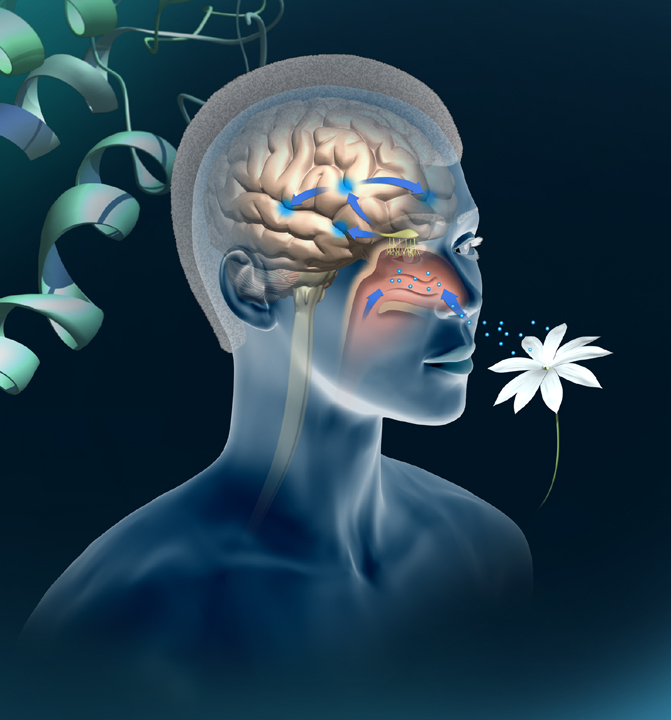
The premiere of the movie Scent of Mystery in 1960 marked a singular event in the annals of cinema: the first, and last, motion picture debut "in glorious Smell-O-Vision." Hoping to wow moviegoers with a dynamic olfactory experience alongside the... Continue Reading →

Research out in the journal Cell shows that a specific change in the SARS-CoV-2 coronavirus virus genome, previously associated with increased viral transmission and the spread of COVID-19, is more infectious in cell culture. The variant in question, D614G, makes a small... Continue Reading →

When sunlight shining on a leaf changes rapidly, plants must protect themselves from the ensuing sudden surges of solar energy. To cope with these changes, photosynthetic organisms -- from plants to bacteria -- have developed numerous tactics. Scientists have been... Continue Reading →
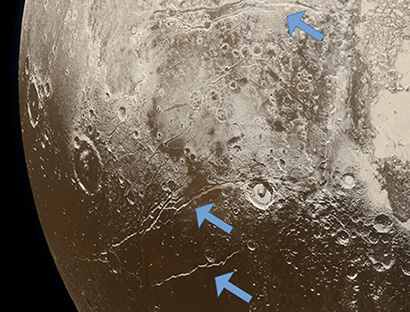
The accretion of new material during Pluto's formation may have generated enough heat to create a liquid ocean that has persisted beneath an icy crust to the present day, despite the dwarf planet's orbit far from the sun in the... Continue Reading →
 Scents of Science