
Many studies have shown that musical training can enhance language skills. However, it was unknown whether music lessons improve general cognitive ability, leading to better language proficiency, or if the effect of music is more specific to language processing. A... Continue Reading →

The evolutionary prerequisites of myelin – the fatty substance that insulates axons and enables rapid communication between cells of the nervous system in jawed vertebrates – are described in new research in fish published in JNeurosci. Myelinated axons increases a neuron’s... Continue Reading →

Effective verbal communication depends on one’s ability to retrieve and select the appropriate words to convey an intended meaning. For many, this process is instinctive, but for someone who has suffered a stroke or another type of brain damage, communicating... Continue Reading →

In contrast to most antidepressant medications, which can take several weeks to reduce depressive symptoms, ketamine — a commonly used veterinary anesthetic — can lift a person out of a deep depression within minutes of its administration, and its effects... Continue Reading →

Philosophers have pondered the nature of consciousness for thousands of years. In the 21st century, the debate over how the brain gives rise to our everyday experience continues to puzzle scientists. To help, researchers in the University of Michigan Medical... Continue Reading →

Our brains are famously flexible, or “plastic,” because neurons can do new things by forging new or stronger connections with other neurons. But if some connections strengthen, neuroscientists have reasoned, neurons must compensate lest they become overwhelmed with input. In... Continue Reading →

For a thousand years, people have reported feeling better by meditating but there has never been a systematic study that quantified stress and how much stress changes as a direct result of meditation until now. U.S. Army Research Laboratory researchers... Continue Reading →
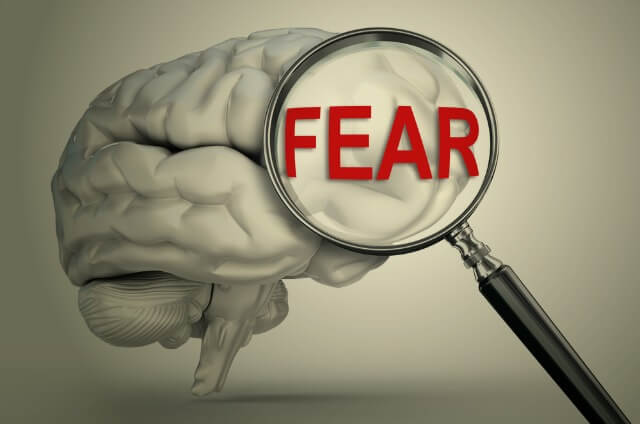
How does your brain decide what to do in a threatening situation? A paper published in Nature describes a mechanism by which the brain classifies the level of a threat and decides when to escape. Escaping from a dangerous situation is crucial... Continue Reading →

Dogs are capable of understanding the emotions behind an expression on a human face. For example, if a dog turns its head to the left, it could be picking up that someone is angry, fearful or happy. If there is... Continue Reading →
 Scents of Science