
What excites the Heart Nebula? First, the large emission nebula on the upper left, catalogued as IC 1805, looks somewhat like a human heart. The nebula glows brightly in red light emitted by its most prominent element, hydrogen, but this long-exposure image was also blended with light... Continue Reading →

The Horsehead Nebula is one of the most famous nebulae on the sky. It is visible as the dark indentation to the orange emission nebula at the far right of the featured picture. The horse-head feature is dark because it is really an opaque dust cloud that lies in... Continue Reading →

Blown by fast winds from a hot, massive star, this cosmic bubble is huge. Cataloged as Sharpless 2-308 it lies some 5,000 light-years away toward the constellation of the Big Dog (Canis Major) and covers slightly more of the sky than a... Continue Reading →

Hubble Space Telescope’s iconic images and scientific breakthroughs have redefined our view of the Universe. To commemorate three decades of scientific discoveries, this image is one of the most photogenic examples of the many turbulent stellar nurseries the telescope has... Continue Reading →

Surprisingly reminiscent of The Great Nebula in Orion, The Great Turkey Nebula spans this creative field of view. Of course if it were the Orion Nebula it would be our closest large stellar nursery, found at the edge of a large molecular... Continue Reading →

Blown by fast winds from a hot, massive star, this cosmic bubble is much larger than the dolphin it appears to be. Cataloged as Sharpless 2-308 it lies some 5,200 light-years away toward the constellation of the Big Dog (Canis Major) and... Continue Reading →

What's all of the commotion in the Tadpole Nebula? Star formation. Dusty emission in the Tadpole Nebula, IC 410, lies about 12,000 light-years away in the northern constellation of the Charioteer (Auriga). The cloud of glowing gas is over 100 light-years across, sculpted by stellar winds and radiation from... Continue Reading →
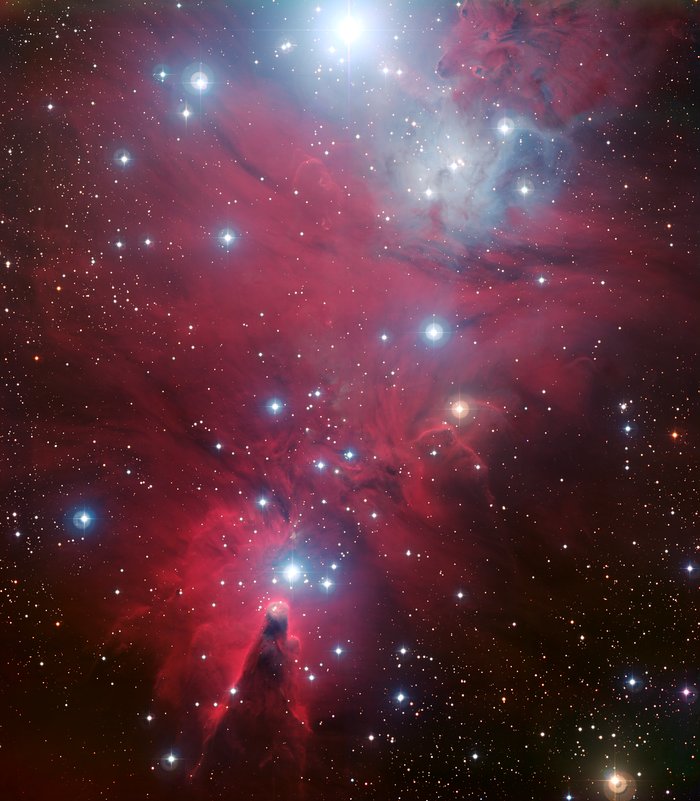
This colour image of the region known as NGC 2264 — an area of sky that includes the sparkling blue baubles of the Christmas Tree star cluster and the Cone Nebula — was created from data taken through four different... Continue Reading →
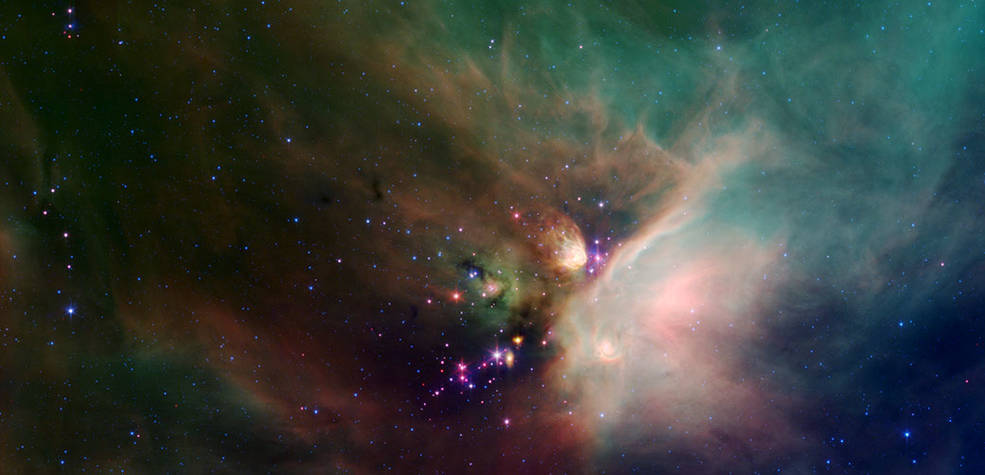
Newborn stars peek out from beneath their natal blanket of dust in this dynamic image of the Rho Ophiuchi dark cloud from NASA's Spitzer Space Telescope. Called "Rho Oph" by astronomers, it's one of the closest star-forming regions to our... Continue Reading →
 Scents of Science