
NGC 3199 lies about 12,000 light-years away, a glowing cosmic cloud in the nautical southern constellation of Carina. The nebula is about 75 light-years across in this narrowband, false-color view. Though the deep image reveals a more or less complete bubble shape,... Continue Reading →
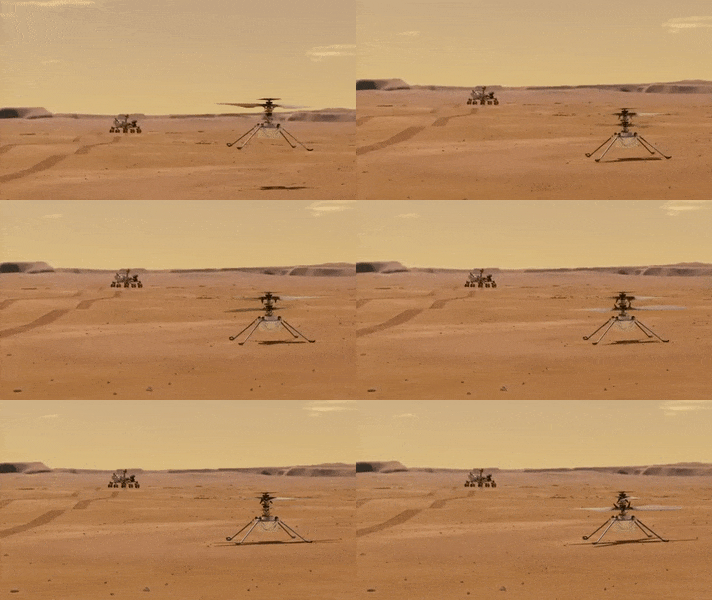
NASA’s Ingenuity helicopter successfully completed its second Mars flight on April 22 – the 18th sol, or Martian day, of its experimental flight test window. Lasting 51.9 seconds, the flight added several new challenges to the first, which took place on... Continue Reading →

What lights up the Flame Nebula? Fifteen hundred light years away towards the constellation of Orion lies a nebula which, from its glow and dark dust lanes, appears, on the left, like a billowing fire. But fire, the rapid acquisition of oxygen, is not what makes this Flame glow. Rather... Continue Reading →

A sea of dark dunes, sculpted by the wind into long lines, surrounds Mars' northern polar cap and covers an area as big as Texas. In this false-color image, areas with cooler temperatures are recorded in bluer tints, while warmer features are... Continue Reading →

The multicolor, stereo imaging Mastcam-Z on the Perseverance rover zoomed in to captured this 3D close-up (get out your red/blue glasses) of the Mars Ingenuity helicopter on mission sol 45, April 5. That's only a few sols before the technology demonstrating Ingenuity will attempt to fly in the... Continue Reading →

Found in far southern skies, deep within the boundaries of the constellation Dorado, NGC 1947 is some 40 million light-years away. In silhouette against starlight, obscuring lanes of cosmic dust thread across the peculiar galaxy's bright central regions. Unlike the rotation... Continue Reading →

Four moons are visible on the featured image -- can you find them all? First -- and farthest in the background -- is Titan, the largest moon of Saturn and one of the larger moons in the Solar System. The dark feature across the top of... Continue Reading →

Wisps like this are all that remain visible of a Milky Way star. About 7,000 years ago that star exploded in a supernova leaving the Veil Nebula. At the time, the expanding cloud was likely as bright as a crescent Moon, remaining visible for weeks to... Continue Reading →
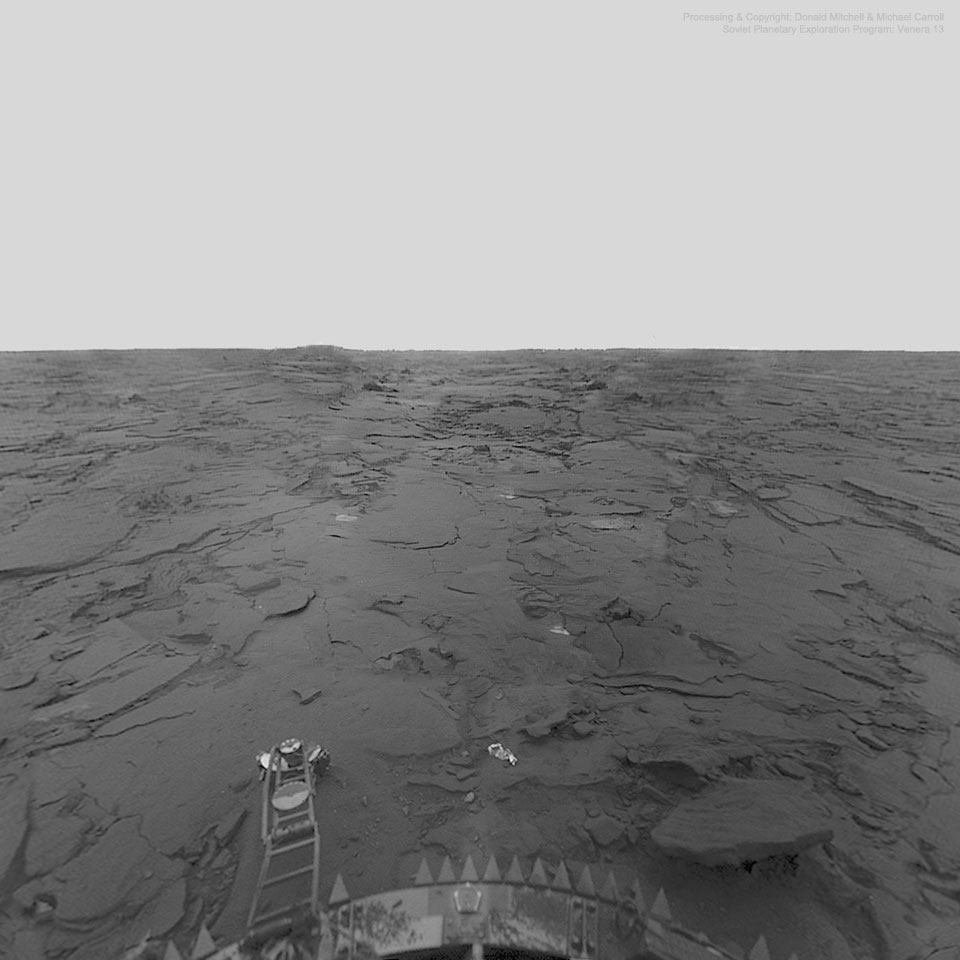
If you could stand on Venus -- what would you see? Pictured is the view from Venera 13, a robotic Soviet lander which parachuted and air-braked down through the thick Venusian atmosphere in March of 1982. The desolate landscape it saw included flat rocks, vast... Continue Reading →
 Scents of Science