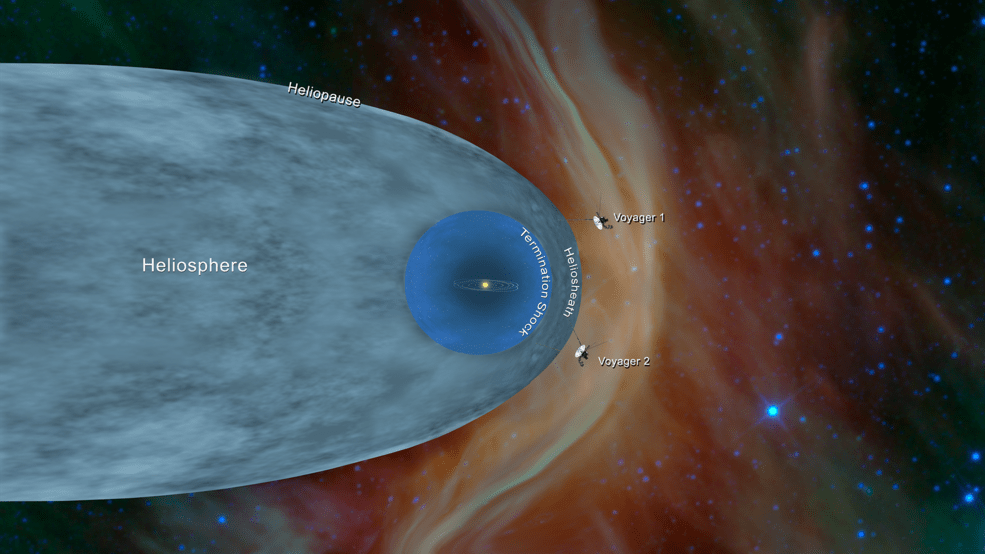
For the second time in history, a human-made object has reached the space between the stars. NASA’s Voyager 2 probe now has exited the heliosphere – the protective bubble of particles and magnetic fields created by the Sun. Voyager 2 now is... Continue Reading →
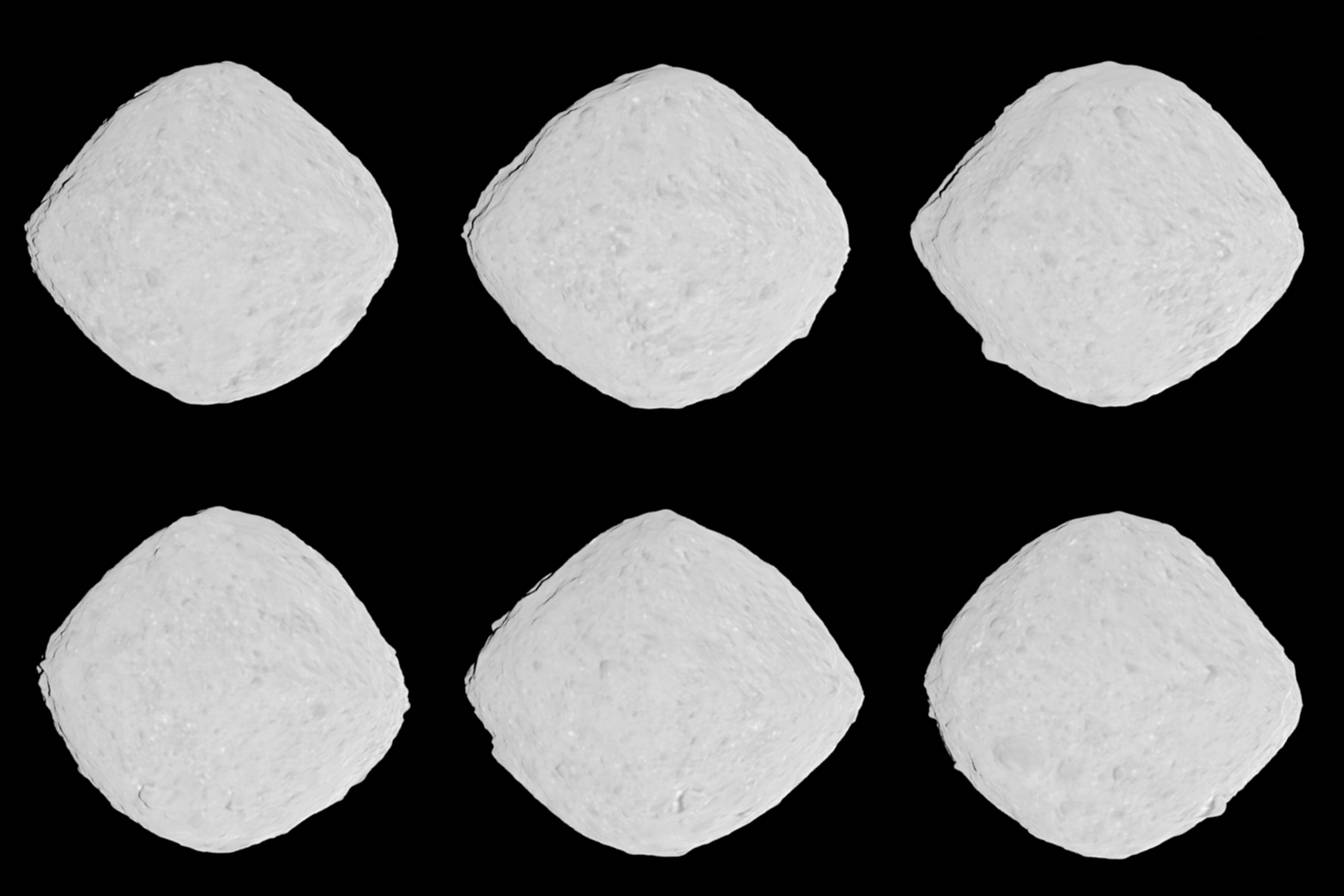
OSIRIS-REx mission recently arrived at its destination, asteroid Bennu. On approach, data from the spacecraft’s spectrometers revealed chemical signatures of water trapped in clay minerals. While Bennu itself is too small to have ever hosted liquid water, the finding indicates... Continue Reading →

This is NASA InSight's first full selfie on Mars. It displays the lander's solar panels and deck. On top of the deck are its science instruments, weather sensor booms and UHF antenna. The selfie was taken on Dec. 6, 2018... Continue Reading →
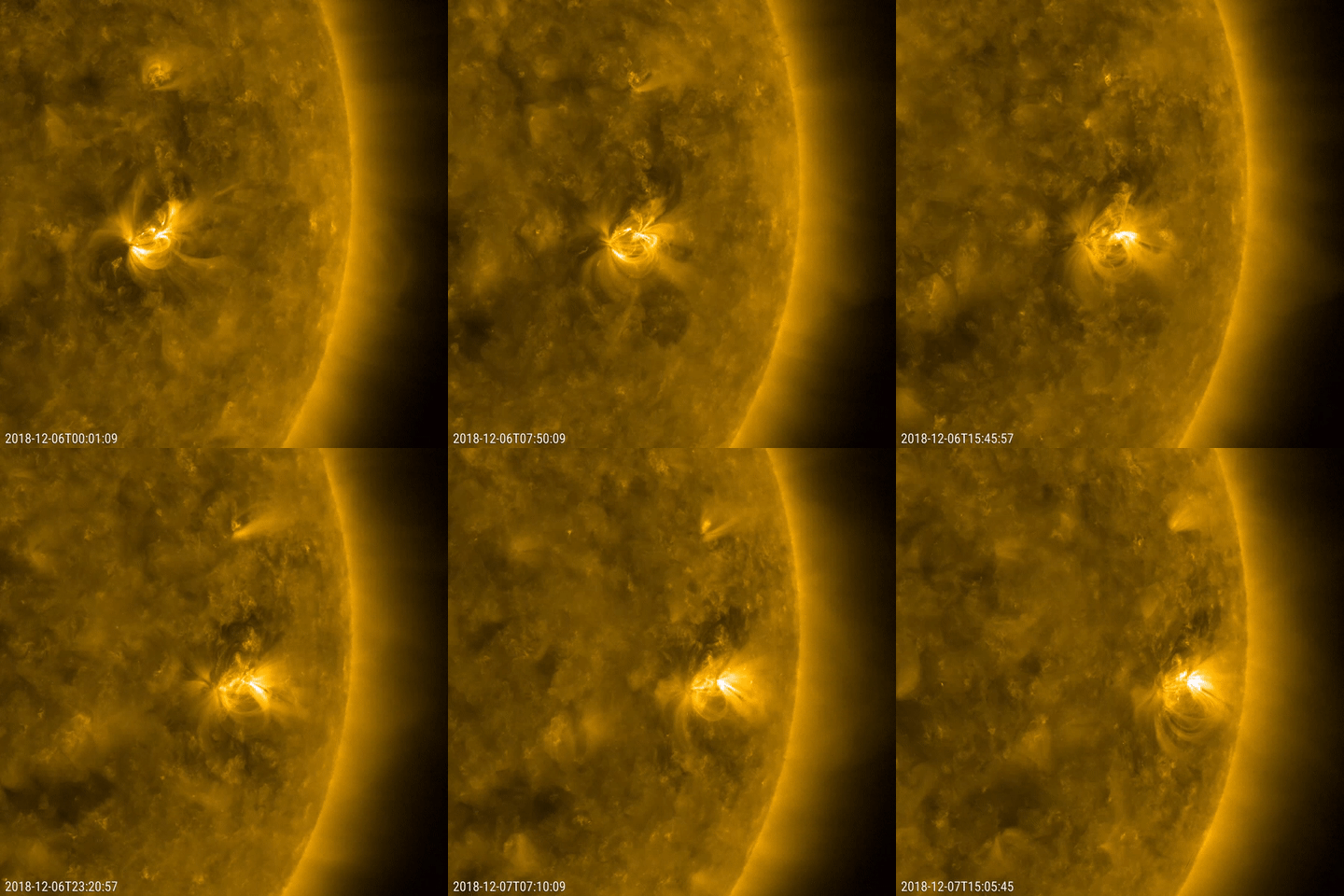
The only active region observed this week appeared on Dec. 5, 2018 and grew into an average size display of dynamic activity (Dec. 6-7, 2018). As viewed in a wavelength of extreme ultraviolet light, the region presented numerous magnetic loops... Continue Reading →

Sometimes it’s all about perspective. This very convincing image of a conjoined moon masquerading as a snowman is actually two separate Saturnian moons – Dione and Rhea – taken from such an angle by the international Cassini spacecraft that they... Continue Reading →

Sand dunes often accumulate in the floors of craters. In this region of Lyot Crater, NASA's Mars Reconnaissance Orbiter (MRO) shows a field of classic barchan dunes on Jan. 24, 2018. Just to the south of the group of barchan... Continue Reading →

What glows in the night? This night, several unusual glows were evident -- some near, but some far. The foreground surf glimmers blue with the light of bioluminescent plankton. Next out, Earth's atmosphere dims the horizon and provides a few... Continue Reading →
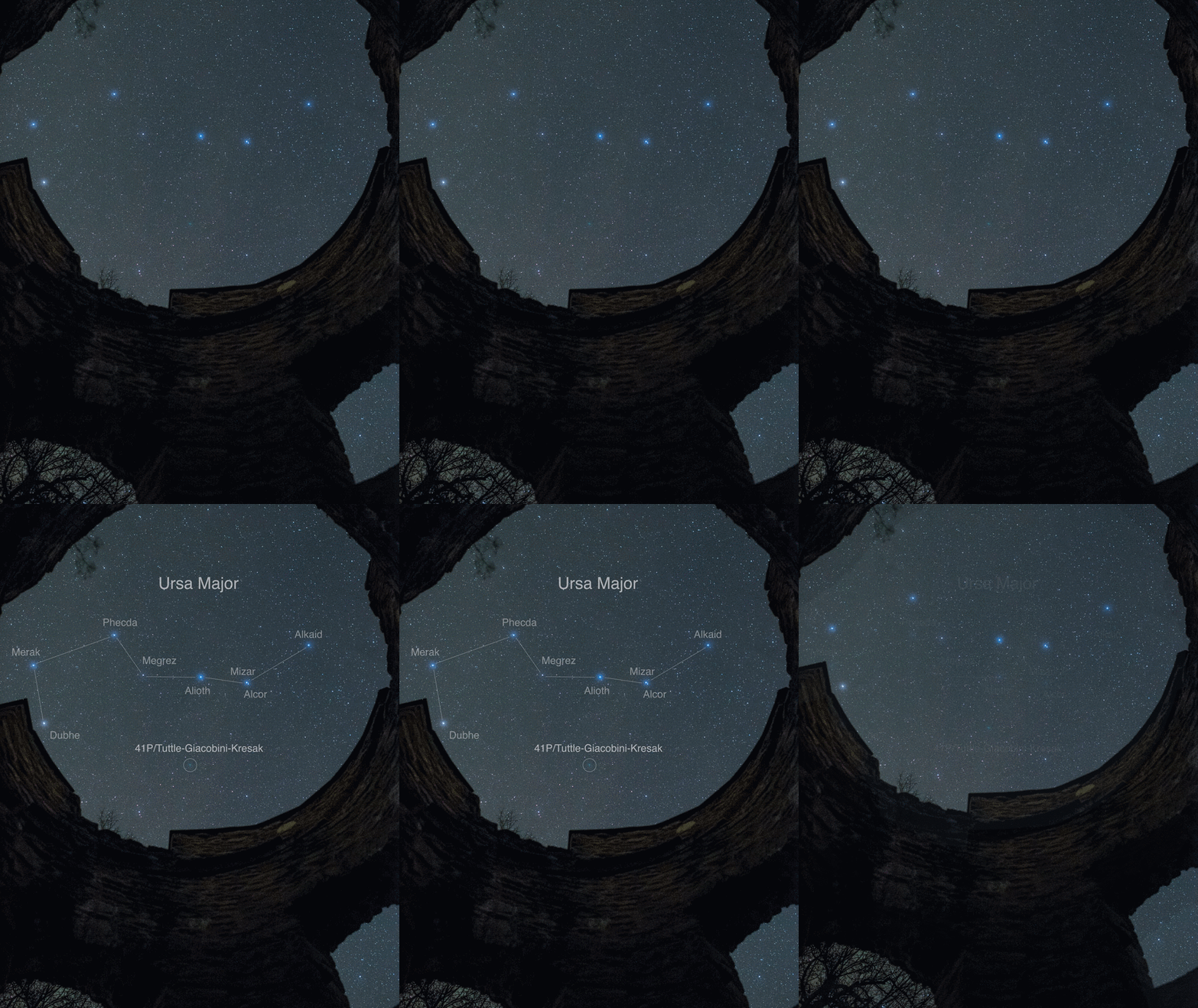
The best known asterism in northern skies, The Big Dipper is easy to recognize, even when viewed upside down, though some might see a plough or wagon. The star names and the familiar outlines appear framed in the ruined tower... Continue Reading →

Get out your red/cyan glasses and gaze across the surface of Churyumov-Gerasimenko, aka Comet 67P. The stereo anaglyph was created by combining two images from the Rosetta spacecraft's narrow angle OSIRIS camera taken on September 22, 2014. Stark and jagged,... Continue Reading →
 Scents of Science