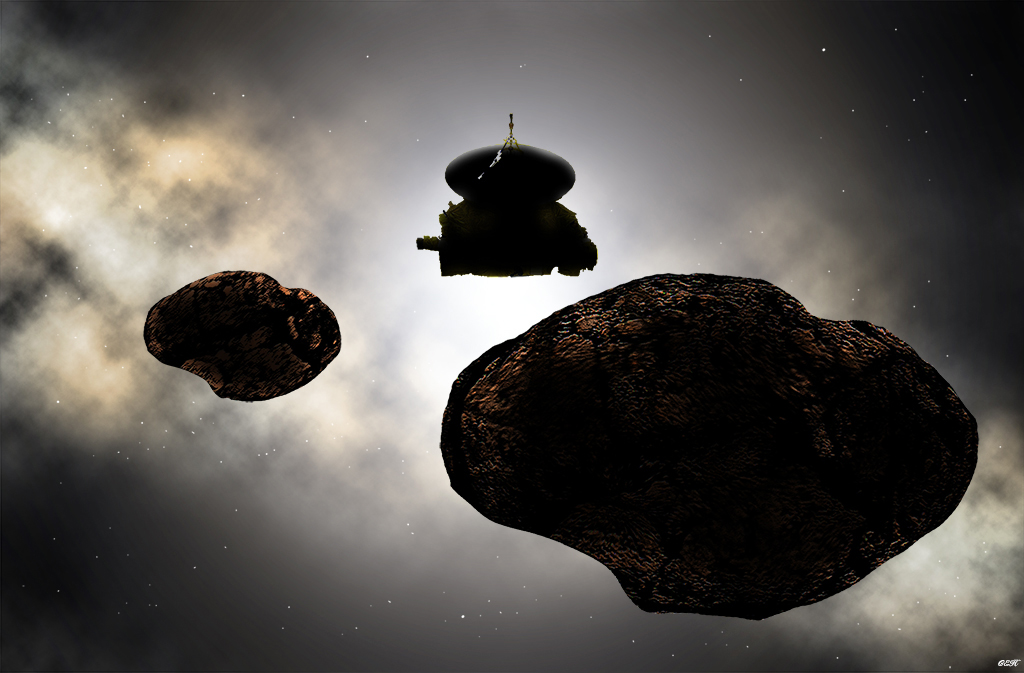
When we celebrate the start of 2019, on January 1 the New Horizons spacecraft will flyby Ultima Thule. A world of the Kuiper belt 6.5 billion kilometers from the Sun, the nickname Ultima Thule (catalog designation 2014 MU69) fittingly means "beyond the known world". Following its 2015 flyby... Continue Reading →
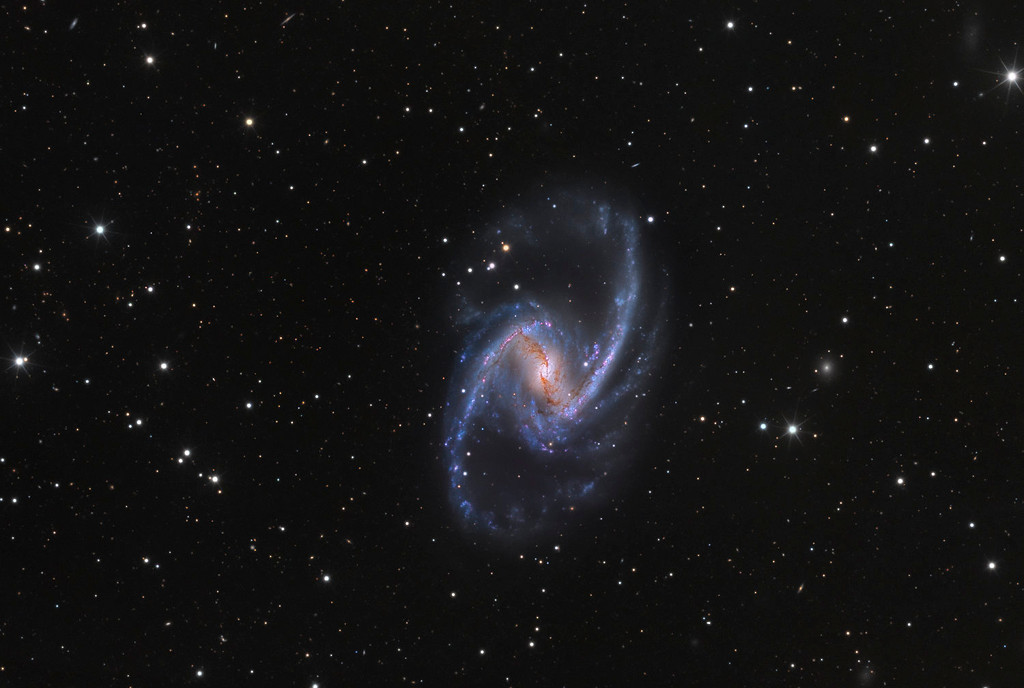
Barred spiral galaxy NGC 1365 is truly a majestic island universe some 200,000 light-years across. Located a mere 60 million light-years away toward the chemical constellation Fornax, NGC 1365 is a dominant member of the well-studied Fornax galaxy cluster. This impressively sharp color image shows intense star forming... Continue Reading →
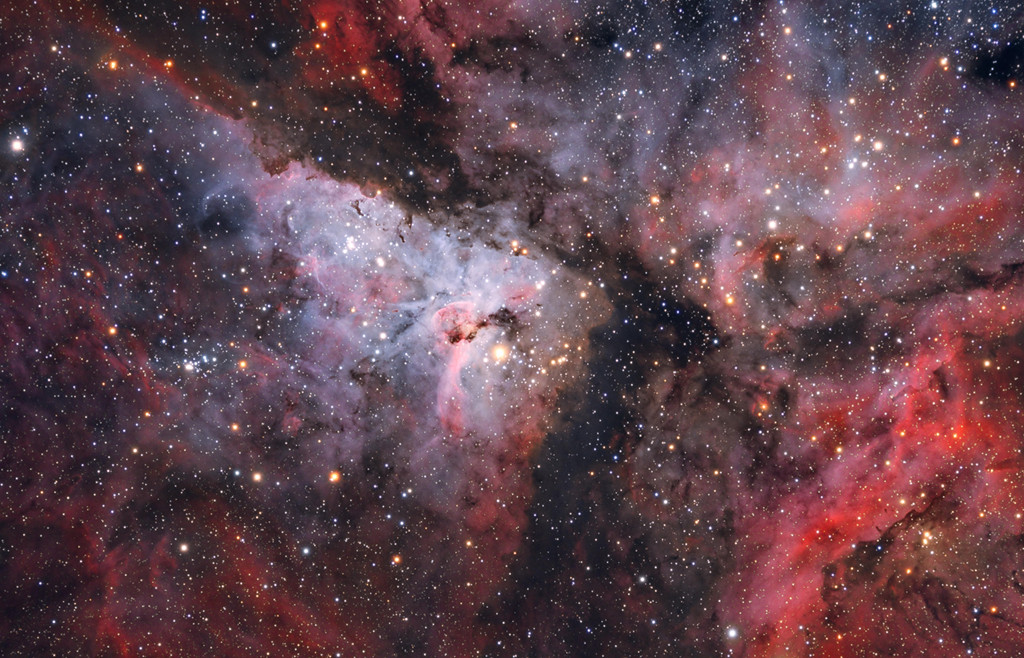
A jewel of the southern sky, the Great Carina Nebula, also known as NGC 3372, spans over 300 light-years, one of our galaxy's largest star forming regions. Like the smaller, more northerly Great Orion Nebula, the Carina Nebula is easily visible to the unaided... Continue Reading →
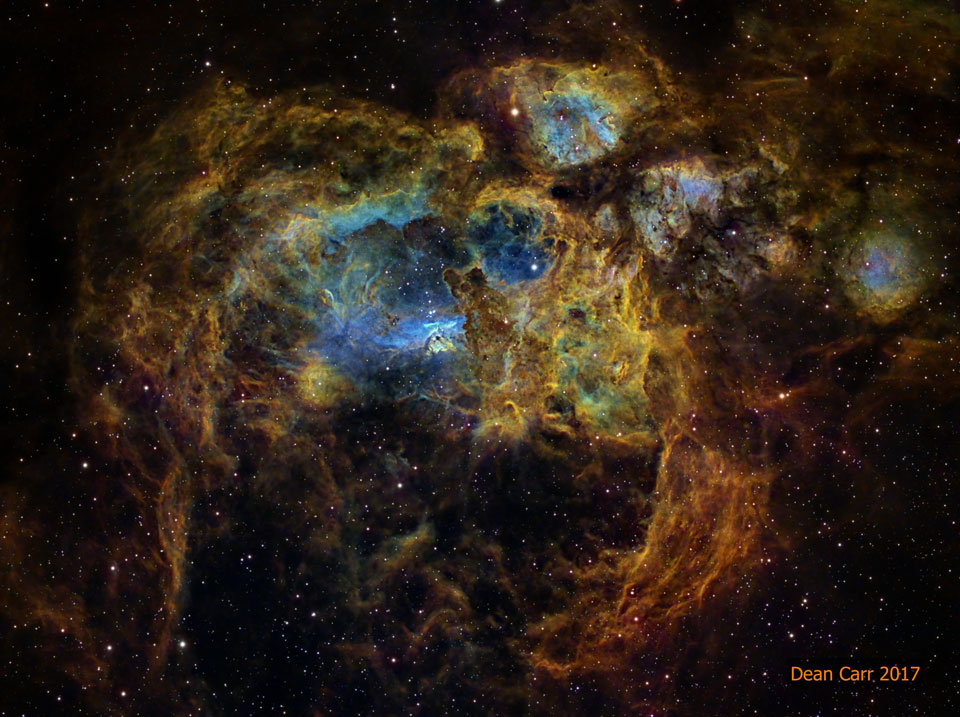
Why is the Lobster Nebula forming some of the most massive stars known? No one is yet sure. Cataloged as NGC 6357, the Lobster Nebula houses the open star cluster Pismis 24 near its center -- a home to unusually bright and massive... Continue Reading →
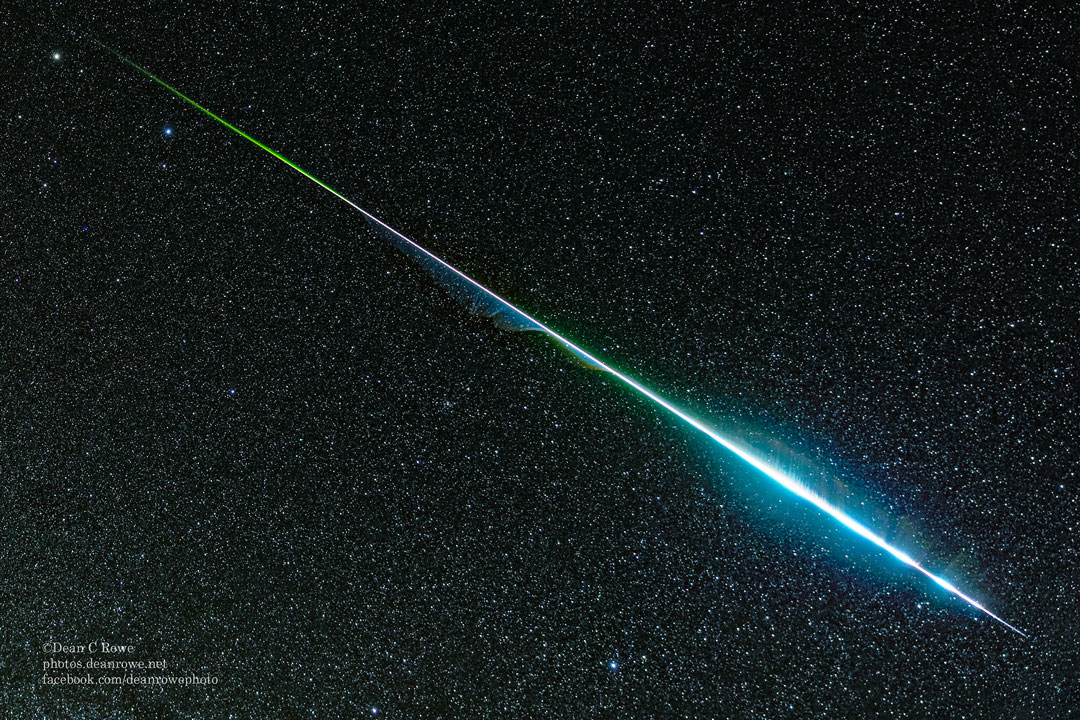
Meteors can be colorful. While the human eye usually cannot discern many colors, cameras often can. Pictured is a Geminid captured by camera during last week's meteor shower that was not only impressively bright, but colorful. The radiant grit cast off by asteroid 3200 Phaethon blazed a path across Earth's atmosphere longer... Continue Reading →

New NASA research confirms that Saturn is losing its iconic rings at the maximum rate estimated from Voyager 1 & 2 observations made decades ago. The rings are being pulled into Saturn by gravity as a dusty rain of ice... Continue Reading →

In space, the human body loses muscle mass. Although living in microgravity requires no heavy lifting, this loss of muscle reduces physical performance. Decreased muscle mass could also prove particularly problematic on future missions to destinations such as the Moon... Continue Reading →

On October 29, 2018, NASA's Juno probe successfully performed her Perijove-16 Jupiter flyby.This time, Juno's spin axis was pointed away from Earth, in order to obtain a better view to Jupiter for Juno's instruments. At the same time, solar conjunction... Continue Reading →

What is the nearest major galaxy to our own Milky Way Galaxy? Andromeda. In fact, our Galaxy is thought to look much like Andromeda. Together these two galaxies dominate the Local Group of galaxies. The diffuse light from Andromeda is caused by the hundreds of billions of stars that... Continue Reading →
 Scents of Science