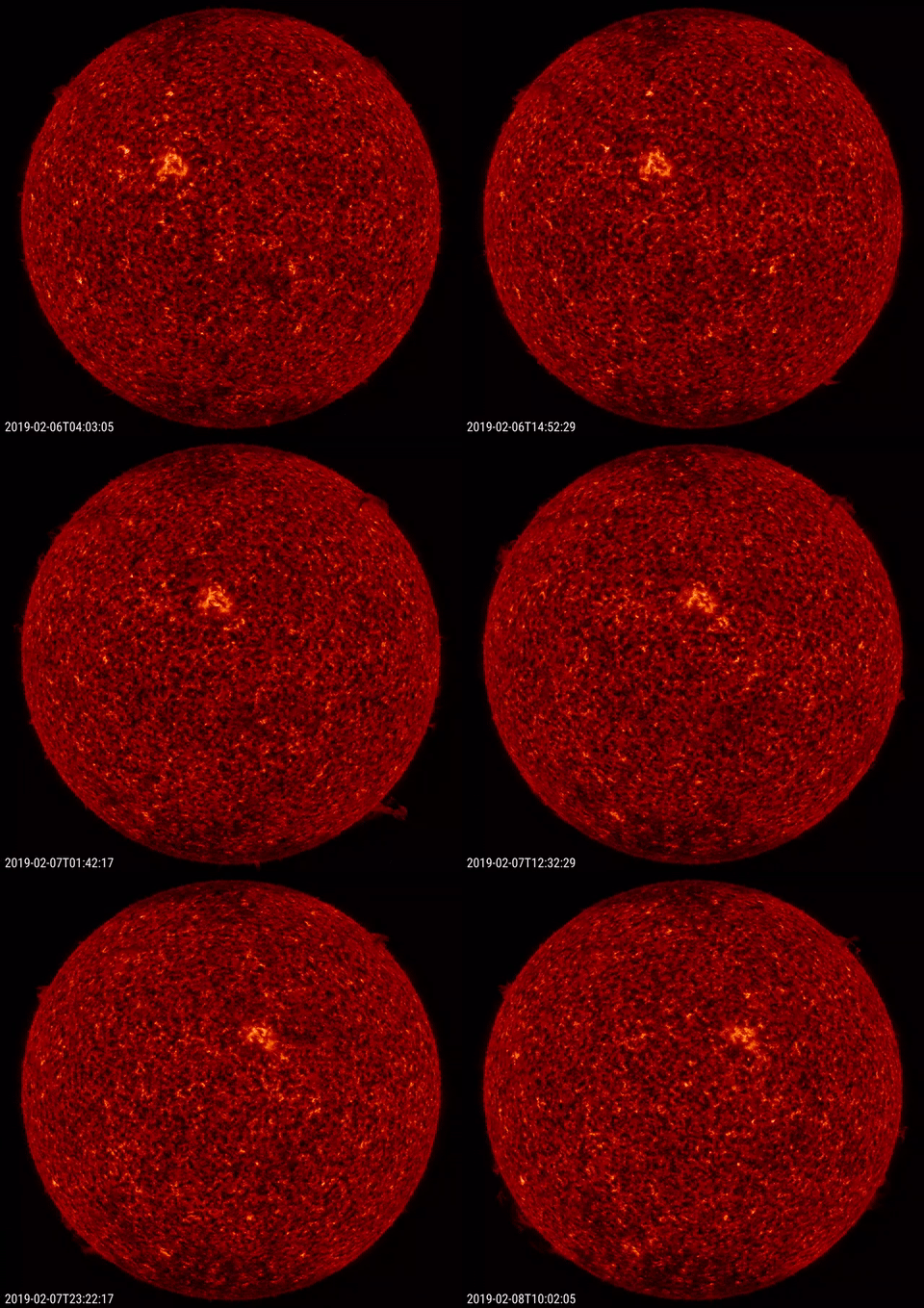
The SDO spacecraft is in another eclipse season as of Feb. 6, 2019. This begins a several week period when the Earth briefly blocks SDO’s view of the Sun each day. In fact, because SDO orbits above the Mountain Time... Continue Reading →
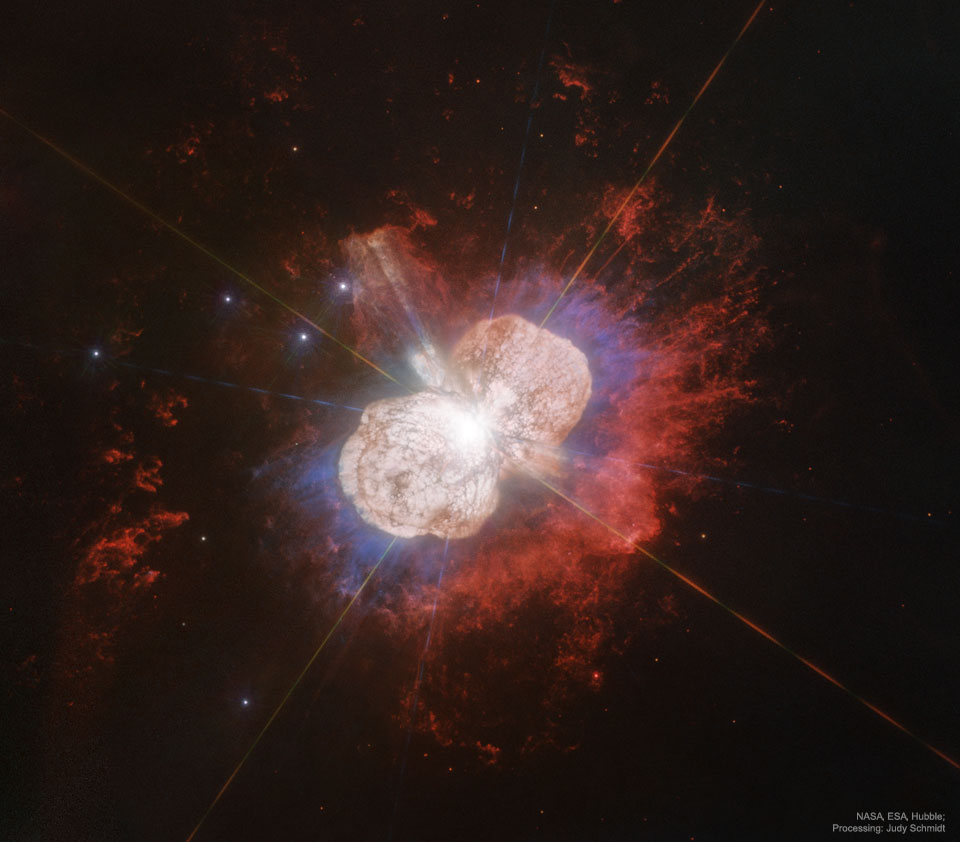
Eta Carinae may be about to explode. But no one knows when - it may be next year, it may be one million years from now. Eta Carinae's mass - about 100 times greater than our Sun - makes it an excellent candidate... Continue Reading →
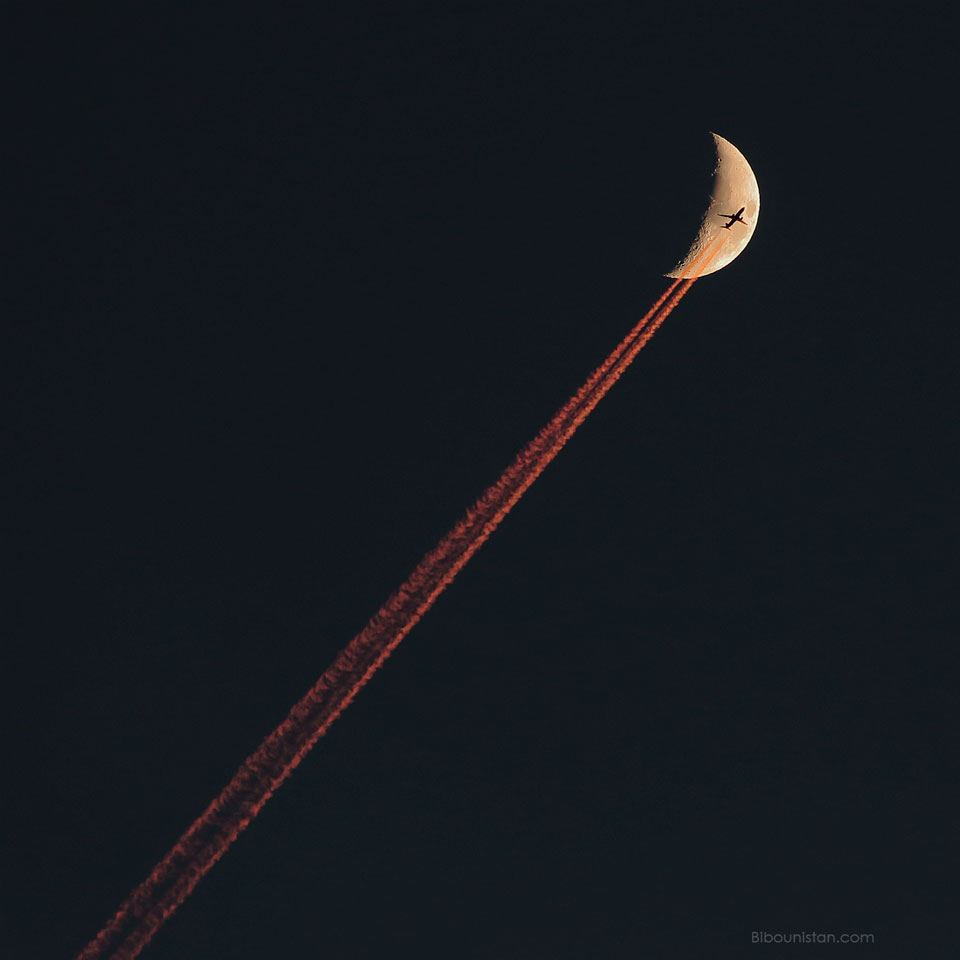
No, this is not a good way to get to the Moon. What is pictured is a chance superposition of an airplane and the Moon. The contrail would normally appear white, but the large volume of air toward the setting Sun preferentially knocks away blue... Continue Reading →

Clouds of glowing hydrogen gas fill this colorful skyscape in the faint but fanciful constellation Monoceros, the Unicorn. A star forming region cataloged as NGC 2264, the complex jumble of cosmic gas and dust is about 2,700 light-years distant and mixes reddish emission... Continue Reading →

Watch Juno zoom past Jupiter again. NASA's robotic spacecraft Juno is continuing on its 53-day, highly-elongated orbits around our Solar System's largest planet. The featured video is from perijove 16, the sixteenth time that Juno has passed near Jupiter since it arrived in mid-2016. Each perijove passes near a slightly... Continue Reading →
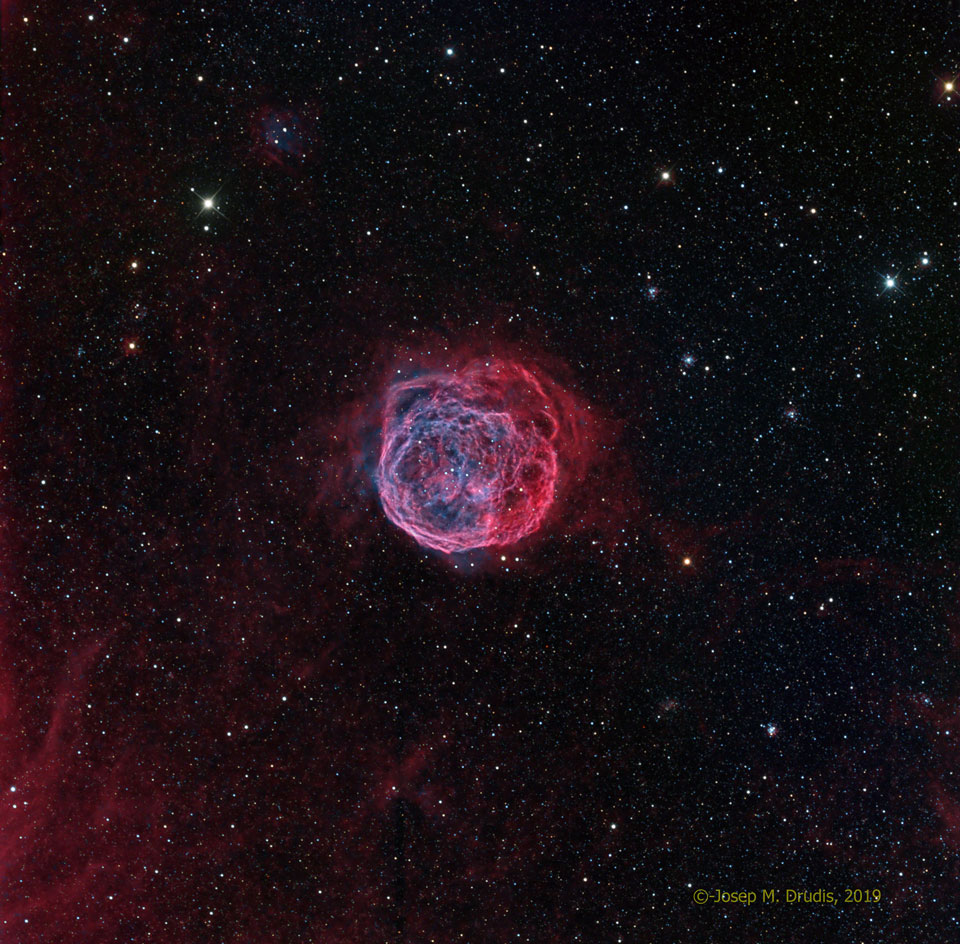
Massive stars profoundly affect their galactic environments. Churning and mixing interstellar clouds of gas and dust, stars -- most notably those upwards of tens of times the mass of our Sun -- leave their mark on the compositions and locations of future generations of... Continue Reading →
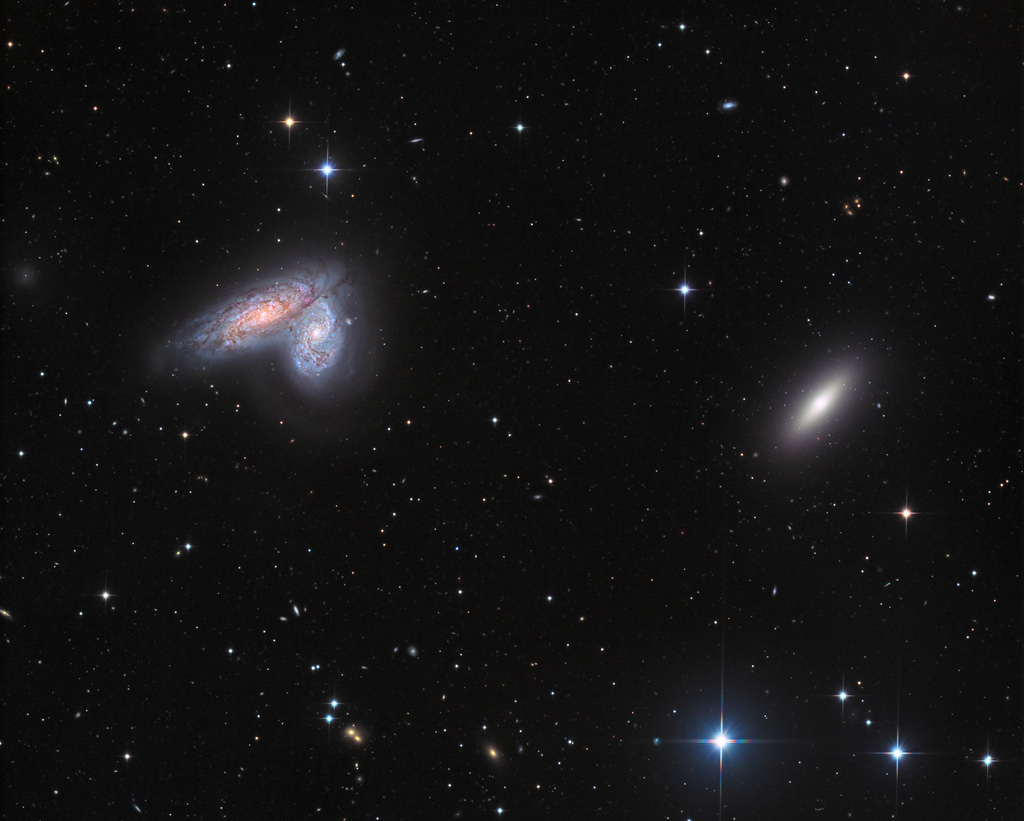
Spiral galaxy pair NGC 4567 and NGC 4568 share this sharp cosmic vista with lonely elliptical galaxy NGC 4564. All are members of the large Virgo Galaxy Cluster. With their classic spiral arms, dust lanes, and star clusters, the eye-catching spiral pair is... Continue Reading →

This winter, NASA's scientists and engineers traveled to the world’s northernmost civilian town to launch rockets equipped with cutting-edge scientific instruments. This is the beginning of a 14-month-long campaign to study a particular region of Earth’s magnetic field — which means launching near... Continue Reading →

Blown by fast winds from a hot, massive star, this cosmic bubble is huge. Cataloged as Sharpless 2-308 it lies some 5,200 light-years away toward the constellation of the Big Dog (Canis Major) and covers slightly more of the sky than a Full Moon.... Continue Reading →
 Scents of Science