
What do birds do during a total solar eclipse? Darkness descends more quickly in a total eclipse than during sunset, but returns just as quickly -- and perhaps unexpectedly to the avians -- just a few minutes later. Stories about the unusual... Continue Reading →
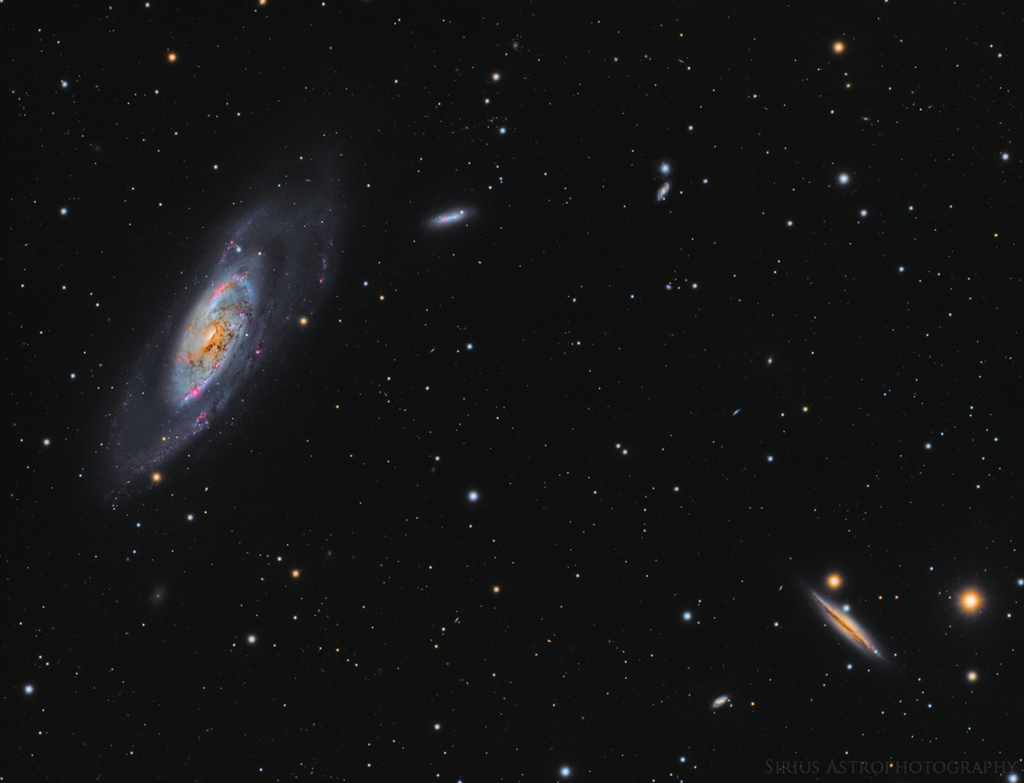
Big, bright, beautiful spiral, Messier 106 dominates this cosmic vista. The nearly two degree wide telescopic field of view looks toward the well-trained constellation Canes Venatici, near the handle of the Big Dipper. Also known as NGC 4258, M106 is about 80,000 light-years across... Continue Reading →

As NASA's Cassini dove close to Saturn in its final year, the spacecraft provided intricate detail on the workings of Saturn's complex rings, new analysis shows. Although the mission ended in 2017, science continues to flow from the data collected.... Continue Reading →
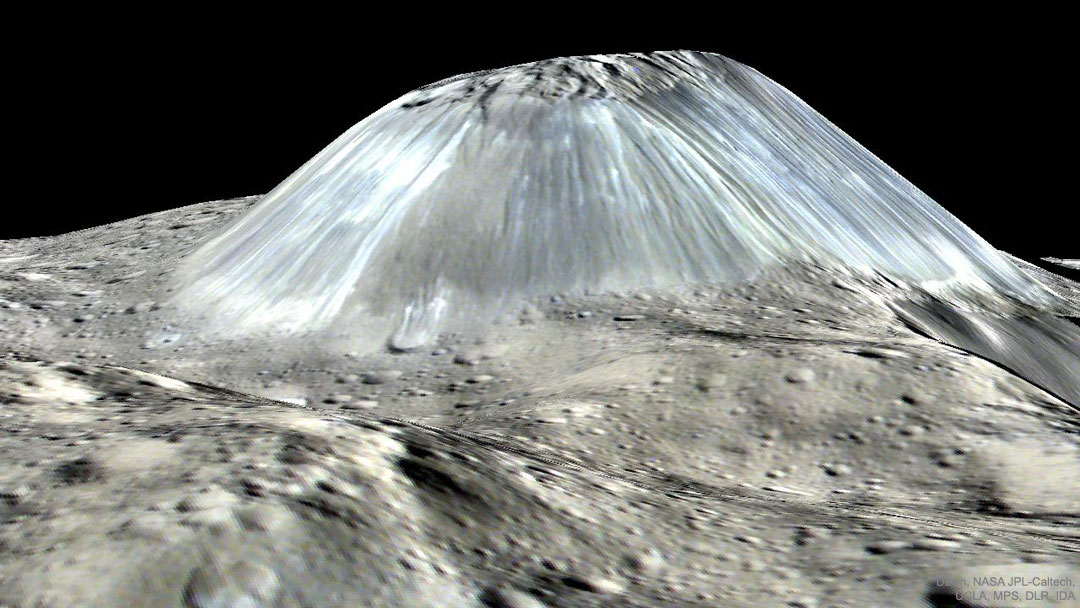
What created this unusual mountain? There is a new theory. Ahuna Mons is the largest mountain on the largest known asteroid in our Solar System, Ceres, which orbits our Sun in the main asteroid belt between Mars andJupiter. Ahuna Mons, though, is like nothing that humanity has ever seen before. For... Continue Reading →
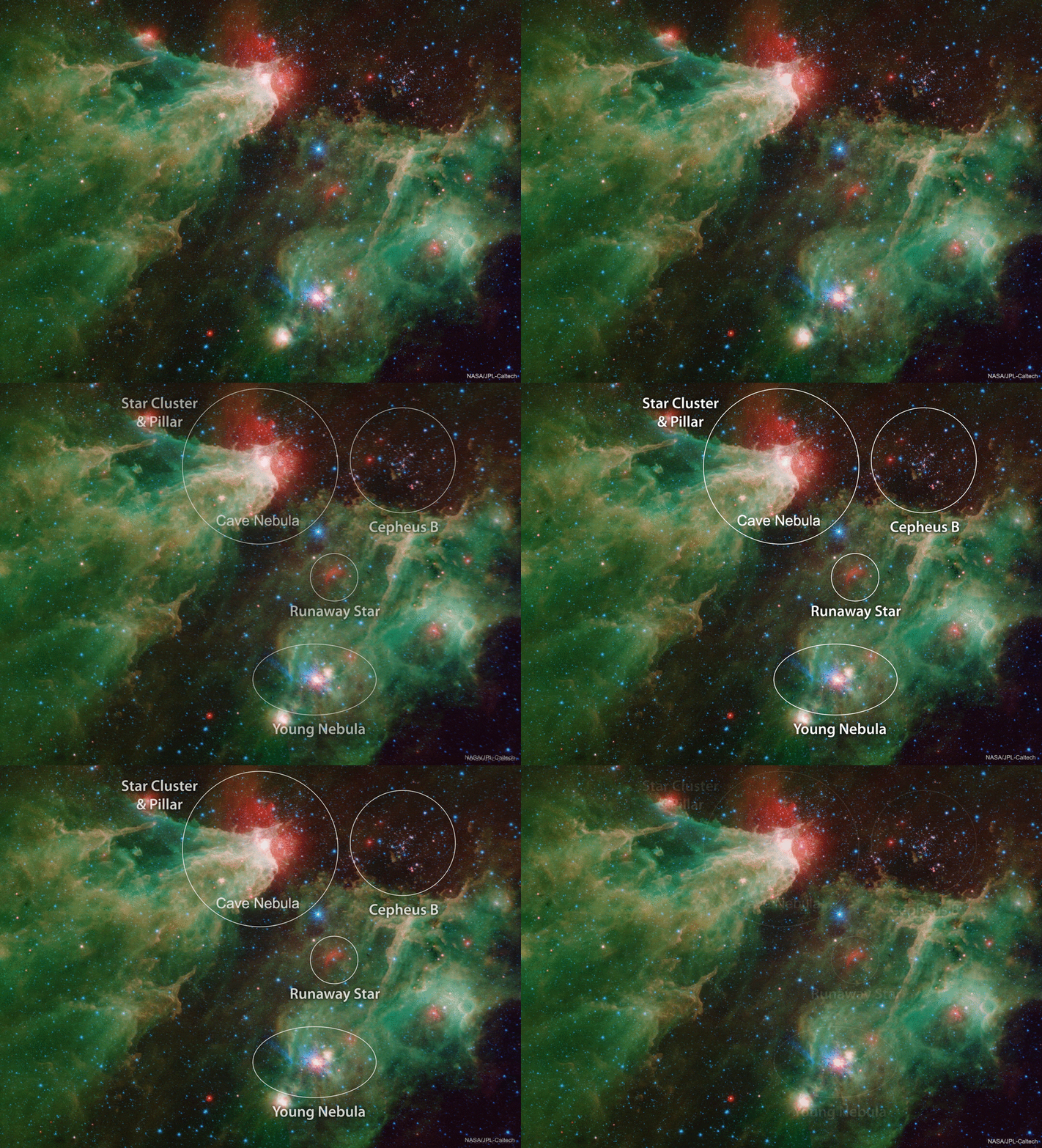
What's happening in and around the Cave Nebula? To help find out, NASA's orbiting Spitzer Space Telescope looked into this optically-dark star-forming region in four colors of infrared light. The Cave Nebula, cataloged as Sh2-155, is quite bright in infrared, revealing details not only of internal pillars of... Continue Reading →
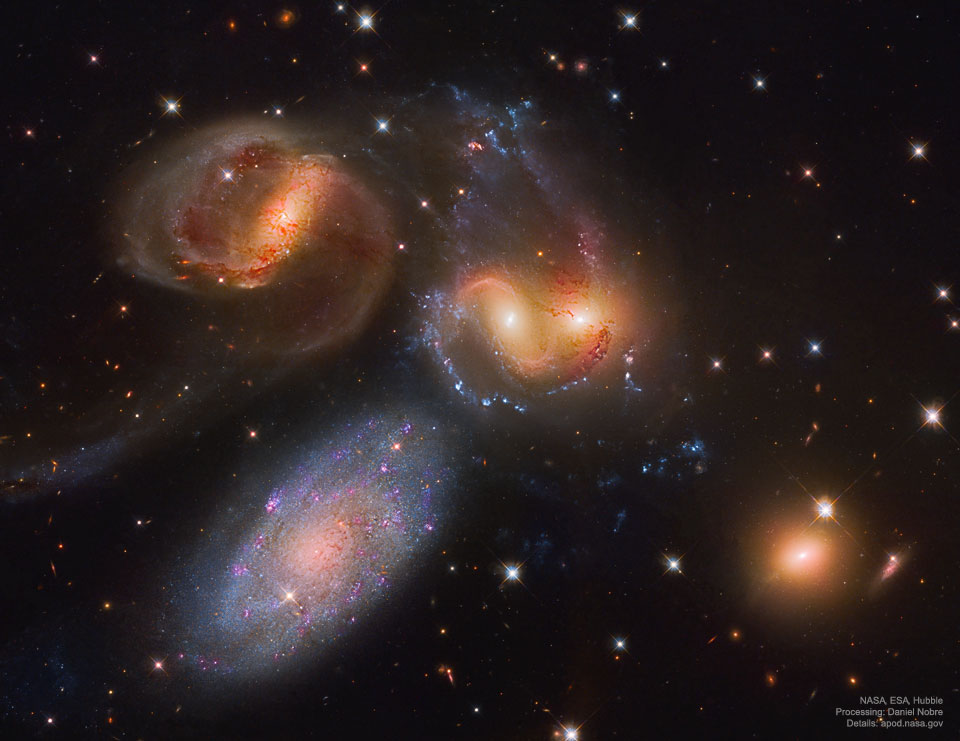
When did these big galaxies first begin to dance? Really only four of the five of Stephan's Quintet are locked in a cosmic tango of repeated close encounters taking place some 300 million light-years away. The odd galaxy out is easy to spot in this... Continue Reading →
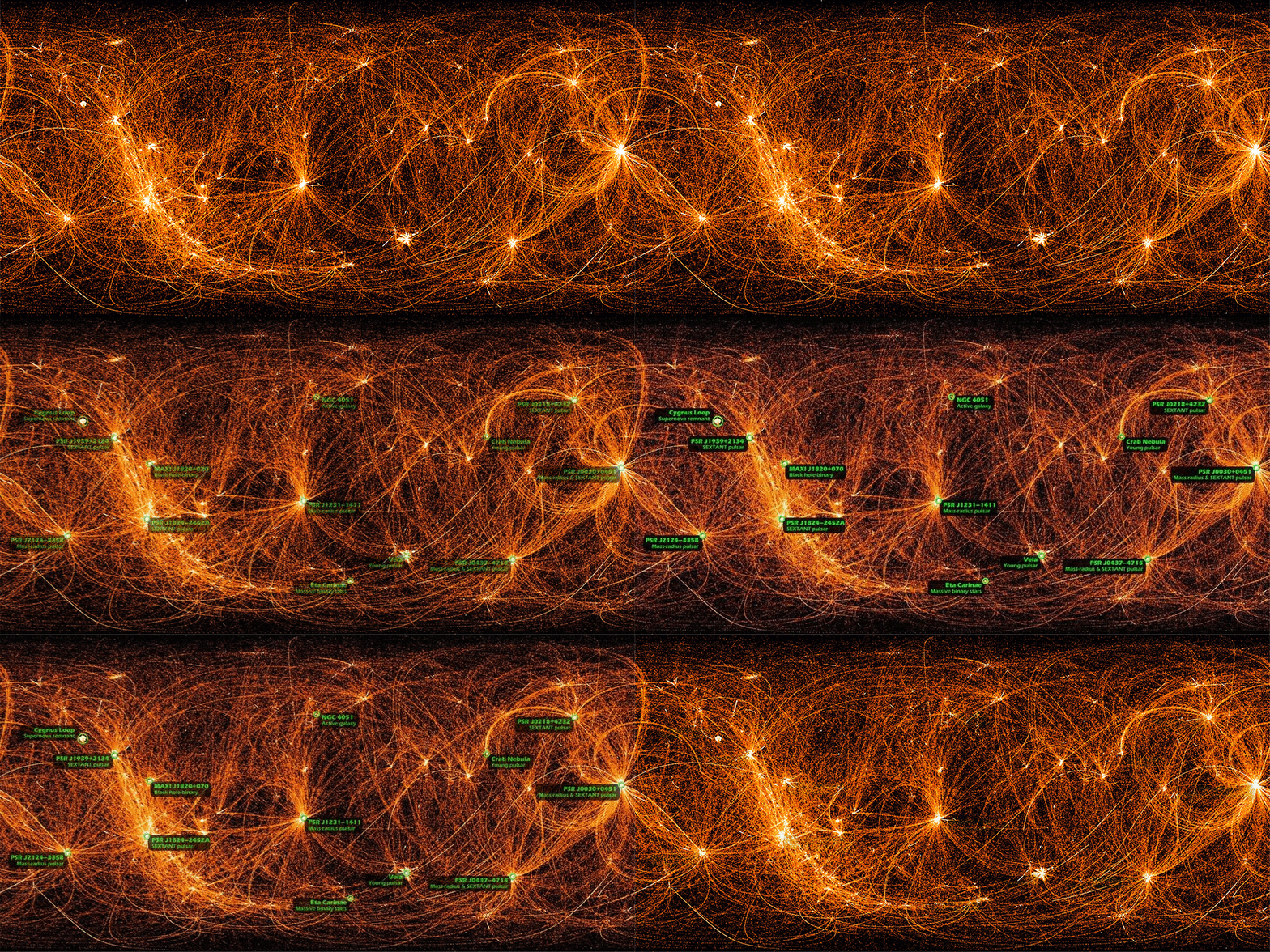
In this image, numerous sweeping arcs seem to congregate at various bright regions. You may wonder: What is being shown? Air traffic routes? Information moving around the global internet? Magnetic fields looping across active areas on the Sun? In fact,... Continue Reading →
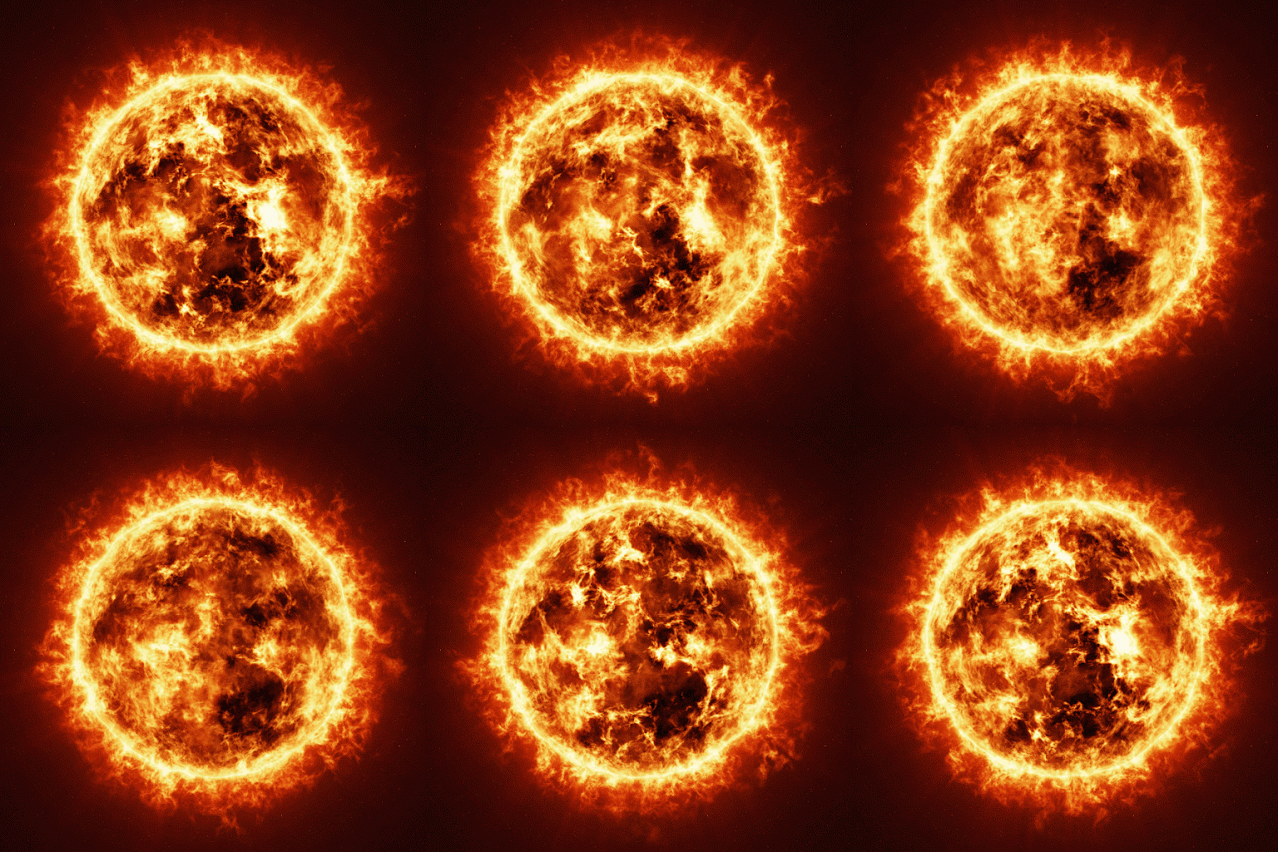
The scientists used large radio telescopes and ultraviolet cameras on a NASA spacecraft to better understand the exotic but poorly understood "fourth state of matter." Known as plasma, this matter could hold the key to developing safe, clean and efficient... Continue Reading →

The Moon is shrinking as its interior cools, getting more than about 150 feet (50 meters) skinnier over the last several hundred million years. Just as a grape wrinkles as it shrinks down to a raisin, the Moon gets wrinkles... Continue Reading →
 Scents of Science