
Blown by fast winds from a hot, massive star, this cosmic bubble is much larger than the dolphin it appears to be. Cataloged as Sharpless 2-308 it lies some 5,200 light-years away toward the constellation of the Big Dog (Canis Major) and... Continue Reading →

University students and researchers working on a NASA mission orbiting a near-Earth asteroid have made an unexpected detection of a phenomenon 30 thousand light years away. Last fall, the student-built Regolith X-Ray Imaging Spectrometer (REXIS) onboard NASA’s OSIRIS-REx spacecraft detected... Continue Reading →
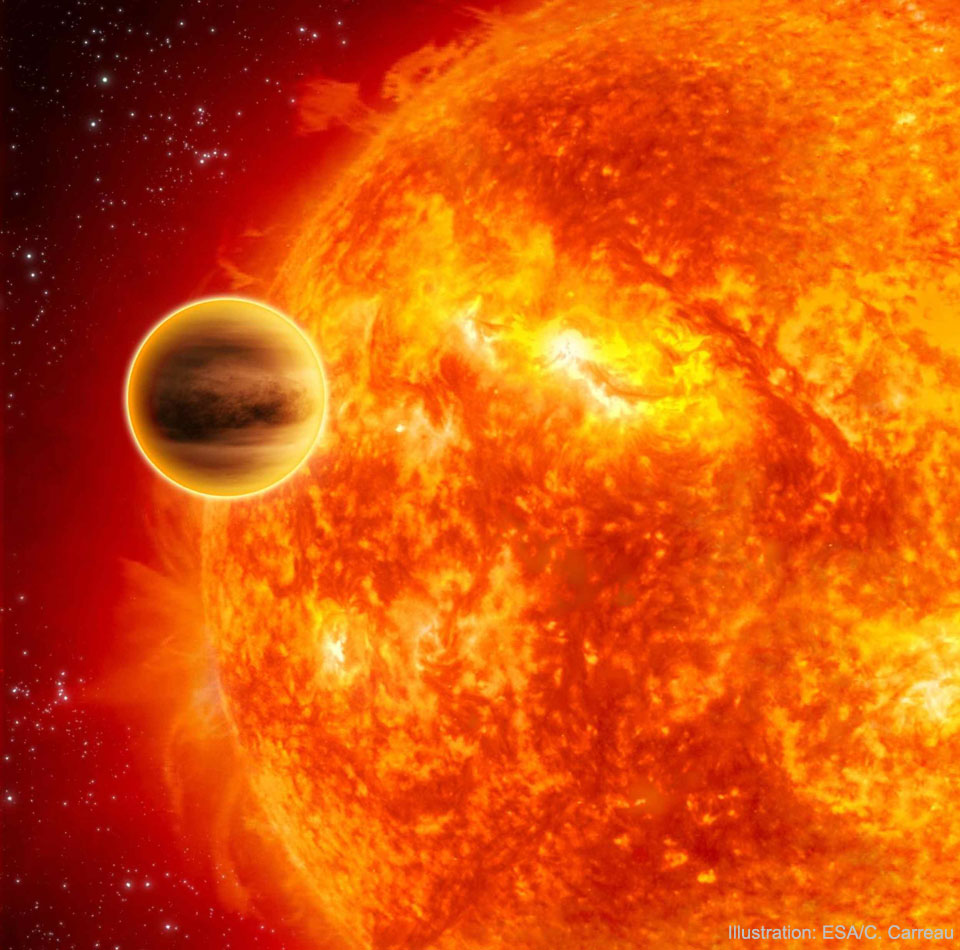
This hot jupiter is doomed. Hot jupiters are giant planets like Jupiter that orbit much closer to their parent stars than Mercury does to our Sun. But some hot jupiters are more extreme than others. NGTS-10b, illustrated generically, is the closest and fastest-orbiting giant planet yet discovered, circling its home... Continue Reading →

Ms Johnson calculated rocket trajectories and Earth orbits for Nasa's early space missions. She was portrayed in the 2016 Oscar-nominated film Hidden Figures. The film tells the story of African-American women whose maths skills helped put US astronaut John Glenn... Continue Reading →
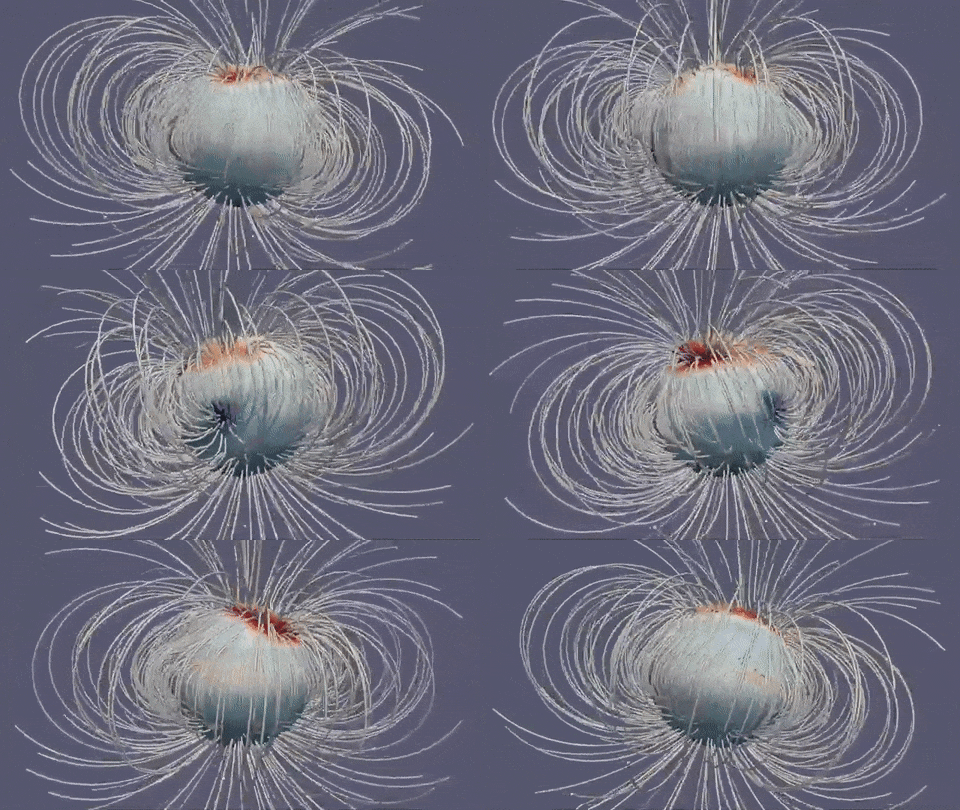
How similar is Jupiter's magnetic field to Earth's? NASA's robotic Juno spacecraft has found that Jupiter's magnetic field is surprisingly complex, so that the Jovian world does not have single magnetic poles like our Earth. A snapshot of Jupiter's magnetic field at one moment in time, as animated... Continue Reading →
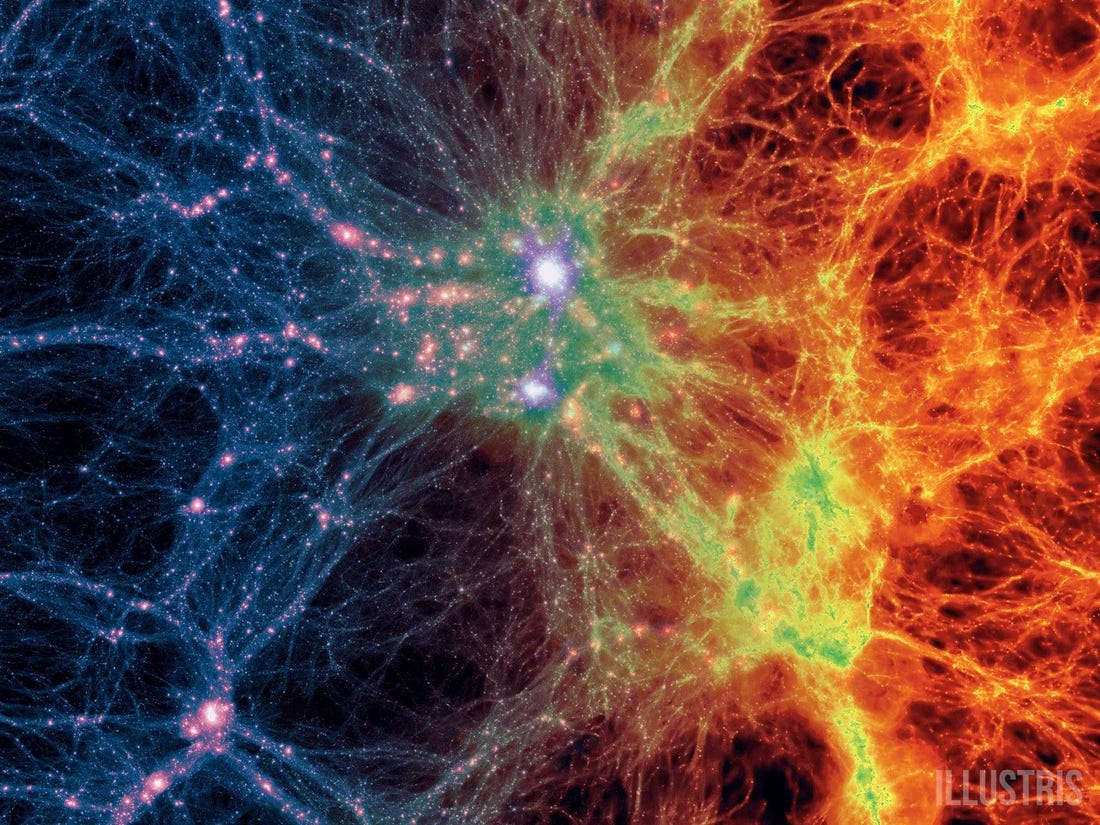
How did we get here? Click play, sit back, and watch. A computer simulation of the evolution of the universe provides insight into how galaxies formed and perspectives into humanity's place in the universe. https://www.youtube.com/watch?time_continue=62&v=QSivvdIyeG4&feature=emb_logo Video Credit: Illustris Collaboration, NASA, PRACE, XSEDE, MIT, Harvard CfA;Music: The Poisoned Princess (Media Right Productions) The Illustris project exhausted 20... Continue Reading →

NASA's Juno mission has provided its first science results on the amount of water in Jupiter's atmosphere. Published recently in the journal Nature Astronomy, the Juno results estimate that at the equator, water makes up about 0.25% of the molecules... Continue Reading →

More is unknown than is known. We know how much dark energy there is because we know how it affects the universe's expansion. Other than that, it is a complete mystery. But it is an important mystery. It turns out... Continue Reading →
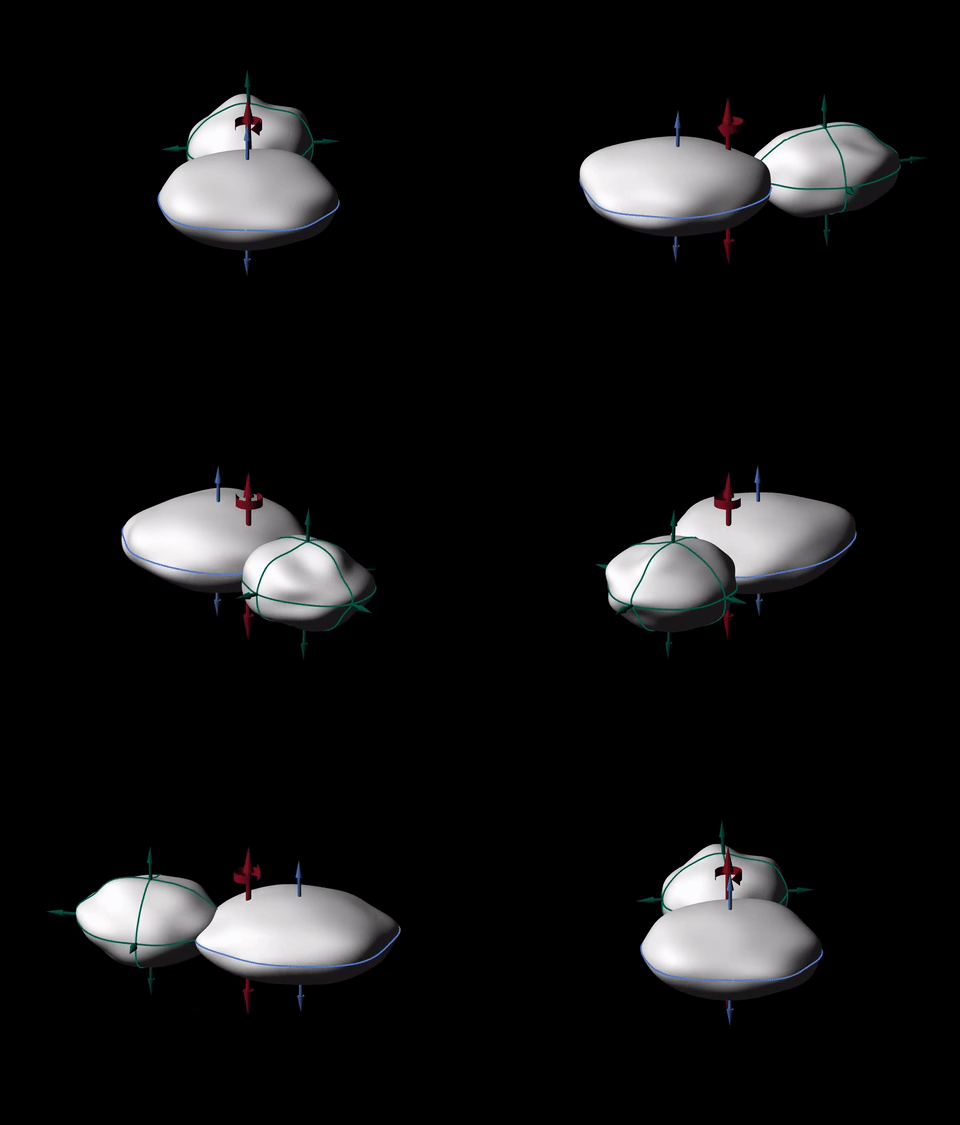
Data from NASA's New Horizons mission are providing new insights into how planets and planetesimals -- the building blocks of the planets -- were formed. The New Horizons spacecraft flew past the ancient Kuiper Belt object Arrokoth (2014 MU69) on... Continue Reading →
 Scents of Science