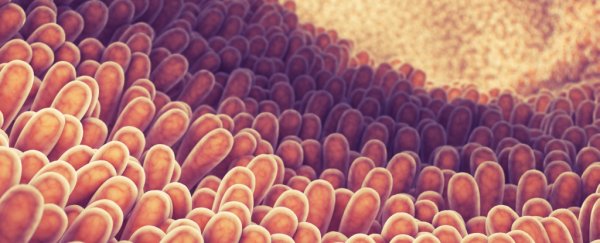
The first time Vayu Maini Rekdal manipulated microbes, he made a decent sourdough bread. At the time, young Maini Rekdal, and most people who head to the kitchen to whip up a salad dressing, pop popcorn, ferment vegetables, or caramelize... Continue Reading →

Scientists once thought that neurons, or possibly heart cells, were the oldest cells in the body. Now, Salk Institute researchers have discovered that the mouse brain, liver and pancreas contain populations of cells and proteins with extremely long lifespans --... Continue Reading →

The early-stage research, led by scientists from Imperial College London and The Institute of Cancer Research, London, identified a genetic 'switch' in breast cancer cells that boosts the production of a type of internal scaffolding. This scaffolding is a type... Continue Reading →

Researchers at York University's Faculty of Health say those who have a history of an eating disorder, obsessive-compulsive traits, dieting, poor body image, and a drive for thinness are more likely to develop a pathological obsession with healthy eating or... Continue Reading →

Men who delay starting a family have a ticking "biological clock" -- just like women -- that may affect the health of their partners and children, according to Rutgers researchers. The study, which reviewed 40 years of research on the... Continue Reading →

In a series of recently published studies using animals and people, Johns Hopkins Medicine researchers say they have further characterized a set of chemical imbalances in the brains of people with schizophrenia related to the chemical glutamate. And they figured... Continue Reading →

Every five seconds we close our eyes and blink to moisten them. During this brief moment no light falls on our retina yet it is not constantly dark and we continue to observe a stable picture of our environment. The... Continue Reading →

Researchers at the University of Maryland School of Medicine (UMSOM) have made a surprising discovery: during fetal development, a particular immune cell seems to play a key role in determining the male or female characteristics of the brain. “This a... Continue Reading →

A review in CMAJ challenges historical surgical practices that are not research-based, outlining a multidisciplinary approach called enhanced recovery after surgery (ERAS) that will help patients recover more quickly from surgery. The article, published in CMAJ (Canadian Medical Association Journal), reviews... Continue Reading →
 Scents of Science