Medical consensus once supported daily use of low dose aspirin to prevent heart attack and stroke in people at increased risk for cardiovascular disease (CVD). But in 2018, three major clinical trials cast doubt on that conventional wisdom, finding few... Continue Reading →

University of Calgary researchers are the first to discover a previously unidentified cell population in the pericardial fluid found inside the sac around the heart. The discovery could lead to new treatments for patients with injured hearts. The study led... Continue Reading →
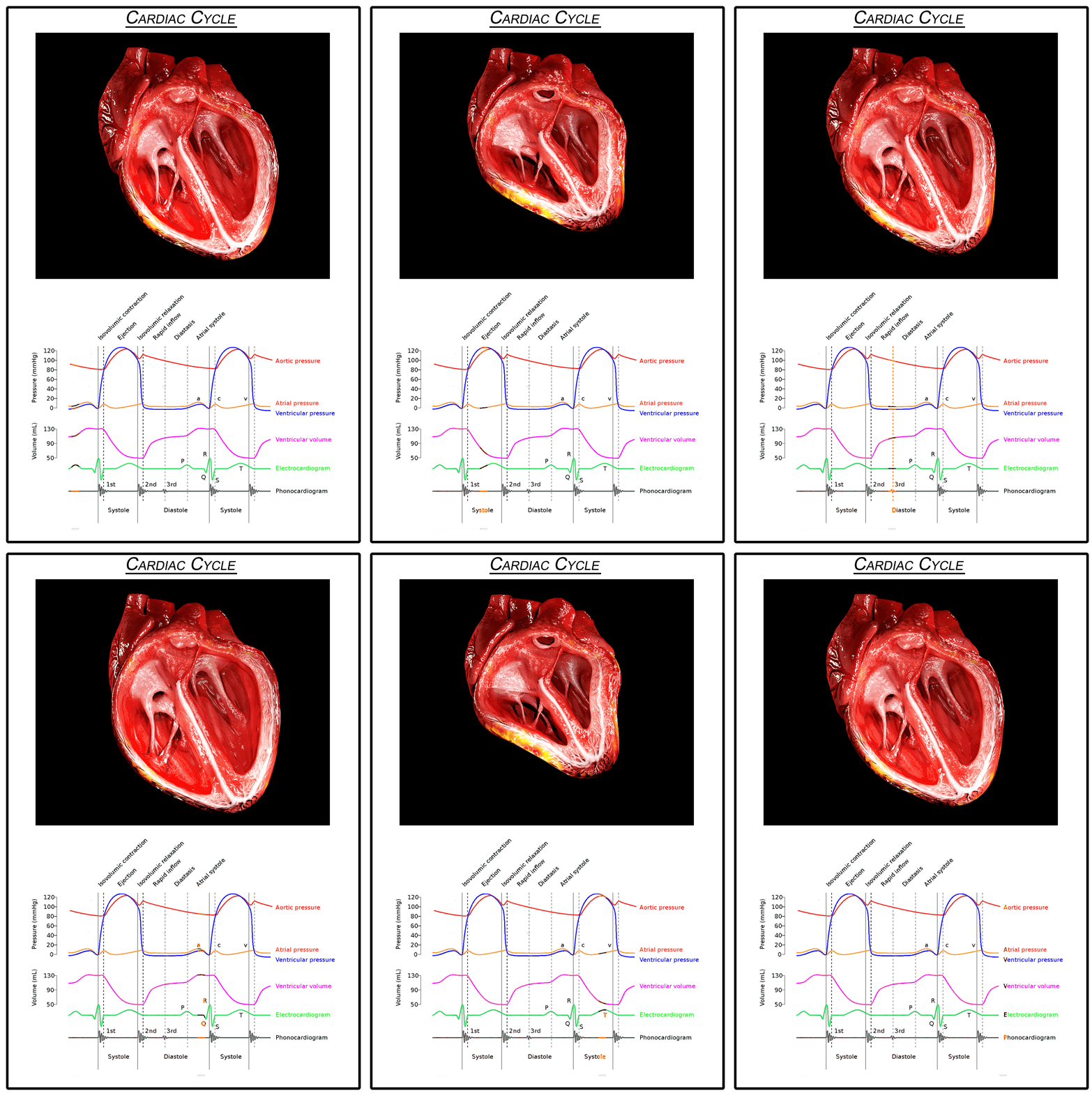
The electrical and mechanical events that occur from the beginning of one heartbeat at the beginning of the next heartbeat is called the cardiac cycle.The first electrical event in the cardiac cycle is the initiation of a spontaneous action potential in... Continue Reading →

Low doses of radiation equivalent to three CT scans, which are considered safe, give cancer-capable cells a competitive advantage over normal cells in healthy tissue, scientists have discovered. Researchers at the Wellcome Sanger Institute and the University of Cambridge studied... Continue Reading →

UNC School of Medicine scientists unveiled how a particular gene helps organize the scaffolding of brain cells called radial progenitors necessary for the orderly formation of the brain. Previous studies have shown that this gene is mutated in some people... Continue Reading →
In a major collaborative effort, researchers at the Lewis Katz School of Medicine at Temple University and the University of Nebraska Medical Center (UNMC) have for the first time eliminated replication-competent HIV-1 DNA -- the virus responsible for AIDS --... Continue Reading →

Blame junk food or a lack of exercise. But long before the modern obesity epidemic, evolution made us fat too. "We're the fat primates," said Devi Swain-Lenz, a postdoctoral associate in biology at Duke University. The fact that humans are... Continue Reading →

A new study identifies the species of bacteria in the human infant gut that protect against food allergies, finding changes associated with the development of food allergies and an altered immune response. Every three minutes, a food-related allergic reaction sends... Continue Reading →

Scientists from the University of Nottingham have discovered that drinking a cup of coffee can stimulate 'brown fat', the body's own fat-fighting defenses, which could be the key to tackling obesity and diabetes. The pioneering study, published in the journal Scientific... Continue Reading →
 Scents of Science