
Breast cancer incidence trends in U.S. women under 40 vary by geography and supports incorporating location information with established risk factors into risk prediction, improving the ability to identify groups of younger women at higher risk for early-onset breast cancer,... Continue Reading →
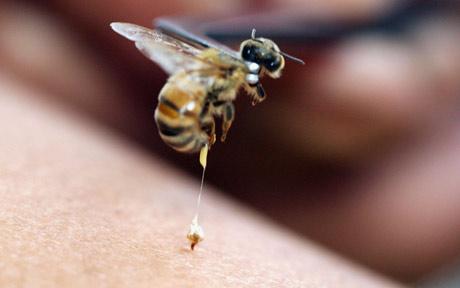
Using the venom from 312 honeybees and bumblebees in Perth Western Australia, Ireland and England, Dr Ciara Duffy from the Harry Perkins Institute of Medical Research and The University of Western Australia, tested the effect of the venom on the... Continue Reading →

Breast cancer could be detected up to five years before there are any clinical signs of it, using a blood test that identifies the body's immune response to substances produced by tumour cells, according to new research presented at the... Continue Reading →

The early-stage research, led by scientists from Imperial College London and The Institute of Cancer Research, London, identified a genetic 'switch' in breast cancer cells that boosts the production of a type of internal scaffolding. This scaffolding is a type... Continue Reading →

MYC, a gene with high cancer-initiating potential, is overexpressed in over 40% of breast cancers. While MYC programs breast cancer cells to build more macromolecules (anabolic metabolism) it also creates a metabolic vulnerability by making them more sensitive to a... Continue Reading →
 Scents of Science