
Microprocessors in smartphones, computers, and data centers process information by manipulating electrons through solid semiconductors but our brains have a different system. They rely on the manipulation of ions in liquid to process information. Inspired by the brain, researchers have... Continue Reading →
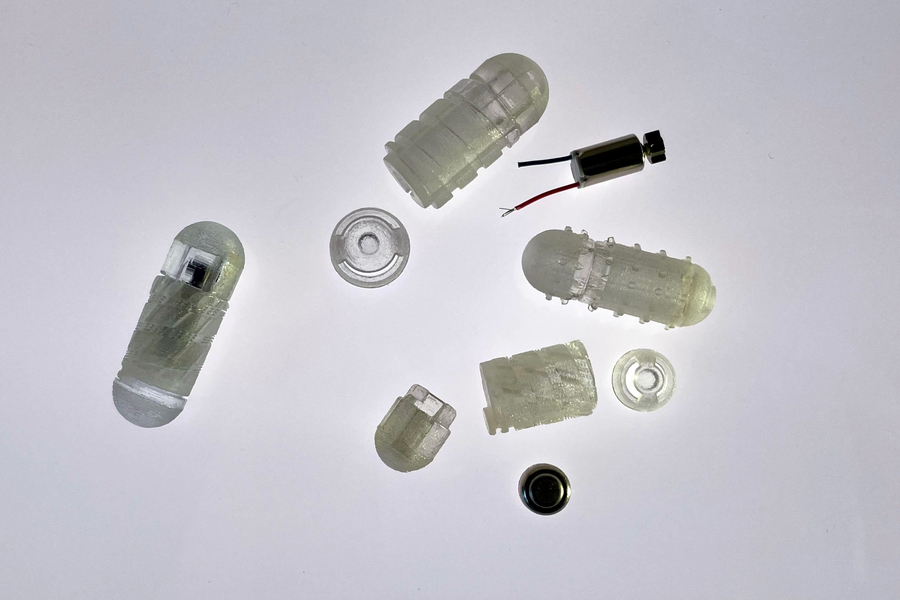
A capsule that tunnels through mucus in the GI tract could be used to orally administer large protein drugs such as insulin. One reason that it’s so difficult to deliver large protein drugs orally is that these drugs can’t pass... Continue Reading →

What mysteries might be solved by peering into this crystal ball? In this case, the ball is actually a moon of Jupiter, the crystals are ice, and the moon is not only dirty but cracked beyond repair. Nevertheless, speculation is rampant that... Continue Reading →

When glacial ice sheets melt, something counterintuitive happens to sea levels. Logic might suggest that nearby levels would rise, but instead they fall. Thousands of miles away, however, they do go up in a kind of seesaw effect. Why? The... Continue Reading →

Addiction is now understood to be a brain disease. Whether it’s alcohol, prescription pain pills, nicotine, gambling, or something else, overcoming an addiction isn’t as simple as just stopping or exercising greater control over impulses. That’s because addiction develops when the pleasure circuits... Continue Reading →

Drinking two to three cups of coffee a day is linked with a longer lifespan and lower risk of cardiovascular disease compared with avoiding coffee, according to research published in the European Journal of Preventive Cardiology, a journal of the ESC. The findings... Continue Reading →

Two of the great space observatories, the NASA/ESA/CSA James Webb Space Telescope and the NASA/ESA Hubble Space Telescope, have captured views of a unique experiment to smash a spacecraft into a small asteroid. Observations of NASA’s Double Asteroid Redirection Test (DART) impact mark... Continue Reading →

Using artificial intelligence, physicists have compressed a daunting quantum problem that until now required 100,000 equations into a bite-size task of as few as four equations — all without sacrificing accuracy. The work, published in the September 23 issue of Physical Review... Continue Reading →

In a recent study, researchers from Xi’an Jiaotong-Liverpool University and other universities in China have reported that brain stimulation combined with a nose spray containing nanoparticles can improve recovery after ischemic stroke in an animal model. Rats that were given... Continue Reading →
 Scents of Science