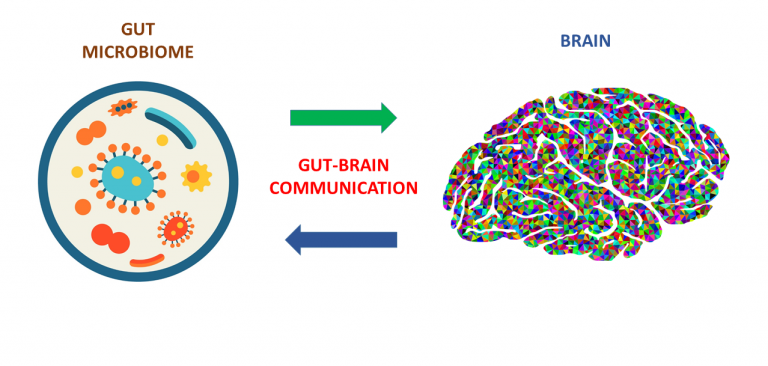
In the past decade, researchers have begun to appreciate the importance of a two-way communication that occurs between microbes in the gastrointestinal tract and the brain, known as the gut–brain axis. These “conversations” can modify how these organs work and... Continue Reading →

Researchers have confirmed the presence of an exoplanet, a planet that orbits another star, using the NASA/ESA/CSA James Webb Space Telescope for the first time. Formally classified as LHS 475 b, the planet is almost exactly the same size as our own,... Continue Reading →

Our Moon doesn't really look like this. Earth's Moon, Luna, doesn't naturally show this rich texture, and its colors are more subtle. But this digital creation is based on reality. The featured image is a composite of multiple images and enhanced to bring up real... Continue Reading →

The reason some people fail to recover their sense of smell after COVID-19 is linked to an ongoing immune assault on olfactory nerve cells and an associated decline in the number of those cells, a team of scientists led by... Continue Reading →

Today, by and large, patients receive a diagnosis of Alzheimer's only after they exhibit well-known signs of the disease, such as memory loss. By that point, the best treatment options simply slow further progression of symptoms. But research has shown... Continue Reading →

Can a gas cloud eat a galaxy? It's not even close. The "claw" of this odd looking "creature" in the featured photo is a gas cloud known as a cometary globule. This globule, however, has ruptured. Cometary globules are typically characterized by dusty heads and elongated tails. These features... Continue Reading →

Tabletop exercises allow researchers to explore options and test scenarios in fields from military strategy and cybersecurity to disaster response planning. Now, NASA is using tabletop exercises to test how electric air taxis will fit safely into the national airspace... Continue Reading →

Have you ever seen an entire rainbow? From the ground, typically, only the top portion of a rainbow is visible because directions toward the ground have fewer raindrops. From the air, though, the entire 360-degree circle of a rainbow is more commonly visible. Pictured... Continue Reading →

Scientists taking a “deep dive” into one of Webb’s iconic first images have discovered dozens of energetic jets and outflows from young stars previously hidden by dust clouds. The discovery marks the beginning of a new era of investigating how... Continue Reading →
 Scents of Science